Happy Jul’ Eikas and Merry Moon Landing!
I celebrate today to combat a plague of hopelessness, a similar plague as described by Lucretius in the final stanzas of De Rerum Natura, a spiritual plague characterized by the “heart-rending” despair of those “with sorrow-stricken” souls, who surrender hope as their “thoughts turned on death“. Like the Plague of Athens in 430 BCE that claimed 25% of the Athenian population, and like the Roman Civil War of 49 BCE that lead to a permanent dictatorship, plagues and political violence once again imperil our expectations and poison our minds with despair.
In Kashmir, a territorial dispute between two nuclear powers (perhaps now three) threatens to disrupt the flow of water from the Indus River that nourishes 90% of Pakistan’s crop yield, endangering nearly 250 million people. In Texas, a preventable measles outbreak reminds us that “whenever any refused to attend their own sick, killing neglect soon after would punish them” (De Rerum Natura 6.1238). We observe a similar, selfish attitude among Christian zealots who deny life-saving treatments to their own children. In Gaza and Ukraine “sometimes you might see lifeless bodies of parents above their lifeless children, and then the reverse of this, children giving up life above their mothers and fathers” (Ibid. 6.1251). Slavery has not only expanded in the States, but Global Estimates of Modern Slavery count nearly 50 million people living without freedom. Sexual abuse of children is rampant, and Jeffrey Epstein and his cohort of political monsters represent only a small fraction of the abuse; most monsters hide within the cozy confines of church. Not even sanctuaries are safe. Our shepherds have become butchers: “All the holy sanctuaries of the gods too death had filled with lifeless bodies” (Ibid. 6.1267). The democratic institutions we formerly prized have been disemboweled and drained. In Florida, we anticipate a year of deaths from storms. Fear of Zeus returns. Clouds darken, and the light dims.
It is midnight, and we must build our own fire.
I mean for this meditation to act as an instrument of hope, a confident reminder of the importance of education, the value of advancement, and the significance of perseverance. When faced with death, Mētródōros indicates that we should continue to live with confidence and cheer, neither abandoning hope, nor capitulating to fear (VS47):
“We meet at a college noted for knowledge, in a city noted for progress, in a State noted for strength, and we stand in need of all three, for we meet in an hour of change and challenge, in a decade of hope and fear, in an age of both knowledge and ignorance.”
(John Kennedy, Address at Rice University 1962)
I recite Kennedy’s Address at Rice University as a remedy against political despair; as we did in the 60s, we yet again find ourselves facing the savage works of war, executed throughout the seas and lands, provoked by the proverbial lords of battle. Yet again, we face preventable annihilation … and, yet again, I am reassured by both the fond love that Mother Nature strikes into the breasts of all people, as well as the voices of those who encourage us to advance “the best of our energies and skills”, and remind us that there is “new knowledge to be gained, and new rights to be won”. May we seek to accept these challenges “for the progress of all people”.
Surrounded by orcs on all sides, Tolkien reminds us, through the voice of a wise, old wizard: “There are other forces at work in this world, Frodo, besides the will of evil.“
We experience the force of goodness in the form of pleasure, not only with physical delights, but, more importantly, through the pleasures of freedom, forming bonds, securing peace, and cultivating love. These pleasures are only achievable through our innate compulsion to pursue a more pleasant existence, an existence that is properly defined through the study of nature:
“[C]ondense, if you will, the 50,000 years of man’s recorded history in a time span of but a half a century. Stated in these terms, we know very little about the first 40 years, except at the end of them advanced man had learned to use the skins of animals to cover them. Then about 10 years ago, under this standard, man emerged from his caves to construct other kinds of shelter. Only five years ago man learned to write and use a cart with wheels. Christianity began less than two years ago. The printing press came this year, and then less than two months ago, during this whole 50-year span of human history, the steam engine provided a new source of power. Newton explored the meaning of gravity. Last month electric lights and telephones and automobiles and airplanes became available. Only last week did we develop penicillin and television and nuclear power, and now if America’s new spacecraft succeeds in reaching Venus, we will have literally reached the stars before midnight tonight.
[…] If this capsule history of our progress teaches us anything, it is that man, in his quest for knowledge and progress, is determined and cannot be deterred. […]
[…] For the eyes of the world now look into space, to the Moon and to the planets beyond, and we have vowed that we shall not see it governed by a hostile flag of conquest, but by a banner of freedom and peace. We have vowed that we shall not see space filled with weapons of mass destruction, but with instruments of knowledge and understanding.
[…] We set sail on this new sea because there is new knowledge to be gained, and new rights to be won, and they must be won and used for the progress of all people. […]
We choose to go to the Moon. We choose to go to the Moon in this decade and do the other things, not because they are easy, but because they are hard, because that goal will serve to organize and measure the best of our energies and skills, because that challenge is one that we are willing to accept, one we are unwilling to postpone, and one which we intend to win, and the others, too.” (John Kennedy, Address at Rice University 1962)

We have met overwhelming challenges before, and we will meet them again.
Pleasure motivates us, guides us, and rewards our pursuit of knowledge. In honor of the pleasure of education and achievement, I have composed a Prayer to the Goddess of Pleasure this Moon Landing Day, and have provided (my best attempt at) a translation, transposed into both English and ancient Greek. The structure of this poem is based on an Orphic Hymn to Zeus (provided below). Herein, the feeling of “pleasure” has been personified as a Blessed Queen, Beloved and Fearless. The icon of our devotion is Cheerful, Thoughtful, Faithful, Confident, and Fair. She calms, comforts, and fulfills. She dispels anxiety, eases anguish, lessens restlessness, satisfies need, and treats torment. Our conception of the Divine Pleasuress disposes us toward a blessed existence, practical, principled, and peaceable, full of friendship. The spirit of pleasure knows no pain. Nowhere in the metakósmios will we find a happier being than Hēdonḗ.
May she serve to remind us of the achievable goal of life in this petulant period.
Your Friend,
EIKADISTES
Keeper of Twentiers.com
Editor of the Hedonicon
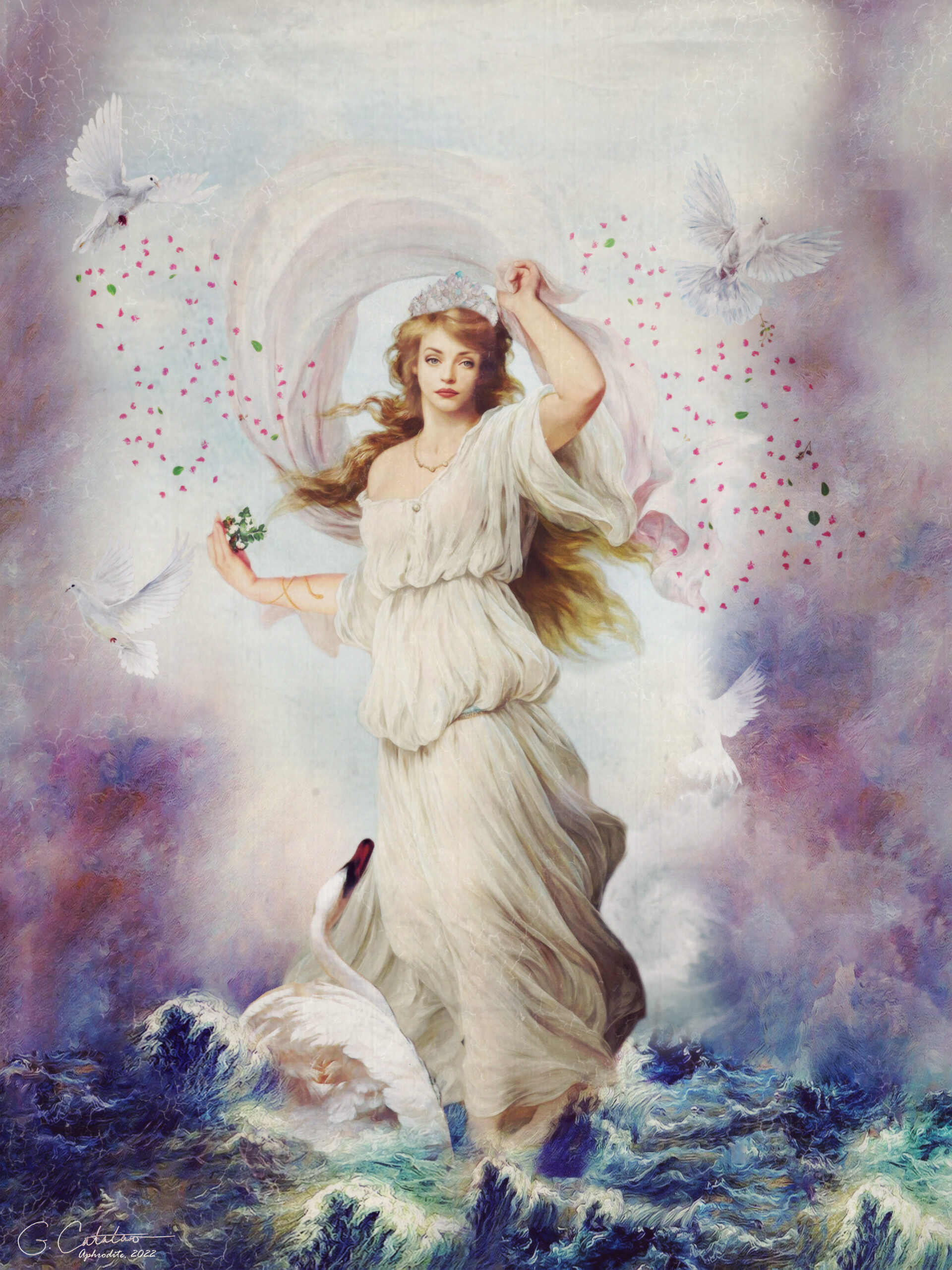
Aphrodite by Genevra Catalano (2022)
AN EPICUREAN HYMN TO HĒDONḖ
PLEASURESS Blessed, PLEASURESS Incorruptible, to this, truly, we
are disposed, testimony, both liberating and therepeutic;
Oh, Queen, because of your divine image, the good life was disclosed,
flavor, fragrance, radiance, warmth, oh, Goddess Fruitful,
and the immortal good of friendship, oh, Mother Bountiful;
PLEASURESS of the GARDENS, prudent, principled, peaceable,
All-Mother, Source-of-all, and End-of-all,
Common-to-All, Motivating, Smile-Loving, Nurse of Love,
Faithful, Fearless, Beloved, Nourishing PLEASURESS;
Hear me, LEADERESS: permit, then, immaculate painlessness,
peace, and, Goddess, also, immaculate impassiveness.
Ἡδονή μακαρία Ἡδονή ἀφθαρτε τήνδε τοι ἡμεῖς
μαρτυρίαν τιθέμεσθα λυτήριον ἠδὲ θερᾰπευτικήν·
ὦ βᾰσῐ́λῐσσᾰ διὰ σὴν εἰκόνᾰ θεία ἐφάνη τὸν ᾰ̓γᾰθόν βῐ́ον
γεῦσῐς εὐωδία καλή θέρμη ὦ θεὰ πολῠ́φορβος
καὶ ᾱ̓θανᾰ́τη ᾰ̓γαθή φῐλῐ́ας ὦ μήτηρ καρποφορος·
Ἡδονή ἐν κήποις φρόνιμη καλή δῐκαία
Παντογένεθλ’ ἀρχὴ πάντων πάντων τε τέλᾱ
Ποθεινοτάτη φιλομμειδής ἐρωτοτρόφος Πάνδημον
πῐστή ἄφοβε φῐ́λῐε φυτάλιε Ἡδονή·
κλῦθί μευ ἡγεμόνη δίδου δ’ ᾰ̓τᾰρᾰξῐ́ᾱν ἄμεμπτον
εἰρήνην τε θεὰν καὶ πλούτου ἀπονῐ́ᾱν ἄμεμπτον.
Hēdonḗ makaría, Hēdonḗ áphtharte, tḗnde toi ēmeîs
martyrían tithémestha lūtḗrion ḗdè therapeutiiḗn.
ṓ Basílissa dià sḗn eikóna theía ephánē tòn agathón bíon,
geûsis euōdía kalḗ thérmē, ṓ theà polýphorbos,
kaì athanátē ágathḗ philías ṓ mḗtēr karpophóros.
Hēdonḗ èn Kēpois, Phrónimē, Kalḗ, Dikaía,
pantogénethl’ árkhē pántōn, pántōn te teleutḗ,
Pándēmon Potheinotátē Philommeidḗs Erōtotróphos,
Pistḗ Áphobe Phílie Phytálie Hēdonḗ;
klythí meu Hēgemónē dídou d’ aponían ámempton
eìrḗnēn te theàn kaì ploútou ataraxían ámempton.
(translations by N. H. Bartman)
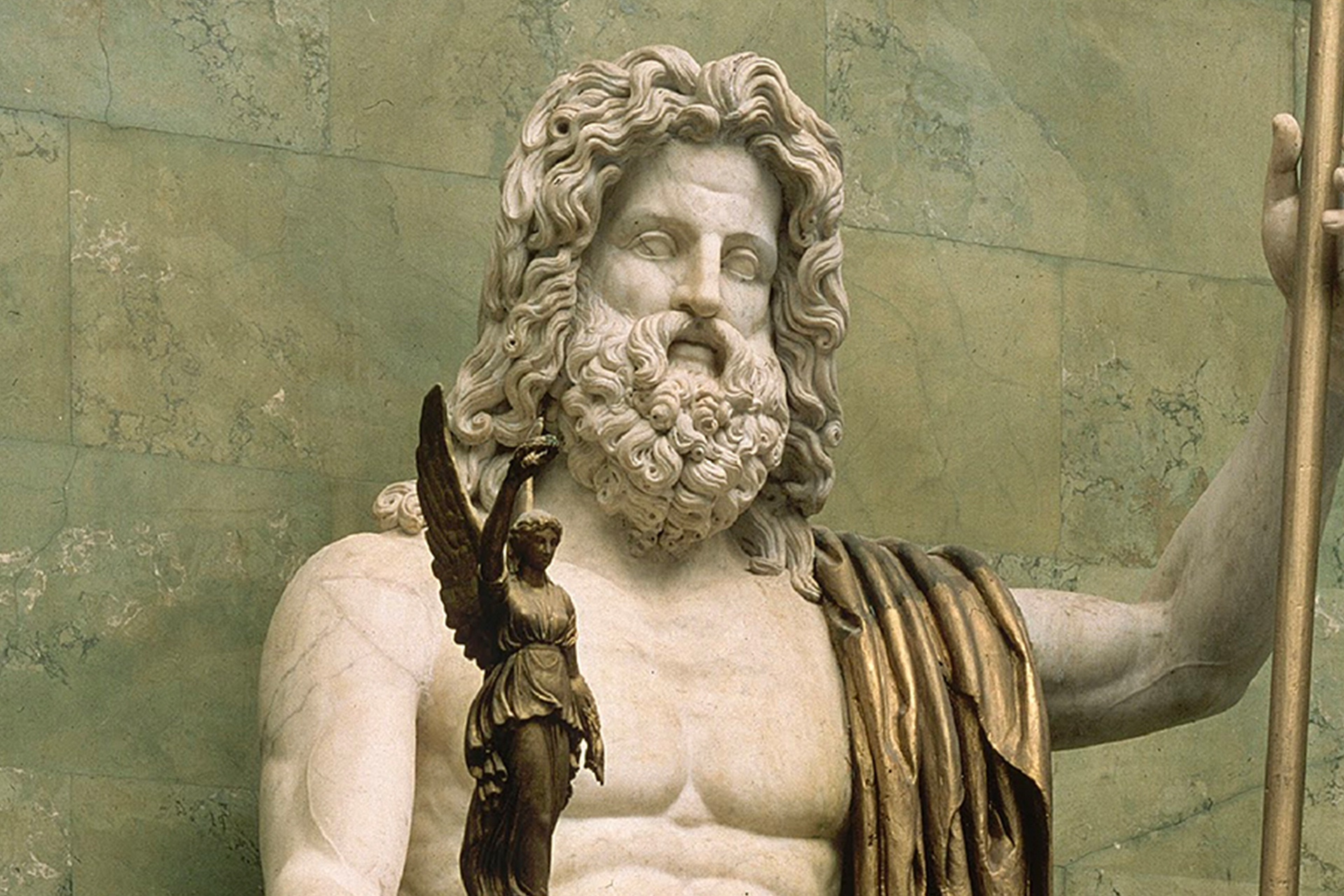
ORPHIC HYMN 15 (TO ZEUS)
Zeus invaluable, Zeus imperishable, here, you see, we [bear]
testimony: you [are] to be reverred, delivering and pre-eminent.
Oh, King — by your lead it was revealed on this account, divine,
Earth, Goddess, Mother, mountains and resounding cliffs,
both sea and all, as high as heaven, positioned within,
Zeus Timekeeper, sceptered, thundering, wild,
All-Generator, beginning of all, and end of all,
Earthquaker, Increaser, Purifyer, All-Shaker,
Flashing, Thundering, Electrifying, Nourishing Zeus;
Hear me, One-of-Changing-Form, permit, then, immaculate health,
and peace, Goddess, and immaculate magnificence of wealth.
Ζεῦ πολυτίμητε, Ζεῦ ἄφθιτε, τήνδε τοι ἡμεῖς
μαρτυρίαν τιθέμεσθα λυτήριον ἠδὲ πρόσευξιν.
ὦ βασιλεῦ, διὰ σὴν κεφαλὴν ἐφάνη τάδε θείᾱς,
γαῖα θεὰ μήτηρ ὀρέουσᾰ θ’ ὑψηχέες ὄχθοι,
καὶ πόντος καὶ πάνθ’, ὁπόσ’ οὐρανὸς ἐντὸς ἔταξε
Ζεῦ Κρόνιε, σκηπτοῦχε, καταιβάτα, ὀμβριμόθυμε,
παντογένεθλ’, ἀρχὴ πάντων, πάντων τε τελευτή,
σεισίχθων, αὐξητά, καθάρσιε, παντοτινάκτα,
ἀστραπαῖε, βρονταῖε, κεραύνιε, φυτάλιε Ζεῦ ·
κλῦθί μευ, αἰολόμορφε, δίδου δ’ ὑγίειαν ἀμεμφῆ
εἰρήνην τε θεὰν καὶ πλούτου δόξαν ἄμεμπτον.
Zeú polytímēte, Zeú áphthite, tḗnde toi ēmeîs
martyrían tithémestha lytḗrion ḗdè próseuxin.
ṓ basileû, dià sḗn kephalēn ephánē táde theías ,
gaîa theà mḗtēr oréousa th’ hypsēkhées ókhthoi,
kaí póntos kaí pánth’, opós’ oúranòs éntos étaxe
Zeú Krónie, skēptoúkhe, kataibáta, ombrimóthyme,
pantogénethl’, árkhē pántōn, pántōn te teleutḗ,
seisíkhthōn, auzēntá, kathársie, pantotinákta,
ástrapaeîe, brontaèe, keraünie, phytálie Zeú;
klythí meu, aìolómorphe, dídou d’ ygíeian ámemphē
eìrḗnēn te theàn kaì ploútou dóxan ámempton.
(translations by N. H. Bartman)