Author Archives: Hiram

About Hiram

Hiram is an author from the north side of Chicago who has written for The Humanist, Infidels, Occupy, and many other publications. He blogs at The Autarkist and is the author of Tending the Epicurean Garden (Humanist Press, 2014), How to Live a Good Life (Penguin Random House, 2020) and Epicurus of Samos – His Philosophy and Life: All the principal Classical texts Compiled and Introduced by Hiram Crespo (Ukemi Audiobooks, 2020). He earned a BA in Interdisciplinary Studies from NEIU.

Our Hegemon

20120828_epicurus


Honoring a sage is itself a great good to the one who honors. – Vatican Sayings

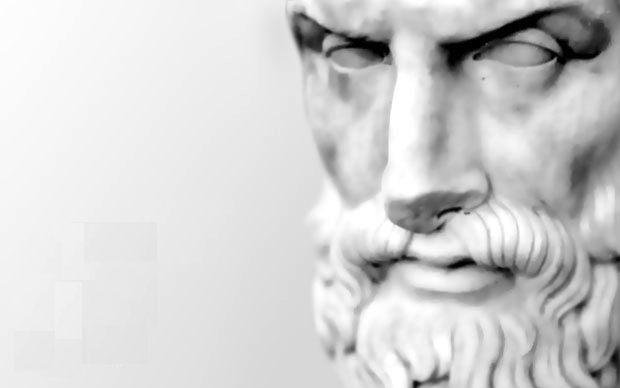
Epicurus of Samos, our cheerful Hegemon (Leader) whose name means Ally or Friend, was born in the Greek city of Samos and lived between the years 341 and 270 Before Common Era.  During his life, he founded a noble philosophical tradition that bears his name, the details of which you will find in these pages.

Epicurus is truly a spiritual Ally to all humanists who seek to apply philosophy and science to the pursuit of wisdom and happiness.  2,300 years ago, he was among the first to propose the idea of the atom, he recommended wholesome association, favored science over superstition, taught a temperate form of hedonism where desires were to be kept under control, and brought the treasure of his science of happiness to thousands of followers who honored him as their founding hero who liberated them from false idols and from ignorance.

His schools, known as Gardens, were oases of cultivation, learning and serenity that flourished for over 700 years.  After the calamities of the Dark Ages, the philosophy flourished again during the Renaissance and influenced enlightenment thinkers.  Centuries later, Thomas Jefferson declared himself an Epicurean, left the fingerprints of the philosophy in the Declaration of Independence, and even cultivated his own Garden.

Recent translations of papyri near Pompeii written by ancient Roman teachers, as well as the current trend away from organized religion, have renewed interest in the philosophy.  Contemporary Epicureans exist in many countries.  The Society of Friends of Epicurus continues the teaching mission of the Gardens and seeks to experiment with replicating the ancient practice of Epicureanism and to update it in light of centuries of philosophical discourse and scientific insight.

In a world filled with anxiety and frivolous instant gratification, the simple life of an Epicurean is not for everyone.  If you feel inspired to benefit from these teachings, welcome home!  Count yourself among the Friends!

INTERNATIONAL SOCIETY OF FRIENDS OF EPICURUS

Ataraxia

Having imbibed the flavor of solitude and the flavor of tranquility, one becomes free from fear and free from evil, drinking the juice of delight in Truth. – Dhammapada 15:9

Ataraxia is the Greek word for equanimity, sometimes translated as imperturbability.  It generally translates as tranquility, serenity, or peace. The entire system of Epicurus‘ teachings is meant to cultivate a state of abiding pleasure which includes ataraxia. This makes perturbation (defined as mental disquiet, disturbance, or agitation) the enemy of the philosopher.

Like Buddha’s doctrines about nirvana, ataraxia requires the extinction of desires, to reach a sated state of not-wanting, not-hungering, a state of satisfaction.  However, Epicurus distinguished between the necessary and the unnecessary desires, and concluded that since we cannot escape certain needs (such as shelter or food), that the wise man should attend to those needs and dismiss the unnecessary and vain desires.  He also pointed to the fact that these needs are easy to procure.

Our longing, our craving, our thirsting for something other than Reality is what dissatisfies us. – Steve Hagen

Desires are like fire.  When fed, they get stronger and they want more.  When we indulge in them, we find that they increase over time instead of going away.  They can also become addictive and enslave us.  Research indicates that sugar is as addictive as any other drug and that when people fall in love, the brain operates as if addicted to another person.  We can easily become dependent on external factors and must therefore be watchful of our minds.

Ataraxia is satisfaction with life as it is here and now, not seeking its perfection but accepting its limitations and never minding them.  It’s the mental aboveness of one who’s learned to be happy and to live in a pleasant state always, regardless of conditions.  Ataraxia is taking pleasure in living.

Although it’s defined in negative terms (as non-perturbance), Epicurus–who called mortals to constant pleasures–maintained that the sage could train himself to experience more or less constant pleasure, and insisted that ataraxia is a mindful, positive state of peaceful abiding which can be cultivated through certain disciplines, including the cultivation of deep gratitude to life, to nature, to one’s teachers and ancestors, etc.

Recollection and Oblivion

Unlike Cyrenaic hedonists, who taught that bodily pleasures are superior to mental ones, Epicurus taught that they are equally valid, except that mental pleasures and pains could be experienced over the long-term. As a result of this, remembering past pleasures, anticipating future ones, and other techniques of abiding in pleasure were accepted as part of the hedonic regimen of an Epicurean.

One of the remedies that Epicurus employed was recollection, which must hold hands with oblivion.  He recognized that we are all selective in our memory, that impressions of past pleasures stay in the mind and can be evoked easily. This includes fond memories of laughter and play with friends, of the affection of loved ones, of happy songs, funny situations, and silly people.

Epicurus in his death bed, on his last day on Earth and while experiencing great physical pain, wrote an epistle to a friend where he confessed how happy he was to reminisce about their time together. Being able to easily ignore pain and to evoke and hold pleasant recollections is an art that can be learned.

The ingratitude of the soul makes a creature greedy for endless variation in its way of life. – Vatican Saying 69

Equally important is thankfulness, which might be seen as a form of recollection of the good things that we sometimes take for granted. Sincere gratitude is an act of instant awakening which changes any situation into a positive one. There are studies that suggest a clear positive correlation between gratitude and happiness.

Recollection should be balanced with oblivion: the blessed ability to forget unpleasant situations and people. Loved ones who pass away or move on, should be let go after our initial mourning.  This is healing after the trauma of death or separation. Sad or difficult situation should also be let go. A philosopher must learn the art of dismissal, along with the art of recollection.

When a loved one dies or when we’ve been wronged, we often tell ourselves we’ll never forget. But do we really want to never forget? Do we really wish to live our short years regretting what could have been, or nurturing our grief and hatred? Is it intelligent to make ourselves miserable while living in the past, haunted by memories while being inexorably swallowed by Time? That is a choice we have to make frequently.

The value of forgetfulness is one of the most important principles in the science of happiness. The inability to let go is sometimes a disease that should be treated like an enemy who has wronged us for years.

If by bad habit our minds frequently evoke a memory or an experience of anger, fear or other negative experiences, one technique is to choose a word that we can train ourselves to use to instantly dismiss them. Buddhists do this with the word neti, which translates as ‘not this’, or ‘not now’. In Epicurean parlance, these techniques are known as remedies (from the Greek, pharmakon).

There is a reason why nature has stipulated that we must have a cycle of sleep and wakefulness. The mind needs to reboot, recharge, and begin again. Otherwise, it gets saturated with experience and we’re exhausted. Thankfully every morning, we live again, and we have this choice to recollect and forget at every moment.

INTERNATIONAL SOCIETY OF FRIENDS OF EPICURUS


The Three Goods

In philosophical and ethical parlance, a good is that which should be sought for its own sake, a thing of intrinsic value.  Virtues, such as honesty, justice, liberty, are goods.  In Epicurean teaching, there are three main goods out of which all other virtues flow.

Friendship

Of all the means to insure happiness throughout the whole life, by far the most important is the acquisition of friends. – Epicurus

Epicurus saw friendship as the most important ingredient for happiness and as a type of insurance against life’s difficulties.

It is not so much our friends’ help that helps us as the confident knowledge that they will help us – Sayings, 34

It’s clear that there is mutual benefit in friendship.  But association is more than I’ll scratch your back, you’ll scratch mine.  We become who we are, develop an identity, through socializing. Association is one of the most fundamental experiences for humans: we acquire even the most subtle of influences from our associations. From our accent and our patterns of speech and the things that we pay importance to, to our values and our attitudes in life: association is the forge in which our personalities evolve.

Discerning between wholesome and bad associations is a basic task of every philosopher.  No person of wisdom wishes to waste time with fools who are frivolous, except perhaps in the case of souls who are awakening to more mature ways of thinking and living.

It’s impossible to replicate ancient Epicureanism without engaging our friends in philosophical discourse: by blending the analysed life with the ideal of friendship, we are properly practicing Epicureanism. While writing about ancient Epicureans, Norman Dewitt mentioned that they employed a system of mutual correction by which they were able to apply the teachings.

The Society of Friends of Epicurus was founded with the vision of becoming an ongoing attempt at experimenting with recreating Epicurean friendships and communities.  It’s not difficult to imagine that the teaching on Death is nothing to us would have been experienced as a warm consolation when imparted within the context of a loving community of friends.  This is a quite different experience from the cold, calculated doctrine that one would encounter in academia.  The embrace of a friend transforms a doctrine into an experience of human empathy, love, phylia, which Dewitt in fact identified as the fuel on which the Epicurean tradition runs.  For this reason, I believe that it’s impossible to truly replicate the practice of Epicureanism, as it was lived in antiquity, without a Society of Friends.

But even beyond the context of practicing philosophy, there are numerous studies that demonstrate the positive effects that good friends have on well-being, happiness, safety and security.  We’re able to be ourselves, we gain confidence, we’re better able to laugh at life and at ourselves, we laugh more, we feel stronger, our enjoyment of pleasures is increased and our ability to tackle difficulties is enhanced with the help of friends.

Analysed Life

An Epicurean is a pragmatist who doesn’t practice philosophy for its own sake, regardless of how valuable, noble, and esteemed wisdom may inherently be, but as a means in the pursuit of happiness, and ergo must develop a firm resolution to be happy and discipline his own mind.

Let us completely rid ourselves of our bad habits as if they were evil men who have done us long and grievous harm. – Sayings, 46

Happiness is an art and a science. Today, we know how the brain works when happy or stressed, what foods contain the tryptophan that synthesizes into serotonin, the chemical of happiness. There is a burgeoning science of happiness. There are specific and useful methodologies, both philosophical and empirical, that can make one a happier person, some of which require consistency and discipline.  We can apply a scientific approach to them and figure out which ones work for us.

There is no expectation of happiness without an analysed life. Certainly, an Epicurean must be at least introspective enough to study his or her desires, dismissing many of them as incompatible with happiness and imperturbability.

We’re never called on to do what hurts.  We just do what hurts out of ignorance and habit.  Once we see what we’re doing, we can stop.

– Steve Hagen

All this inner work requires a firm resolution and conviction. So does the cultivation of wholesome friends, the attainment of autonomy, and many of the other psychological and social tasks assigned by Epicurus, which together constitute a complete program for well-being.

A person who has not made the resolution to be happy will be dragged like a pebble in the river by wasteful distractions, hatreds, capricious and mindless desires, and a general lack of discipline. He may encounter moments of joy here and there, but many of these joys will be mindless, gone before he can relish them, and without the conviction and the means he may lack the tools to deal with life’s baggage. If it’s hard for even many mindful people to be happy, for mindless and thankless people it’s entirely unexpected.

The mindless will sometimes drown in even the vainest of unnecessary suffering whereas the mindful will avoid unnecessary suffering, and otherwise accept with humility and wisdom the limitations imposed by nature.

Autarchy

Self-government, independence, and autonomy, and the liberty that comes with them, are the third good. This autarchy is not just fiscal and monetary, but also emotional and mental. Emancipating ourselves from the misery of unnecessary and capricious wants is a form of autarchy.

In antiquity, Epicurus devised the method of living in a commune known as the Garden.  In it, they enjoyed cultivating the Garden not just for pleasure, but also for food.  The scribes that worked in the Garden lived off of the fees from their work replicating the scrolls and educational material they produced, and from fees paid from lecturing and teaching.  Any business in which we find pleasure and affords us with sustainability would constitute a modern Garden.  Epicurus favored self-sufficiency and self-employment over wage slavery.

Something must be said here about Epicurean politics.  Although Epicurus advised his followers to avoid politics, clearly the act of not participating in the dominant culture’s schemes is a political, even a subversive, act.

One thread that is noticed throughout the tradition of philosophical materialism is the concern with human relations between equals.  We see it in Marx, who wrote his dissertation on Epicurus’ materialism, and we see it in Sartre whose existentialist theory evolved into a Marxist theory of inter-subjective (rather than subject-object) relations not based on domination.

The ideal model for human interaction for Epicurus is friendship, which again is an inter-subjective, egalitarian model.  It’s interpersonal rather than a subject-object model.  His Garden was known to be a place where women and even slaves engaged in philosophical discourse with men as equals, a tradition so progressive in its day that it was deemed scandalous.  Here, we can see how liberated, how removed from cultural consensus Epicurus was, and we can see the fruits of this emancipation.

A free person is unable to acquire great wealth because that is not easily achieved without enslavement to the masses or to the powers that be. Instead, he already has everything he needs, and in abundance. But if by chance he should have great wealth, he could easily share it with his fellows to win their goodwill. – Sayings, 65

Epicureanism is apolitical in order to preserve ataraxia, but it’s also profoundly subversive and political when we consider the implications of autarchy, which is often contrasted to anarchy as a more analysed and balanced alternative.  Self-sufficiency and autonomy of the individual can only lead to liberty and an ethical system that places full responsibility on each person and promotes cooperation among fully sovereign individuals rather than dependence or domination.


Epicurean texts

Whereas other pursuits yield their fruit only to those who have practiced them to perfection, in the love and practice of wisdom knowledge is accompanied by delight; for here enjoying comes along with learning, not afterward.” – Epicurus, Vatican Saying 27

One of the issues faced by those interested in Epicureanism, as is the case with any other philosophical or spiritual tradition, is the amount of misinformation and misconceptions that we will encounter when we seek to learn more. The best way to avoid this trap is to consult the source material: the surviving writings of the Epicureans themselves. The overall goal of what follows is to give beginners and more advanced Epicurean aspirants free online access to the writings of the historical Epicureans.

There are 4 direct sources of Epicurean literature accessible to us:

  • The surviving letters and maxims of Epicurus (and other Kathegemones).
  • The De Rerum Natura of Lucretius
  • The Herculaneum Library mostly consisting of the writings of Philodemus
  • The wall inscription of Diogenes of Oinoanda

To these sources we can add countless testimonies from antiquity whose reliability is of varying quality. We will divide this overview of Epicurean writings into two parts:

  1. The Pragmateia: the direct writings of the Epicureans
  2. Testimonies: indirect writings informing us of the Epicureans, their ideas and their lives from antiquity.

I. THE PRAGMATEIA

The Pragmateia (practices, applications) refers to the foundational writings of the ancient Epicureans, those of the Kathegemones, the four founders of the Epicurean school: Epicurus, Metrodorus, Hermarchus and Polyaenus. These writings were considered authoritative by generations of Epicureans and were read, studied and commented on for many centuries.

The term Pragmateia comes to us from Philodemus. Unfortunately almost all of these writings have been lost through the ages. For example, of the approximately 300 scrolls written by Epicurus, only three letters remain, as well as a certain amount of maxims and quotations from ancient authors. Even less remains from Metrodorus, Hermarchus and Polyaenus. Fortunately, thanks to the writings of Lucretius, the Herculaneum library and the wall inscription of Diogenes of Oinoanda, we can reconstruct a new Pragmateia for those who want to live as Epicureans in the 21st century.

Letters and Maxims

Of the original Pragmateia, three letters survive; the Letter to Herodotus, the Letter to Pythocles and the Letter to Menoeceus. We also have the Kyria Doxai, the Principal Doctrines, which contain 40 maxims summing up Epicurean ethical philosophy. These writings are embedded in Lives and Opinions of Eminent Philosophers of the 3rd century CE biographer Diogenes Laertius. The 10th book of this collection of biographical content, anecdotes and philosophical doctrines is dedicated to Epicurus.

The other direct work that survives from the original Pragmateia is the Epicurean Sayings, more commonly known as the Vatican Sayings because of the fact that it was discovered in a manuscript found in the Vatican Library. The Vatican sayings contain 81 quotes from Epicurus and other Epicureans founders such as Metrodorus, and some of them overlap with the Principal Doctrines. To this we can add Epicurus’ deathbed letter to Idomeneus and Epicurus’ final will, which is important in that it established Epicurean rituals, especially Eikas, the celebration of the Twentieth.

– Ethical writings

The Letter to Menoeceus is probably the easiest introduction to any aspiring Epicurean to the philosophy. It is a short summary of Epicurus’ ethical doctrines and gives a brief outline on the practices to follow in order to live a good life. It deals with subjects such as our attitude towards the divine, the fear of death, pleasure, choices and avoidances, the virtues, and many other topics.

Read Letter to Menoeceus

The next important ethical work is the Principal Doctrines. This list of 40 sayings gives us a general overview of Epicurean ethical doctrines and adds to the content of the Letter to Meoneceus with topics such as friendship, society and justice. It serves as a summary of Epicurus’ ethical system.

Read Principal Doctrines

The founder of the Society of Friends of Epicurus, Hiram Crespo, put together a helpful study guide to the Principal Doctrines here.

Finally we have the Vatican Sayings, which can be seen as complementing the Principal Doctrines with wisdom teachings covering various topics.

Read Vatican Sayings

It is strongly recommended that a student of Epicurean philosophy read these main teachings over and over again. Ideally, Epicurus wanted his followers to learn the content by heart. The more you read their content, which seems simple at first, the more you will discover new layers of meaning you haven’t seen before. And while it is important to also read and study the other Epicurean writings, these are the ones you want to keep returning to and keep close to your heart.

– Letters on Physics

Two letters on Epicurean physics, in other words Epicurus’ view of the universe, have been preserved. While the content of these letters may seem dry and outdated to the modern reader, it is important to keep in mind the purpose of Epicurean scientific inquiry: learn about the world around us to better overcome our fears and understand our place in it. This is the foundation upon which we can confront fears caused by religion, superstition, our mortality, and more. By studying Epicurean physics, we can better grasp the ethics. Once we understand Epicurean physics, we can update many of the ideas: Epicurean theories of natural selection can be replaced by Darwin’s theory of evolution, ancient atomism can be replaced by the Standard Model of particle physics, old theories of the soul can be replaced by neuroscience, and so on.

The first and most important of these writings is the Letter to Herodotus, a general introduction and summary of Epicurean physics.

Read the Letter to Herodotus

The second writing is the Letter to Pythocles, which introduces us to the Method of Multiple Explanations, an Epicurean method which consists in accepting multiple hypotheses as possible when confronted with an unexplained phenomenon rather than settling on a single explanation.

Read the Letter to Pythocles

Society of Friends of Epicurus founder Hiram Crespo elaborates on the Method of Multiple Explanations here.

For the real nerds among us, watch scholar Voula Tsouna’s presentation on the subject here.

– Epicurus’ Legacy

On his deathbed, Epicurus wrote this letter to his friend Idomeneus:

On this blissful day, which is also the last of my life, I write this to you. My continual sufferings from strangury and dysentery are so great that nothing could increase them; but I set above them all the gladness of mind at the memory of our past conversations. But I would have you, as becomes your lifelong attitude to me and to philosophy, watch over the children of Metrodorus.

In this letter we see Epicurus’ gratitude towards his friends but also his devotion towards his community, in this case the children of his dead friend Metrodorus.

The other important document preserved is Epicurus’ Last Will, which is relevant to us because it mentions ritual celebrations that would define the identity of the Epicurean community: the celebration of Epicurus’ birthday, funerary rituals for his family, a day dedicated to his brothers, another day dedicated to his friend Polyaenus and most importantly, the celebration on the 20th of every month dedicated to Epicurus and his best friend Metrodorus known as Eikas and practiced by many Epicureans today.

Read Epicurus’ Last Will

De Rerum Natura by Lucretius

Lucretius was a Roman Poet from the 1st century BCE and a follower of Epicurean philosophy. Almost nothing is known about his life other than the fact that he wrote the Latin poem of six parts in Homeric verse known as De Rerum Natura, On the Nature of Things. The reason for writing this text in poetic verse was to give an esthetic appeal to what could otherwise be a dry subject: Epicurean physics. The artistic value of the text led to it being preserved throughout the Medieval period and rediscovered during the Renaissance.

Even though De Rerum Natura focuses on ancient atomistic theories (and can complement Epicurus’ Letters to Herodotus and Pythocles), there are many references to existential and ethical topics such as free will, the fear of death, the blinding nature of love, lust for power, the simple life, the social contract, religion and much more.

There are multiple translations of Lucretius in English and many of the ones you will find online are very old and hard to read for a modern audience. For this reason we recommend these two modern translations here and here.

Also, we recommend you consult this helpful study guide of De Rerum Natura put together by Hiram Crespo here.

Philodemus and the Herculaneum Library

The Herculaneum library was discovered in the ruins of the ancient city of Herculaneum which had been destroyed by the eruption of Mt Vesuvius in 79 CE, the same disaster that devastated Pompeii. This library was part of a villa which belonged to Piso, the father-in-law of Julius Caesar, who was a patron of the 1st century BCE Epicurean philosopher Philodemus. The contents of the library, over 1,800 papyrus scrolls, were carbonized due to the heat of the eruption, which at the same time paradoxically preserved them, even if in poor condition and therefore hard to unroll and decipher. However, thanks to modern imaging technology, it has become easier to decipher and reconstruct much of the content of the scrolls, leading to new research and publication of Epicurean content which has revolutionized our understanding of Epicurean philosophy. Most of the surviving writings belong to the 1st century BCE philosopher Philodemus.

While it is impossible to find much of the writings of Philodemus online, Hiram Crespo wrote summaries of many of his surviving works.

Read the summaries of the Herculaneum Library

We also recommend this introduction to Philodemus and his ideas by scholar Sonya Wurster and an article she wrote about how the discovery of the Herculaneum Library changed our understanding of Epicurean philosophy.

Those who wish to explore further can read the following ethical works of Philodemus published by the Society of Biblical Literature: On Frank Criticism, On Death, On Property Management and On Anger. Published by Bibliopolis: On Choices and Avoidances and On Methods of Inference. Also consult The Ethics of Philodemus by scholar Voula Tsouna, published by Oxford University Press. You can read a review of this last book by Hiram Crespo here:

Diogenes of Oinoanda’s wall inscription

An Epicurean wall inscription was built by Diogenes of Oinoanda, a wealthy philanthropist from the city of Oinoanda, province of Lycia (today Turkey), then part of the Roman Empire. It is believed that the construction of the wall dates back to the 2nd century CE. On this wall, located in the portico of the ancient city, are engraved several Epicurean philosophical texts. While the fragments of these texts were fragmentary, much of its content has been reconstructed by the efforts of scholars.

Diogenes of Oinoanda’s wall inscription was published by Bibliopolis (under the titles The Epicurean Inscription and Supplement to Diogenes of Oinoanda The Epicurean Inscription), but is quite pricey. However, you can read a free online version here, and more recently discovered fragments of the wall inscription here.

Documentary dedicated to Diogenes’ Wall

II. TESTIMONIES

Other than the direct writings of Epicurus and his followers over many centuries, we have many ancient writers who were more or less sympathetic, hostile or neutral towards Epicureanism who provide us with valuable information on the philosophy and lives of the Epicureans. These testimonies exist in the form of direct and indirect quotes from Epicurus and members of his school, summaries and references to many of their ideas, biographies, letters, epitaphs, inscriptions and more. Much of this information must be approached with caution because they may come from hostile sources or lack context. However, if used correctly, these sources can help give us a more complete picture of the ideas and lives of those who followed the Epicurean tradition in antiquity and those who would like to live by these principles today.

Diogenes Laertius’ Life of Epicurus

Diogenes Laertius is a 3rd century CE biographer who wrote Lives and Opinions of Eminent Philosophers. He was an admirer of Epicurus and dedicated the last book of his long sequence of biographies to Epicurus. While he is mostly credited with preserving Epicurus’ letters and Principal Doctrines, he also provides us with valuable biographical information on Epicurus and his followers.

Read the Life of Epicurus

Usener’s Epicurea

Hermann Usener was a 19th century German scholar who specialized in philology and comparative religion. Most relevant to us, he organized and published a compilation of ancient sources dedicated to Epicurus called Epicurea. While many of the quotes included are from hostile sources, there is also much useful content, including direct quotes from lost works of Epicurus.

Read an English translation of Epicurea here:

Cicero’s testimony

The 1st century BCE Roman statesman and philosopher Cicero was no friend of Epicureanism and is often very critical. However, his relationship with Epicureanism is very complex. He studied under Epicurean teachers and there were many Epicureans in his circle with whom he was on good terms, including his best friend Atticus. Some of his works include presentations of Epicurean philosophy that are valued by scholars and their content was informed by Epicurean works that are no longer available to us. While often unfair, he does give Epicureans a voice through characters in his philosophical dialogues.

  • The Epicurean character Torquatus discusses pleasure, virtue and friendship in De finibus bonorum et malorum, On Moral Ends. Read the passage here.
  • The Epicurean character Velleius discusses the gods in De Natura Deorum, On the Gods. Read the passage here.

Of historical interest, Cicero exchanges letters with the Roman politician Gaius Cassius Longinus, one of Caesar’s assassins, who was an Epicurean. They make references to Epicurus in some of the letters. Read the letters here.

Cornelius Nepos’ testimony

This biography is that of Cicero’s Epicurean friend, Atticus.
Read here.

Philodemus’ Epigrams

The Epicurean philosopher Philodemus wrote poetry, including short entertaining poems called Epigrams. While most of these poems have little to do with Epicureanism, some of them make references to the Epicurean celebration on the Twentieth of the month known as Eikas and discuss what the diner tables looked like during these events, which is of historical significance to us. Read Philodemus’ Epigrams here.

Seneca’s testimony

The Stoic philosopher and statesman Seneca describes a visit to his dying friend Aufidius Bassus, an Epicurean, in his Letters to Lucilius and they have a philosophical discussion on suffering and death. Read the letter here.

Empress Pompeia Plotina and priest Aurelius Belius Philippus

This article quotes and comments on an inscription by Empress Pompeia Plotina, wife of Emperor Trajan and supporter of his successor Hadrian, where she exchanges with the Epicurean community in Athens. She was an ally and possibly member of that community. Also quoted is a dedication honoring a priest of the Syrian god Bel, Aurelius Belius Philippus, who was also the leader of the local Epicurean community. Read the article here.

Learn more about Empress Plotina

Regarding Aurelius Belius Philippus, some of you might be wondering how an Epicurean can be a priest. Find out here.

Lucian of Samosata’s Alexander the Oracle Monger

The 2nd century CE comical writer Lucian of Samosata writes to his Epicurean friend Celsus and defends the Epicureans of his time against the religious grifter and fraud Alexander.

Read Alexander the Oracle Monger

INTERNATIONAL SOCIETY OF FRIENDS OF EPICURUS


Mission of the Society of Friends of Epicurus

There was a school of philosophy in antiquity, the Skeptics, that postulated that nothing was knowable and that the senses were unreliable.  Its teachings, in view of our modern system of checks and balances and the rigorous empirical and experimental, scientific methods that we apply today in our pursuit of knowledge, seem radical.

While surrounded by people who sought diviners, feared wrathful gods and a hellish afterlife, engaged in animal sacrifice and participated in mystery rites, Epicurus, instead, taught that there are legitimate means of acquiring knowledge. In fact, he considered science as one of the most important endeavors for human civilization and progress.

It is impossible for someone who is completely ignorant about nature to wash away his fears about the most important matters if he retains some suspicions about the myths. So it is impossible to experience undiluted enjoyment without studying what is natural. – 12th Principal Doctrine

Epicurus’ epistemology proposes that Truth is knowable, and that therefore there is such a thing as The Truth, as well as false opinions.  Epicurus also teaches that certainty is desirable and that knowledge of the nature of things can liberate us from wrong views that sometimes generate unnecessary pain, confusion, and anxiety.

In this sense, the Epicurean system is a dogmatic secular philosophy that points the way to the Truth, with a capital T, and that seeks to be a civilizing force that liberates mortals from the shackles of superstition, ignorance, and suffering. It is dogmatic in the philosophical sense: it rejects as false the opinion that truths are unattainable. True ataraxia is impossible without the freedom from superstition that science and philosophy bring.

Epicurean Gardens had teaching missions: scribes there were in constant correspondence with people from all over the Mediterranean and were constantly replicating scrolls and producing educational materials. Epicureanism, with its good news about the science and art of living a pleasant life, is the first and only missionary humanist philosophy that classical Greece gave humanity. According to Norman DeWitt in his Epicurus and his Philosophy, early Epicureans had an “each one teach one” system.

Epicureans are the only humanists who ever sent missionaries to save Middle Easterners from the evils of religion and superstition. Even in the II Century of Common Era, Diogenes of Oenoanda built a wall and wrote an Epicurean Inscription on it so that his entire town would benefit from learning philosophy. In the opening of the inscription, he explains his mission:

… [observing that most people suffer from false notions about things and do not listen to the body] when it brings important and just [accusations] against the soul, alleging that it is unwarrantably mauled and maltreated by the soul and dragged to things which are not necessary (in fact, the wants of the body are small and easy to obtain — and the soul too can live well by sharing in their enjoyment — while those of the soul are both great and difficult to obtain and, besides being of no benefit to our nature, actually involve dangers). So (to reiterate what I was saying) observing that these people are in this predicament, I bewailed their behaviour and wept over the wasting of their lives, and I considered it the responsibility of a good man to give [benevolent] assistance, to the utmost of one’s ability, to those of them who are well-constituted. [This] is the first reason [for the inscription]…

[And I wanted to refute those who accuse natural science of being unable to be of any benefit to us.] In this way, [citizens], even though I am not engaging in public affairs, I say these things through the inscription just as if I were taking action, and in an endeavour to prove that what benefits our nature, namely freedom from disturbance, is identical for one and all.

And so, having described the second reason for the inscription, I now go on to mention my mission and to explain its character and nature.

Having already reached the sunset of my life (being almost on the verge of departure from the world on account of old age), I wanted, before being overtaken by death, to compose a [fine] anthem [to celebrate the] fullness [of pleasure] and so to help now those who are well-constituted. Now, if only one person or two or three or four or five or six or any larger number you choose, sir, provided that it is not very large, were in a bad predicament, I should address them individually and do all in my power to give them the best advice. But, as I have said before, the majority of people suffer from a common disease, as in a plague, with their false notions about things, and their number is increasing (for in mutual emulation they catch the disease from one another, like sheep) moreover, [it is] right to help [also] generations to come (for they too belong to us, though they are still unborn) and, besides, love of humanity prompts us to aid also the foreigners who come here. Now, since the remedies of the inscription reach a larger number of people, I wished to use this stoa to advertise publicly the [medicines] that bring salvation. These medicines we have put [fully] to the test; for we have dispelled the fears [that grip] us without justification, and, as for pains, those that are groundless we have completely excised, while those that are natural we have reduced to an absolute minimum, making their magnitude minute.

… [One thing] only I ask of you: do not, even if [you should be] somewhat indifferent and listless, be [like] passers-by [in your approach] to the writings, [consulting] each [of them] in a patchy fashion and [omitting to read everything] …

Epicurus taught that philosophy that does not heal the soul is no better than medicine that cannot cure the body. Giving people teachings about human happiness and avoidance of suffering is seen as philanthropy. Our teaching mission contends with the accusation, repeated often throughout history, that Epicureanism is a purely self-indulgent philosophy of selfish hedonism. A proper introduction to how Epicureans deal with desires will lay that stereotype to rest. There is a strong element of philanthropy in the Epicurean tradition: we aim to impart Epicurus’ teachings as medicine for the soul.

The mission of the Society of Friends of Epicurus is to be true to the philanthropic spirit of the ancient Gardens: to spread a message that ultimately helps to liberate humanity from ignorance and unnecessary suffering, and to do so by forging with each other friendships that are intellectually vibrant.

We aspire to fully revitalize the Epicurean teaching mission both online and offline, establishing Gardens in every city where there are Epicureans willing to organize; We aspire to embody the ideals of friendship, autarchy, prudence, suavity, and all the other virtues that the ancient Epicureans exemplified, and as other communal needs emerge, we will seek to meet those needs.

In the process of helping pupils to discern between true Epicureanism and the alleged teachings that are attributed by indirect and sometimes hostile sources, we have established a lineage of established teachers, personalities, and thinkers within our tradition. We don’t always agree with all of them, but they are like the constellations that guide our heaven and help us find our way.

    • The pre-Epicurean atomists: Leucippus, who taught Democritus, who taught Nausiphanes
    • The Cyrenaics: Aristippus and Anniceris
    • Epicurus of Samos, who taught Metrodorus, Hermarchus, and Polyaenus: the four founders of our tradition, collectively known as the Men
    • After Hermarchus (the second Hegemon), the Scholarchs were Polystratus, Dionysius, Basileides, Apollodorus
    • Philonides of Laodicea, an Epicurean missionary to Asia
    • Zeno of Sidon and his most renouned student Philodemus of Gadara
    • Titus Lucretius Carus, author of On the Nature of Things
    • Titus Pomponius Atticus was an avowed Epicurean who in the middle of the civil wars was friendly to everyone and was a great example of how to live
    • Lucian of Samosata, a satirist
    • Diogenes of Oenoanda, who erected a wall with inscriptions of our teachings
    • Pierre Gassendi, who attempted to Epicureanize Christianity
    • Frances Wright, author, and her mentor Thomas Jefferson, American founding father
    • Norman Dewitt, author
    • Michel Onfray, French hedonist author, founder of Université de Caen

See also the Honor Roll of Epicureans. Please learn more about Epicurus and his philosophy! Whether you consider yourself an Epicurean or not, you will undoubtedly benefit from his wholesome association through his teaching.

Back to the Main Page


The Four Remedies

It’s generally believed that it was the Epicurean philosopher from Syria Philodemus of Gadara who organized the core of the teachings into the Four Remedies, the Tetrapharmakon in Greek.

There are, to be fair, many more than four remedies in Epicureanism.  However, the Four Remedies are known to be the core of the doctrine:

Do not fear the gods
Do not fear death
What is pleasant is easy to attain
What is painful is easy to endure

In his Principal Doctrines 11-12, Epicurus –who 2,300 years ago was among the first to propose the idea of the atom– argued for the study of science as a way to emancipate ourselves from irrational fears.  For naturalists who don’t believe in gods or spirits, the first two negative statements may be translated as “Do not fear chance or blind luck, for it is pointless to battle that which we have no control over. It generates unnecessary suffering”.

The second remedy is elaborated in a series of teachings and aphorisms which serve as a form of cognitive therapy to deal with the trauma of death.  Among them, the most memorable is the following:

“Death is nothing to us, since when we are, death has not come, and when death has come, we are not”

The latter two positive statements lead to Epicurean teachings on how we should evaluate our desires and discern which ones are unnecessary versus which ones are necessary, which ones carry pain when satisfied or ignored versus which ones don’t. By this process of an analysed life, one learns to be content with the simple pleasures in life, those easiest to attain. The best things in life are free.

“The wealth required by nature is limited and easy to procure; but the wealth required by vain ideals extends to infinity; Do not spoil that which you have by desiring what you have not; remember that what you now have was once among the things you only hoped for.” – Epicurus

One of the first tasks of every convert to Epicureanism is to become mindful of her desires and whatever pain or anxiety they may be generating.  Another task is to learn to relish and appreciate the simple things when they’re in front of us.  The good friends, the good foods and the refreshing beverages, the family, the good music, our proximity to nature, even our view of the sky.  There are so many things we take for granted in our hectic lives, particularly when we live in the city.

As to the Fourth Remedy, Epicurus reminded us of the temporal nature of bodily pain.  We may get a fever, or a stomach ache, but within days our immune system fights it.  In the case of more chronic pains, one gets used to them after some time.  In nature, no condition lasts forever.  The impermanence of all conditions is a consolation when we consider whatever pain they generate.

Then there are mental pains and anxiety.  These are systematically worked through via the cognitive therapy of working with our desires and mindfulness.  The resolution to follow Epicurus is a resolution to protect one’s mind.  It’s impossible to be happy if we can’t control our anger and other strong emotions: we will go from one perturbed state to the next and never taste imperturbability, ataraxia.

One technique to try out is to stop and start again.  If we catch our minds degenerating into negative thought streams, we can try the mantra “Live as if Epicurus was Watching“.  It really does work, if used with intent.  One becomes mindful.  A chilly, snowy winter no longer feels like slush beneath our feet.  Instead we may notice the snowflakes in the distance and the beautiful colors of winter.  Sometimes at my mindful recollection of this mantra, what used to bother me no longer really matters.

A dismissive attitude towards pain takes discipline but it can be cultivated if we are mindful and develop a resolve to protect our minds.

External Links:

Read Death and the Skeptic, an article written by yours truly for The Humanist, a publication of the American Humanist Association, on Epicurean and Buddhist teachings for coping with death