Category Archives: epicurus

Society of Friends of Epicurus (SoFE) Journal Volume 13 – 2018-19

Hiram Crespo
A Concrete Self
February 25, 2018

Various
Dialogue on the Extent to Which the Declaration of Independence is Consistent With Epicurean Philosophy
April 16, 2018

Michel Onfray
A Transcendental Epicureanism
July 6, 2018

Hiram Crespo
Swinish Herds and Pastafarians: Comedy as an Ideological Weapon
September 5, 2018

Hiram Crespo
Book Review of Ontology of Motion
December 9, 2018

Hiram Crespo
Hygge and the Landscape of Pleasure
March 15, 2019

Our Friend Joshua
Hermarchus, Seeing the Bust of Epicurus

Hiram Crespo
Metrodorus’ Epistle to Timocrates
July 11, 2019

Hiram Crespo
In Memory of “The Men”
July 20, 2019

Hiram Crespo
Epicurus’ On Nature, Books I-X , Books XI-XIV, Books XXV and XXVIII
July 25-August 5, 2019

Michele Pinto
Epicurean Festival in Italy
September 26, 2019

Meme Series

Fun Epicurean Willy Wonka & Other Memes

La Mettrie: Against Creationism

The following is a continuation of the book review of Histoire Naturelle de l’Ame, a book published in 1747 by Julien Offray de La Mettrie.

Some passages by La Mettrie remind us of the book Ontology of Motion, which argues that Lucretius accentuated that motion is an attribute of matter.

The most important repercussion of this is that motion is natural and does not require gods, spirits, or animating forces outside of nature: nature is “free of masters”, as Lucretius states.

In La Mettrie, in addition to the essential attributes of matter, there is something he called “la force mortice” (the dynamic force), which is “puissance” (power). In page 9, the relation between force and motion is established. This “puissance motrice de la matière” (mobile power of matter) is in every moving body, and it’s impossible not to conceive of these two attributes: that which moves, that which is moved. As we saw in Ontology of motion, the role that this plays is to abolish all supernatural or superstitious animism, and to replace it with the concept of a mechanical nature that exhibits motion on its own according to natural laws.

Against the Theologians

In Histoire Naturelle de l’Ame, La Mettrie closes by echoing Voltaire, saying that there’s no need to fear that philosophers will harm the religion of a country. No, it is the theologians who wish to preside over sects and political parties.

A hundred treatises on materialism are much less to fear than a merciless Jansenist or an ambitious Pontiff.

Nature has no Purpose

One of the features of the anti-creationist view of nature is that nature is blind, mechanical, that it does not “intend” to make this or that machine, this or that body, this organ or that ecosystem. These things appear as a result of random mutations or events, or of the never-ending dance of particles moving in space and relating to each other, and only once their function serves an advantage, do organisms begin to perfect the use of their organs. This argument was originally found in Lucretius.

Nature is blind, innocent, unaware, and in fact this blindness and innocence is a consolation for death.

Pre-Darwinian Naturalist Reasoning

La Mettrie lived prior to Darwin. His Lucretian argument for how humans emerged from the Earth are, therefore, pre-Darwinian, but based on the reasoning that if humans have not always existed, the Earth must have acted as the uterus of mankind.

Why, I ask you, modern anti-Epicureans, why should the Earth, that mother and nurse of all objects, have refused to animal seeds what she allowed to the meanest, most useless and most harmful vegetables?

Obviously, Darwin made huge contributions to our understanding of the evolution of life, and geneticists after him continued his work. But Lucretius demonstrates that the ancients did have an idea of natural selection, and La Mettrie is again writing a commentary on Lucretian ideas when he says:

Perfection was no more achieved in a day in nature than in art.

Art’s fumblings to imitate nature give us an idea of what nature’s fumblings were like.

The idea is that nature produced many anomalies and mutations. Those that were disadvantageous did not survive to pass on their seed, but those that were advantageous did pass on their seed, and after countless generations this produced beings that were increasingly adapted to their environment.

Man “came after” the beasts because man is more complex, therefore man took more time to make.

The case of mutants prove nature’s absent-mindedness and trial by error: her “innocence”, and her lack of intention and of “final causes”. Nature passed by many combinations before reaching the ones that worked effectively. Nature happens to have made eyes, not intending to, just as water serves as a mirror without intending to. He compares this to a metaphor of how chance on a canvas paints something.

Nature’s creation of eyes and ears follows laws of nature similar to the ones that govern the ebb and flow of the sea.

A Glorious Harbor

La Mettrie was deeply aware that much of what he was writing would be considered practically seditious by the religious authorities of his times, and yet he pressed these issues with zeal. We are reminded of chapter 14 of A Few Days in Athens, which closes with the following conclusion concerning the supposed immorality of atheism, originally believed by the character Theon to be a thought-crime. After explaining that it is no crime to believe with certainty in gods, but that’s it’s unreasonable, Wright’s Epicurus closes:

(Let) this truth remain with you: that an opinion, right or wrong, can never constitute a moral offence, nor be in itself a moral obligation. It may be mistaken; it may involve an absurdity, or a contradiction. It is a truth, or it is an error: it can never be a crime or a virtue.

La Mettrie closes his book by beautifully celebrating the breath of fresh air that intellectuals of his time were enjoying as a result of finally being able to openly discuss the anti-clerical ideas that they were entertaining. The Enlightenment had managed to create a “glorious harbor” for intellectuals, and it’s only here that intellectual life had been able to flourish after centuries under the asphyxiating grip of the clergy:

I salute you, favourable climate where any man who lives like others can think differently from others; where theologians do not act as judges of philosophers, a role of which they are incapable; where the freedom of the mind, humanity’s finest attribute, is not chained by prejudices; where one is not ashamed to say what one does not blush to think; and where there is no risk of becoming a martyr to the doctrine whose apostle one is. I salute you, country already celebrated by philosophers, where all those persecuted by tyranny find (if they are deserving and reputable), not a safe asylum but a glorious harbour; where one feels how far the victories of the mind are above all others; where the philosopher, finally crowned with honours and kindness, is only a monster to the minds of the mindless. May you, oh fortunate land, bloom more and more! May you appreciate your good fortune and make yourself worthy in everything, if possible, of the great man who is your King! Muses, Graces, Cupids and you, wise Minerva, when crowning with the most splendid laurels the august brow of this modern Julian — as worthy of governing, as learned, as clever and as philosophical as the classical one — you are only crowning your own handiwork.

Further Reading:

Book Review of Ontology of Motion

Histoire Naturelle de l’Ame (French Edition)

The Philosophy of Epicurus: Humanism and Science Aiming for Happiness

What follows is the report on the 10th Panhellenic Symposium of Epicurean Philosophy, February 8-9, 2020, Cultural Center of Pallini, Athens, Greece by Dr. Christos Yapijakis.

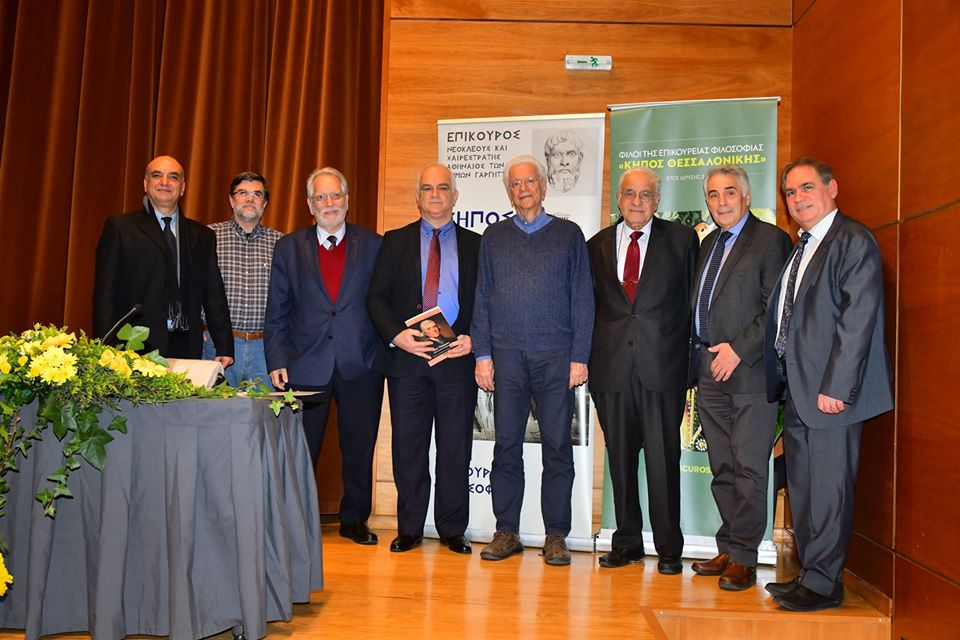
From left to right: Panagiotopoulos (Garden of Athens), Prof. Liolios, Prof. Chrousos, Mayor Zoutsos, Prof. Krimigis, Dr. Simopoulos, Prof. Pelegrinis, Prof. Yapijakis (Garden of Athens)

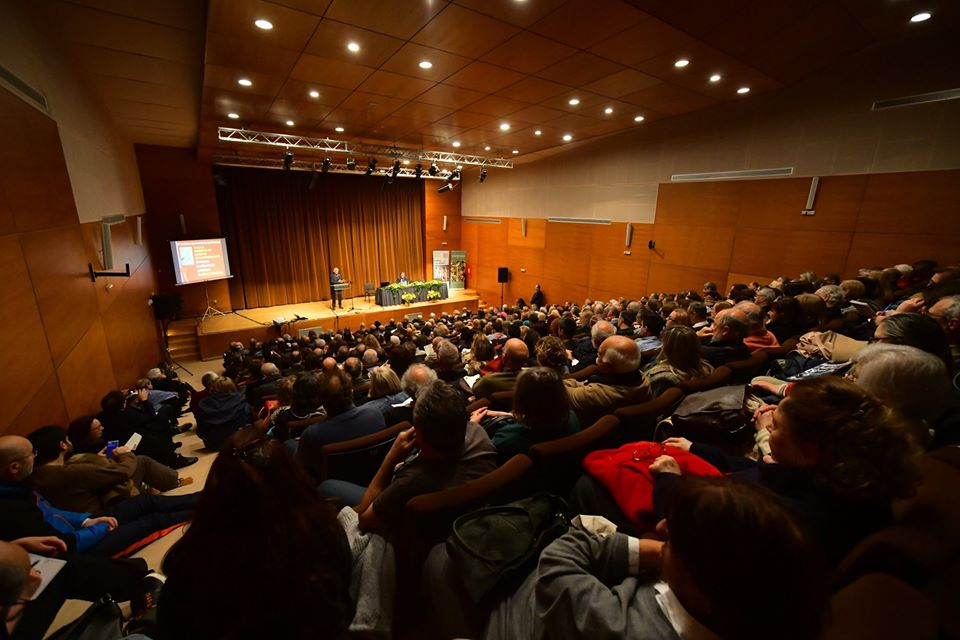
A top-of-the-world cultural event, the 10th Panhellenic Symposium of Epicurean Philosophy took place on the weekend of 8 and 9 February 2020 with the participation of a record number of more than five hundred Greeks inspired by the enlightening and humanistic philosophy of Epicurus. This is a unique philosophical conference, as it is the only one organized worldwide dedicated exclusively to Epicurean philosophy. It is also the largest national philosophical conference and the only one in Greece that has been established since 2011 as an institution from the people rather than from the university philosophers. It is organized annually with free entrance for the public by the Municipality of Pallini and the Friends of Epicurean Philosophy Garden of Athens; and Garden of Salonica; at the Cultural Center of Gerakas, located within the ancient area of ​​Gargettus, from which the philosopher Epicurus originated from.

The commencement of the Symposium was held by the Mayor of Pallini, Athanasios Zoutsos, followed by greetings from friends of Epicurus from all over the world and Greece. In this year’s 10th anniversary Panhellenic Symposium, Epicurus’ timeless contribution to human thought was highlighted by distinguished scientists and philosophers in a roundtable discussion coordinated by Christos Yapijakis, Associate Professor of Medicine at the University of Athens and founding member of the “Garden of Athens”. Theodosis Pelegrinis, Professor of Philosophy and Former Rector of the University of Athens, referred to the humanistic philosophy of Epicurus; George Chrousos Professor of Medicine at the University of Athens, highlighted the Epicurean psychotherapeutic approach to stress management; Evangelos Protopapadakis, Assistant Professor of Philosophy of the University of Athens, discussed Epicurean ethics as based on human biology (bioethics); Anastasios Liolios, Professor of Physics at Aristotle University of Thessaloniki and CERN researcher, presented Epicurean atomic physics as the ancestor of modern particle physics and quantum physics; Dionysis Simopoulos, Director Emeritus of Eugenides Planetarium, discussed the Epicurean perception regarding the existence of many worlds in the universe as confirmed by modern astronomy; Stamatios Krimigis, Professor of Space Physics and renown NASA scientist, described modern exploration of the possible existence of life on other planets, as predicted by Epicurus.

The amphitheater was packed – People sitting on the side stairs

Distinguished members of the “Gardens” made important speeches, among which it is worth mentioning “a new fragment of Diogenes of Oenoanda” by Yannis Avramidis of the Garden of Thessaloniki, and “Epicurean philosophy and nutrition” by Klea Nomikou-Tsantsaridi of the Garden of Athens.

In the artistic part of the Symposium, the presentation of one scene from Christos Yapijakis’ new theatrical play A Happy Greek, regarding Epicurus’ life and work, stood out. Directed by Stavros Spyrakis, the four amateur actors thrilled the audience with their performance and were rewarded by a particularly warm applause.

The 10th Panhellenic Symposium of Epicurean Philosophy has allowed hundreds of Greeks who have a need for learning and a desire for a better world to experience the timeless utility of Epicurean philosophy, which offers a mental shield to putative individual and social deadlocks. The scientific, humanistic and psychotherapeutic message of Epicurus on one hand expresses the simplest and most profound way of approaching a happy life with friendship and solidarity, even in difficult times, and on the other hand it differs fundamentally from the fashionable superficial message of “prosperity” propagated in Greece and internationally.

Dr. Christos Yapijakis, DMD, MS, PhD.
Associate Professor of Genetics

Learn More:

Epicuros.gr

The Epicurean Canon in La Mettrie

The following is part of a book review of Histoire Naturelle de l’Ame by Julien Offray de La Mettrie.

In his Letter to Herodotus, Epicurus establishes the criteria of truth. This criteria are the faculties that nature gave us as a contact with reality: the anticipations (which form as we encounter and memorize sense objects), the five senses, and the pleasure-pain faculty.

It is essential that the first mental image associated with each word should be regarded, and that there should be no need of explanation, if we are really to have a standard to which to refer a problem of investigation or reflection or a mental inference. And besides we must keep all our investigations in accord with our sensations, and in particular with the immediate apprehensions whether of the mind or of any one of the instruments of judgment, and likewise in accord with the feelings existing in us, in order that we may have indications whereby we may judge both the problem of sense perception and the unseen. – Epicurus, in his Epistle to Herodotus

In this essay I will evaluate passages from Natural History of the Soul that discuss how the canon is to be used. We will once again see that his system and method are essentially Epicurean.

But, first of all, why is this subject important? In the first pages of the book, La Mettrie explains that not knowing the nature of the soul makes us submit to ignorance and faith, and that one can’t conceive the soul as abstraction, separate from the body. Body and soul were made at once together; to know the properties of the soul one must research those of the body, of which the soul is the animating principle. Since all properties that we observe suppose a subject they’re based on, idealists posit the soul exists by itself without the body, that it is unnatural or immaterial. In setting up a doctrine of unity of body and soul, La Mettrie answers to the idealists:

Yes, BUT why do you want me to imagine this subject to be of a nature absolutely distinct from the body?

The key premise of Natural History of the Soul is that the soul is physical, part of the body, and that it’s born with and dies with the body. Like Epicurus explains in his Epistle to Herodotus, the body is the passive component and the soul is the active component of the self; and furthermore, he says that there are no surer guides than the senses in our inquiry into the nature of the soul.

Reason: a Mechanism that Can Go Wrong

La Mettrie is, among other things, a defender of pleasure and highly skeptical of the value of reason. He also argues that happiness is not found in thoughts or in reason, but is born of the body.

Happiness depends on bodily causes, such as certain dispositions of the body, natural or acquired–that is, procured by the action of foreigner bodies over ours. – La Mettrie, in Histoire naturelle de l’ame, page 135-136

He argues that some people are by birth happier than others. He also argues that proud reason is a mechanism which can go wrong, and in paragraph 79 of his Système d’Epicure he speaks of how cold reason “disconcerts, freezes the imagination and makes pleasures flee“.

The Senses

It’s difficult to know to what extent La Mettrie based his Natural History of the Soul on Lucretius.

To speak the truth, the senses never fail us, except when we judge their reports with too much precipitation, for otherwise they are loyal ministers. The soul may surely count on being averted by them of pitfalls thrown its way. The senses are ever alert, and are always ready to correct each other’s errors. –  Histoire Naturelle de l’Ame, p. 69

Elsewhere he seems to concede that the senses aren’t fully reliable because perceptions can change. Sweet fruit becomes sour, even colors change with lighting. To all this, Epicurus would answer that even if we concede that the senses can err (and they do), still they are our best and only criteria that connect us with reality.

Towards the end of the book, we are raptured into a fascinating world of real-life Tarzans from European history when the author shares several stories that confirm that all ideas come from the senses. He narrates one story about a deaf man from Chartres who, upon hearing bells, started recovering his hearing. When he later started talking and was questioned by theologians, he didn’t understand the meaning of the concept of god or ideas related to the afterlife, etc. Another story had to do with a blind man who had to use touch to get an idea of things. Finally, he narrates the story of Amman, who taught the deaf to speak with touch and sight. He would have them touch their throat to feel the vibration of sound there, and read lips and use mirrors to practice using sight. (Interestingly, the It’s Okay to be Smart YouTube channel has a video on how blind people see with sound) At the closing of the book, the author says:

From all that has been said up to the present, it is easy to conclude with evidence that we don’t have a single innate idea, and that they’re all the products of the senses

He goes on to offer the formula:

No education, no ideas.
No senses, no ideas.
Less senses, less ideas.

Anticipations: a Constant Law

While La Mettrie doesn’t directly mention anticipations (the third canonic faculty), he does describe this faculty when he discusses speech and memory. I will make an attempt to offer a clear translation from the French, which is made difficult by the fact that the author uses long sentences.

The cause of memory is, in fact, mechanic–as memory itself is. It seems to depend on that which is nearby the bodily impressions of the brain, which trace ideas that follow it. The soul can not discover a trace, or an idea, without reminding the others which customarily went together. – La Mettrie, speaking of the “bodily impressions of the brain in p. 88-89 of “Natural history of the soul”

Since in order for a new movement (for instance, the beginning of a verse or a sound that hits the ears) to communicate on the field its impression to the part of the brain that is analogous to where one finds the first vestige of what one searches (that is, this other part of the brain (see note) where memory hides, or the trace of the following verses, and represents to the soul the follow-up to the first idea, or to the first words, it is necessary that new ideas be carried by a CONSTANT LAW to the same place to where the other ideas of the same nature as these were carried. – La Mettrie, speaking of the “constant law” by which memory functions in p. 89-90 of “Natural history of the soul”

(note: he uses the word moelle, which translates as “bone morrow”, but he must be referring to brian tissue or brain lobe of some sort)

Now, we know that much of La Mettrie’s writing was inspired on or based on Lucretius’ De Rerum Natura, and this passage in particular is related to the passage where Lucretius mentions neural pathways in the brain. Notice that La Mettrie also refers to ideas tracing a path inside the brain.

Notice also that this is remarkably scientific, considering when it was written. To La Mettrie, ideas are “bodily impressions” in the brain. Ideas are material: they are physical and are lodged in (or happen to) the brain. Today we know that ideas are, concretely, electric signals shared by neurons according to established connections in the nodes between them, which are formed as a result of habitual and instinctive behavior by the animal.

Furthermore–and this is another feature of the canon as it is understood by most modern Epicureans: in p. 93 La Mettrie argues that the fact that we remember or recognize ideas with or without the consent of the will is seen as proof that they are pre-rational. The anticipations are sub-conscious, and obey what La Mettrie calls an “internal cause”.

Some Conclusions

The author seems intimately familiar with many details of the Epicurean canon. It seems that much of what he wrote were commentaries on Lucretian ideas, and that he was unfamiliar with Epicurus as a direct source. His familiarity was with Lucretius, which was a popular document in the intellectual life of anti-religious intellectuals of his day.

He does not use the same words as Lucretius (or Epicurus) used. He is employing clear speech in his native language to name things that we know as anticipations, canon, dogmatism, etc. He used “système” for dogmatic systems of philosophy, and referred to anticipations functionally as they related to memory and speech.

La Mettrie regards reason and the canonic faculties similarly to how the orthodox Epicurean does. He says of reason that it’s a “mechanism which often fails”. He frequently uses the term “internal causes” here (as opposed to “external”), perhaps admitting some acknowledgement of the existence of the unconscious or subconscious mind. That he goes to such lengths to argue that these faculties are pre-rational is very interesting.​​

Next, we will be focusing on controversies against the creationists and theologians.

Further Reading:

A Concrete Self

On “-Isms” and Pleasure Wisdom

On “-Isms” and Pleasure Wisdom

Epicureanismvs.Epicurean Philosophy

The Society of Friends of Epicurus has dedicated extensive dialogue to the suffix “ism” regarding its relevance to the Epicurean tradition. In the Epicurean spirit of  παρρησíα  (or “parrhēsíā) meaning frank speech” or “speaking candidly”, the ancient Greek language did NOT employ the “ism” when referring to the tradition of Epicurus (nor, for that matter, of any other ancient Greek philosophy). Thus, while the word can be employed for practical purposes, Epicureanism” does NOT quite compliment the nuance of “Epicurean Philosophy.

ISMs

The English suffix, “-ism” — according to BOTH common and academic usages — is employed to designate a distinctive “doctrine“, “theory“, “attitude“, “belief“, “practice“, “process“, “state“, “condition“, “religion“, “system“, or “philosophy“. According to this definition, it is NOT incorrect to add a simple “ism” at the end of the philosophy of Epicurus“; it should, appropriately and accurately, render the word “Epicureanism” (or even “Epicurism).

In more succinct terms, we can visualize “Epicureanismsimply as “Epicurean-philosophy“.

While this works for practical purposes, it may lead to several misconceptions:

  1. Bracketing the suffix “-ism” to a name often indicates devotional worship of an individual (consider the differences between the old, misleading usage of “Mohammedanism” versus the preferred, contemporary usage of “Islam). Epicureans do NOTworship Epicurus as a supernatural prophet, NOR as a manifestation of a transcendental ideal.
  2. Bracketing the suffix “-ism” can ALSO indicate contempt for an individual or system. Consider, for example, when “Marxism”, “Leninism”, “Stalinism”, and “Maoism” are used by critics and detractors of Marx, Lenin, Stalin, Mao, and many others. Thus, the word “Epicureanism” can be employed by critics and detractors of Epicurean philosophy as an indictment of Epicurus.
  3. In the modern era, “-ism” is frequently used to identify political typologies. Terms like “Monarchism”, “Liberalism”, “Conservatism”, “Communism”and “Fascism” express ideological systems that — contrary to Epicurean philosophy — presuppose the existence of an ideal state or utopia, organized according to the dimensions of a perfect, timeless principle.
  4. The suffix “-ισμός” (or “-ismós“) was rarely employed in ancient Greek; few examples of “-ism” (or “-ismós“) exist prior to New Latin, and the linguistic conventions of the modern era. In giving preference to the term “Epicurean philosophy”, we acknowledge the importance of privileging ancient Greek historical sources to the reliance upon Latin translations.

ISMVS

Our tradition of adding “-ism” to the end of words — in which we recognize distinctive “ideologies” — begins in the post-Classical period, corresponding to the Renaissance. Coming from the Latin “re-” (meaning “again”) and “nasci” (meaning “to be born”), this “Rebirth” resurrected the innovations and observations of Antiquity. The revival allowed scholars to adapt translations through the Latin language, using the Romanalphabet, sheathing many ancient Greek observations. Scholars began to liberally apply the suffix –ISMVS during this period of New Latin.

(I’m going to call the tradition — in which modern English-speakers partake — the “Ismism“, or, in other words, “the systemic practice of adding ‘-ism‘ to idea-expressing words”, sometimes as a celebration, sometimes as a derogation, sometimes as a religion, and sometimes as a political system. Due to the profound influence of Latin, and the linguistic conventions of the modern era, we ALL — in one way or another — have become dedicated Ismists.)

From the perspective of the contemporary world, the suffix –ISMVS (or “-ismus“) was first borrowed from the Old Latin language of the Romans, and later appropriated by post-Classical peoples as New Latin and Contemporary Latin. We find an abundance of “-ism” and “-ismus” in both Romance and Germanic language families. As with the Latin ISMVS, our contemporary suffix “-ism” is used to indicate distinctive “doctrines“, “theories”, “attitudes”, “beliefs”, “practices“, “processes“, “states“, “conditions“, “religions“, “systems“, and “philosophies“.

Here, however, is where we note a difference that our Mediterranean friends have often recognized: while the Greek language — like (for example) Celtic and Indic languages — has evolved from a common Indo-European root, it did NOT adopt Latin conventions the same way that Romance and Germanic languages have. Ancient Greek philosophers — perhaps, especially Epicurus — would NOT have thought of a “philosophy” as an “-ism”.

ize | ίζω | ízō |

We receive the Latin –ISMVS or “-ismus” from the ancient Greek “-ισμός” (“-ismós“), which, itself, is a bracketing of two other ancient Greek words, those words being “-ίζω” (“ízō“) and “μός” (“mós“). We’ll start with the former word. The suffix “-ίζω” (“-ízō“) was added to nouns to form new verbs. Let’s look at (x3) examples:

  1. canonize | κανονίζω | kanonízō
    κανών or “kann literally referred to a “reed”, and carried the connotation of a “measuring rod” or “standard”.
    + “-ίζω (“-ízō or “-ize“) rendered “κανονίζω“, “kanonízō” or “canonize” meaning “to make standard“.
  2. Hellenize | ἑλληνίζω | Hellēnízō
    ἑλλην or llēn literally referred to that which is “Greek”.
    + “-ίζω (“-ízō or “-ize“) rendered “ἑλληνίζω“, “Hellēnízō“, or “Hellenize” meaning “to make Greek“.
  3. synchronize | συγχρονίζω | súnkhronosízō
    σύγχρονος
    or “súnkhronos literally referred to “synchronous
    + “-ίζω (“-ízō or “-ize“) rendered “συγχρονίζω“, “súnkhronosízō“, or “synchronize” meaning “to sync“.

The key point with “-ίζω” (“-ízō“) — and our Modern English suffix “-ize” — is that we can turn any concept into a verb, or, in more philosophically interesting terms, we can ACTIVATE it.

μός | mós

The second suffix from which the ancient Greek “-ισμός” (“-ismós“) was bracketed is “μός” (“mós“). Contrary to the convention of ACTIVATING a word that represents a concept, adding “μός” (“mós“) ABSTRACTS an action. We can demonstrate this convention through (x3) other examples that translate well into Modern English:

  1. cataclysm |κατακλυσμός | kataklusmós
    κατακλύζω (kataklúzō) – literally meant “to wash away”.
    + “μός” (“mós“) rendered “κατακλυσμός“, “kataklusmós” or “cataclysm“, meaning a “great flood“.
  2. sarcasm | σαρκασμός | sarkasmós
    σαρκάζω” or “sarkázō literally, and figuratively meant “tearing apart” or “to tear off the flesh”.
    + “μός” (“mós“) rendered “σαρκασμός“, “sarkasmós” or “sarcasm“, meaning “(figuratively) tearing apart“.
  3. syllogism | συλλογισμός | sullogismós
    συλλογίζομαι (sullogízomai) literally meant “to compute” or “to infer”.
    + “μός” (“mós“) rendered “συλλογισμός“, “sarkasmós”, or “syllogism“, meaning an “inference“.

The key point with “μός” (“mós“) is that the ancient Greeks could turn any verb into a word that expressed an abstract concept, or, in more philosophically interesting terms, it could systematize activity into an idea.

ism | ισμός | ismós

The re-bracketing of the suffix “μός” (“mós“) appended with “-ίζω” (“ízō“) presents us with “-ισμός” (or “-ismós“) or the suffix “-ism“, a convention which systematizes a verb that has been activated from a noun. Very few examples exist in ancient Greek. A suitable example for English mono-linguists can be demonstrated in the word “Sabbath”:

  1. σάββατον | sábbaton literally means “the Sabbath” (borrowed from the Hebrew שבת or “shabát”)
    + “ίζω” (“-ízō or “ize“) σαββατίζω | sabbatízō means “to make, observe, or keep the Sabbath
    + “ισμός” (“ismós“) σαββατισμός | sabbatismós means “the state of keeping the Sabbath

UNLIKE the ubiquitous –ISMVS of Latin, and the overused “-ism” of Modern English, the ancient Greekισμός (or “ismós“) is almost NEVERused. The ancient Greeks did NOT shared our zeal for Ismism. When faced with the need to express a NEW word with FRESH meaning, the ancient Greeks built words from either [1] the names of people and objects they directly knew or observed, and [2] active forces they felt or experienced, but NOT as [3] abstract systems.

So, why NOT “Epicureanism“?

The philosophy of Epicurus recognizes that we EXPERIENCE NATURE DIRECTLY and NOT indirectly as an abstract system. Epicurean philosophy and the instruments with which humanity can make informed and ethical decisions — the sensation of an atomic reality, theanticipation of natural patterns, and the feelings of pleasure and pain — neither depend upon allegiance to a single leader, nor initiation into a secret society, nor longing for a golden age.

Christ’s resurrection would NOT be known without the Gospels.
Muhammad’s revelations would NOT be known without the Qur’an.

Even without the historical personage of Epicurus, human beings would still have sensed an atomic reality, anticipated the patterns of nature, and felt pleasure and pain, still have made mutual agreements, and still have formed friendships.

Without Jesus of Nazareth, Christians would NOT know to recite the Lord’s Prayer.
Without Muhammad, Muslims would NOT know to perform Salah to Mecca five times a day.

NATURE, itself, is so much LARGER, more important, and more fundamental than any one personage or tradition. Even without Epicurean Philosophy, humans would still have developed scientific intellects to their own advantage.

Epicureanism” (or, also, “Epicurism) carries a connotation – albeit very slightly – that the philosophy of Epicurus is just another doctrinal institution that advertises immaterial truths from an untouchable dimension. It is not quite as authentic to recognize serious seekers of pleasure as “Epicureanists” who follow “Epicureanism” as opposed to “Epicureans” who study “Epicurean philosophy“. Our endeavor rests within our own bodies; NATURE, itself, is the greatest teacher.

All that being said …

for practical purposes, there most isn’t anything inherently incorrect about preferring the term “Epicureanism; the “-isminnocuously identifies a “philosophy“. In Modern English, this does correctly indicate the philosophy of Epicurus, apart from any oath to a mythic person or principle.

Nonetheless, the employment of “Epicurean philosophy” over “Epicureanism” serves to keep our anticipations FRESH, to indicate to others that our interactions are bigger than disembodied souls paddling ideas back and forth in a court of Mind. It acts as a reminder that the path to wisdom is NOT a map that has been given to us from an Eternal Place of Perfection, but that we each carry a well-calibrated compass within ourselves to know the world and guide us to happiness.

DON’T call [my belief system] an –ism!

While the preference toward the phrase “Epicurean philosophy” may better reflect its ancient Greek origin, it should NOT indicate that the suffix “-ism” should be reserved as a derogation for non-Epicurean ideas, nor exclusively employed as a polemic toward Idealism. Even Epicurean philosophy, itself, incorporates the “-isms” of atomism, hedonism, naturalism, and materialism; these are most certain NOT idealistic.

Even ancient Greek opponents to Epicurean philosophy did NOT employ the “-ism”. Members of Plato’s Academy were “Academics”; members of Aristotle’s Lyceum with “Peripatetics”; members of Zeno’s Stoa were “Stoics”. It was only later that scholars began to employ the terms “Platonism”, “Aristotelianism”, and “Stoicism”.

Furthermore, this same acknowledgment applies to religious traditions:

The earliest rendering of the religion we refer to as “Judaism” was  יהדות  or “Yahadút”, from the Hebrew word  יהודי  (or Yhudá”) meaning “the Jewish people” and the suffix  ־ות  (or “-ót) meaning “the tradition of”. The ismed word that we employ — Judaism — is found in Maccabees 2 in the Koine Greek language by Hellenistic Jews, written around 124 BCE (over a thousand years after the foundation of Hebrew monotheism), rendered as  ιουδαϊσμός  (or “Ioudaismós”).

The word “Zoroastrianism” is first attested from 1854 as an anglicization of the ancient Greek Ζωροάστρης (meaning Zōroástrēs” or “Zoroaster”) borrowed from the Avestan word     or “Zarathustra”. Ancient Iranians referred to their religion as   orMazdayasna” translating to “worship of Mazda” (also romanized as “Mazdaism”). The wor   orMazda” both identifies the name of the Iranian Creator deity, and also, translates to “wisdom”.

The isming of the religion of post-Classical Arabs has been noted for its inadequacy, and identified in the contemporary era as being largely offensive to the Islamic populations. Until the 20th century, the monotheistic religion of  ٱلْإِسْلَام‎  (or al-Islām”) was identified by Europeans as “Mohammedanism” (or “Muhammadanism), inappropriately implying that the prophet Muhammad was divine himself, in the same way that Christians think of Jesus of Nazareth as divine.

People from the Punjab region of India refer to their religious tradition as  ਸਿੱਖੀ  (or Sikhī) anglicized to the English-speaking world as “Sikhism”. The word comes from the Sanskrit root  शिक्षा  or “śikṣā” meaning “to learn” or “to study”. (This recognition of the religious practitioner as a “student” is also found in the “Confucian tradition).

The same is true of “Hinduism”, an anglicization of the Sanskrit  सनातन धर्म  or “Sanātana Dharma” meaning “Eternal Order“. In fact, the word “Hinduitself was used by non-Indians to refer to people living around the Indus river. Ancient Indo-Iranian populations would have referred to themselves as आर्य or “Arya” (from which we get the term “Aryan“).

Jainism” is first attested from 1858 as an anglicization of the Sanskrit adjectiveजैन Jaina” which comes from the Sanskrit name for the 6thcentury BCE tradition  जिन  (or “Jina”). The word “Jina” is related to the verb  जि  meaning “to conquer”, coming from  जय  (or jaya”) meaning “victory”. The word “Jain” indicates a spiritualconqueror”.

Our rendering of “Buddhism” is an anglicization of the original Pali बुद्ध धम्म  (or “Buddha Dhamma“) meaning approximatelyThe Awakened One’s Eternal Law. The first recorded use of “Buddhism was in 1801, after Europeans romanized the spelling of Indic vocabulary.

There is NO direct Chinese equivalent to the word “Confucianism” since it has never been organized as a formal institution. The word was coined in 1836 by Sir Francis Davis, a British sinologist, and second Governor of Hong Kong who reduced the vast collection of ancient Chinese practices into a title named after the philosopher Kǒng Fūzǐ ( or “Master Kong”). While no single Chinese word or logogram represents the collection of beliefs and practices that developed from the teachings of Master Kong (anglicized as “Confucius”), the word  儒  (or “”) roughly translates as a “Man receiving instruction from Heaven” (also, a “scholar”), and is used to describe a student of Master Kong’s body of works.

The Taoists of ancient China identified the universal principle as or “Dào”, meaning “road”, “path” or “Way”. In China, the religious tradition is written 道教 or “Dàojiào” pronounced /’daʊ.ʨaʊ/ (or, for English mono-linguists, roughly transliterated asdow-chyow”). It was anglicized asTaoism” in 1838.

Shintoism”— the anglicized name for the native religion of Japanprovides an interesting example of an ismized tradition. The word “Shinto” is of Chinese origin, constructed from the Kanji logograms for the words  神 Shén”, (meaning “God”) and    Dào” (meaning “Way”) rendering  神道  or “Shéndào. However, Shinto populations do not employ this phrase as often as they do the Japanese  かむながらのみち  or “kan’nagara no michi”, (written in the Hirgana writing system) loosely translated as way of the divine transmitted from time immemorial”. Consequently, the word “Shintoism is the anglicization of two syllables from Japanese Kanji, inherited from ancient China’s Hanji logograms.

Christianity has been the dominant tradition of the post-Classical, and modern worlds; thus, it has avoided being reductively ismed (since the people who accused false traditions of being mere isms tended to be Christian, themselves). The word “Christianism” is occasionally used to express contempt for Christian fundamentalism (much like “Islamism” is used to indicate contempt for Islamic fundamentalism.)

Even early Christians did NOT refer to their tradition using the same vocabulary as do modern Christians. Like Taoists, they used the metaphor of της οδου (or “tês hodoû”) meaning “The Way“. A non-Christian, community in Antioch first coined the term  Χριστιανός  (or christianós“) to described the followers of The Way. Within 70 years, the early Church Father Ignatius of Antioch employed the term of  Χριστιανισμός  (or “Christianismós“) to refer to the Christianity.

Pleasure Wisdom

Regardless of a preference to “
Epicurean philosophy” versus “Epicureanism”, the insight of Epicurus’ philosophy demystifies nature and deflates the superstition of common religion. Epicurus anticipated the sciences of particle physics, optics, meteorology, neurology, and psychiatry. His logic was NOT one of theoretical axioms, but of a demonstrable hedonic calculus. Epicurus knew Virtue as a guide post to happiness, but NOT as happiness, itself.

Here, you will do well to tarry; here our highest good is pleasure.

Cheers, friends!

Further Reading:
Hiram’s “On Ismshttp://societyofepicurus.com/on-isms/


Works Cited

Barnhart, Robert K., ed., Barnhart Dictionary of Etymology, H.W. Wilson Co., 1988.

Beekes, Robert, Etymological Dictionary of Greek, Leiden, Netherlands, Brill, 2010.

Buck, Carl Darling, A Dictionary of Selected Synonyms in the Principal Indo-European Languages, University of Chicago, 1949, reprinted 1988.

de Vaan, Michiel, Etymological Dictionary of Latin and the other Italic Languages, vol. 7, of Leiden Indo-European Etymological Dictionary Series, Alexander Lubotsky ed., Leiden: Brill, 2008.

Fowler, H.W., A Dictionary of Modern English Usage, Oxford University Press, 1926.

Grose, Francis, A Classical Dictionary of the Vulgar Tongue, London, 1785; 2nd ed., London, 1788; 3rd ed., London, 1796; expanded by others as Lexicon Balatronicum. A Dictionary of Buckish Slang, University Wit, and Pickpocket Eloquence, London, 1811.

Hall, J.R. Clark, A Concise Anglo-Saxon Dictionary, Cambridge University Press, 1894, reprint with supplement by Herbert D. Meritt, University of Toronto Press, 1984.

Johnson, Samuel, A Dictionary of the English Language, London, 1755.

Klein, Dr. Ernest, A Comprehensive Etymological Dictionary of the English Language, Amsterdam: Elsevier Scientific Publishing Co., 1971.

Lewis, Charlton T., and Short, Charles, A New Latin Dictionary, Harper & Brothers, New York, 1891.

Liberman, Anatoly, Analytic Dictionary of English Etymology, University of Minnesota Press, 2008.

Liddell, Henry George, and Robert Scott, eds., Intermediate Greek-English Lexicon, Oxford University Press, 1883.

McSparran, Frances, chief editor, The Middle English Compendium, University of Michigan, 2006.

Room, Adrian, Place Names of the World, 2nd ed., McFarland & Co., 2006.

The Oxford English Dictionary, 2nd ed., Clarendon Press, 1989.

Watkins, Calvert, ed., The American Heritage Dictionary of Indo-European Roots, 2nd ed., Houghton Mifflin Co., 2000.

Weekley, Ernest, An Etymological Dictionary of Modern English, John Murray, 1921; reprint 1967, Dover Publications.

Whitney, William Dwight, ed., The Century Dictionary and Cyclopedia, New York: The Century Co., 1902

The Pursuit of Happiness: 21 Steps to Continuous Life Improvement

From the early days of the tradition, the founders have encouraged students of philosophy to write down concise summaries of their views in order to gain clarity and facilitate learning. We find that this practice of summarizing doctrines was mentioned and recommended in the opening portions of Epicurus’ Letters to Herotodus and to Pythocles.

We live in the age of short attention spans and of Wikipedia, and so naturally this tradition has been easily revived among us, and there is an entire sub-section in the EF forum dedicated to “Personal Outlines of Epicurean Philosophy” submitted by members. The following essay was written by “Garden Dweller”, a participant in the Epicurean Friends forum who, while slowly and systematically writing down his own personal life philosophy and while simultaneously studying Epicureanism, found himself agreeing with Epicurean teachings. Needless to say, this is his own personal philosophy, posted here with his permission. We encourage others to engage in a similar exercise here.

The Pursuit of Happiness: 21 Steps to Continuous Life Improvement

Learning how to examine one’s life and change it to maximize happiness is a very powerful skill. Increasing one’s tranquility and happiness can lift the human spirit to a high level of grace and dignity.

In this text, we propose a process of examining one’s life and carefully reconstructing it to maximize tranquility and happiness. We encourage each reader to examine his own life and make improvements based on his own judgment and free will.

This strategy is not for everyone: it requires a certain level of discipline to be able to choose behavior and action that benefits one’s life over the long term, rather than selecting instant gratification. If one is able to make decisions with maturity, the process of Continuous Life Improvement can lift one to a high level of happiness and contentment.

1. Be Sensitive and Learn From Your Senses!

Listen to what your body is telling you about the world. Your senses are your most direct and real connection with the physical world, and should be trusted more than dreams, imagination, things that you have heard from others or what you have been taught by others. Be sensitive to how your mind/body processes and reacts to physical sensations, and learn to recognize and distinguish negative sensations (pain) from positive sensations (pleasure).

Our written language is somewhat limited in the meanings it can convey through a single word. The words “pain” and “pleasure” are not adequate to describe the positive and negative sensations which we receive from our environment. Some synonyms for pain that one may sense include distress, dismay, discomfort, worry, anxiety, disturbance, fear, bother, discontent, displeasure, stress, distastefulness and unpleasantness. Synonyms for pleasure that one may sense include joy, peace, relief, comfort, contentment, enjoyment and satisfaction.

Learn to recognize which of your own feelings are positive, and which are negative by “listening” to or being aware of your own senses. Try to connect events, behaviors and actions which trigger these positive and negative feelings to identify cause and effect for positive and negative feelings.

Many sensations are not strongly painful or pleasurable, but one can often recognize that the body prefers one behavior over another, for example, depending on the outdoor temperature, the body may prefer sunshine to shade, or vice versa. Be open to these types of subtle sensations, both positive and negative.

2. Respond to Negative Feedback!

Be conscious of negative sensations and identify the actions, behaviors and situations that cause them. Find ways to change those behaviors to reduce or eliminate the negative sensations. Negative sensations include pain, discomfort, distress, anxiety, stress and fear.

When you recognize a negative sensation, try to determine which behavior or action caused the negative sensation and change it. Continually be aware of your sensations and strategically make changes in your life that relieve negative sensations. Eliminating behavior and actions that are the cause of negative sensations is a very powerful way to improve one’s life. Repeating this process over time will create enormous improvement in one’s life.

3. Be Rational!

The senses occur in the present moment, so one must use the rational mind to evaluate the cause of that sensation, which may have happened in the past. For example, “after drinking that tea, I became somewhat nervous and agitated…”, which might lead you to suspect that drinking that type of tea causes a certain level of distress. One can then eliminate this behavior to reduce one’s level of distress.

It is not always clear which behavior caused which sensation. The rational process of identifying cause and effect is an important skill and requires one to recall one’s actions over time and discover clues that indicate which behavior affected one’s sense of well being. Use cause and effect analysis to choose how to modify your behavior to reduce negative sensations.

4. Develop a Strategy!

A behavior or action which causes a negative sensation should be modified or eliminated to reduce the negative sensation. There may be a number of behaviors and actions that work together to cause negative sensations. Because the world is complex, this may require a multilevel strategy in response as one improves one’s life.

Changes in one area may have unintended consequences in other areas. A unified strategy that makes changes in many areas may be more effective than making a single change at a time. Learning from others and comparing strategies may be effective if others are following a similar philosophy.

5. Be Good to Yourself!

Choose behavior that maximizes positive sensations. Fill your day with pleasant places, people, activities and events. Listen to what your senses are telling you, and take action to move toward that which is pleasant. Seek out beauty, comfort, joy and contentment. Continually reassess a behavior or action to determine whether it continues to be pleasurable, or if it is becoming less positive over time. Improve your life every minute by constantly thinking about how you could increase your happiness and tranquility.

6. Use Long Term Cost/Benefit Analysis!

It is important to rationally choose behavior and actions which maximize positive sensations. Use a long term cost/benefit analysis to assess whether a short term pleasure is worthwhile over the long term. For example, a sexual relationship may cause emotional distress in the future if one is not selective about the type of person one has a relationship with. Avoid behavior that causes long term negative impacts on one’s life.

Assess a short term negative sensation which may resolve a problem based on the long term positive effects which it might bring. A visit to the dentist is unpleasant, but it can relieve a toothache and promote long term dental health. When considered on a rational basis, one can endure the short term pain for the long term benefit.

There are many such compromises which one must make in life. By focusing on the long term benefit, one can remain aware of the reason one is accepting the short term negative sensation. When the long term benefit no longer exists, one should then end the short term negative sensation.

In some cases, the best strategy may be to select a behavior which minimizes the negative effects of an activity which has some benefits. Working to earn money is a neccessity in today’s world. One can select a career with a minimum of negative impacts on one’s life, and one can live frugally to minimize the amount of money needed. The negative aspects of one’s time being controlled by others can be rationalized by the money which one can save for a future life unencumbered by work.

7. Control Desires!

Recognize that there are some desires which are needs that every human must satisfy, for example, the need for food, water, shelter and friendship. Respect these desires and focus on satisfying them with appropriate responses.

Desires which are not necessary for one’s basic needs are often desires which can damage one’s happiness if one pursues them. Pursuing desires for political power, sexuality, wealth, conspicuous consumption and fame might bring fleeting satisfaction, but over the long term cause distress and pain.

Learn to recognize the difference between desires which are necessary for one’s happiness, and those desires which are unnecessary and often destructive to one’s long term happiness. Use discipline to say no to unnecessary desires. Consciously reduce one’s thoughts about unnecessary desires.

8. Be Loyal to Yourself!

It is important to be relentlessly and completely true to your own self-interest. Every other person who you are in contact with will try to influence your behavior toward their interests. Organizations and governments will try to impress your mind with the “duty” to put their interests first. Businesses will try to influence your behavior in a way that is likely to increase purchases from them and will increase their profits.

In order to find true happiness, it is important to put your interests in the primary position. Delegating decisions which serve the best interest of others can lead to bitterness, dismay, and the feeling of being cheated. By following your own best interest, you will be honest, true, predictable and reliable to yourself and to others.

9. Choose Wisely!

There will be many decisions made throughout your life. They are all important. It is crucial to rationally choose the path your life follows, and to have the discipline to follow through with those choices. Many choices are difficult, and only by carefully considering the potential outcomes can one choose the optimum path. The best method is to rationally consider long term outcomes of action in the present. Consider, decide and act to live your life.

10. Cultivate Friendship!

Friendship is a necessary human need. Your state of mental well-being is affected by the mental state of those around you, in particular family and friends with whom you have frequent contact over a long period of time. It is human nature to need association with friends.

Seek out people with positive thoughts and lifestyles and get to know them. Reach out to communicate with friends regularly. Invite others and meet with others as often as you can to build a group of friends. Eat with friends, share your food with friends. Help friends, and ask friends for help when you need it. Learn how to develop friendship and how to respond to the social dynamics within a group of friends.

Support your friends to help keep them in a positive state of mind. Work to maintain lifelong friendships. As friendship develops over time, one gains trust and the friendship strengthens to the point of one’s friends being almost as important as one’s self.

11. Add Behaviors Which Bring Happiness!

As you make decisions on behavior throughout your life, be sensitive to feelings of joy, kindness, love, beauty, grace and other positive emotions. Select behavior and seek out situations that promote and maximize these feelings.

12. Shut Down Negative Thoughts!

You are enjoying something, and suddenly a thought comes flying out from your deep subconscious that causes you doubt, guilt, fear or anxiety. For example, you are taking a nice hot shower and enjoying it. Suddenly a thought comes through telling you that you should not waste hot water. Consider that thought, assess whether it is valid, and if not, let that thought pass, and continue to enjoy the shower. Don’t jump every time your subconcious mind comes up with an objection to something that you enjoy.

13. Recognize and Avoid Asceticism!

Ancient ascetics believed that the spirit was good and the body evil, and by punishing the body one enhanced the spirit. Some ascetics pursue this philosophy to the point of causing pain through self-flagellation, self-starvation and purposefully living in pain or discomfort. Some ascetics use a display of their self-torture as a way to draw attention to themselves. Avoid this behavior and always seek to increase happiness and tranquility in your life.

Asceticism includes simplifying or minimizing one’s life to an extreme level. When simplifying one’s life, do it to the extent that it increases happiness and tranquility. Don’t punish one’s self with pain or suffering for any reason other than cases where one gains a long term benefit through short term pain.

14. Ignore Negative Inputs!

Listening to negative news is debilitating. The information that enters your mind is what shapes your mind. Choose your incoming communication deliberately. Avoid media which push programming and choose media which allow you to select the information you wish to receive. Avoid people who are caught in negative thought patterns and who constantly speak about threats, dangers, crime and injustice.

Develop the state of your mind by choosing what enters your brain. Seek out a group of like-minded people to fill your day with thoughts of friendship and caring. Be kind and greet others with a smile to help others rise above the negativity. Doing so will benefit you as much as others.

15. Know that Happiness is Easy to Achieve!

It is easy to get the things necessary for basic human needs: food, water and shelter. A person who can obtain these basic things can be happy.

If your thoughts start to worry about how you are going to earn money to pay for something, ask yourself if you really need that item. Be calmed by the knowledge that basic human needs are easy to acquire, and anyone who has the basic human needs can be happy.

In addition to these items, by nature a human needs friendship, fascination (intellectual focus) and physical fitness. Friendship means social interaction and being part of a group of friends and family. Fascination and intellectual focus are the things one is passionate about. Often fascination is related to learning, building or creating. Physical fitness allows a person to be active and able to do a wide range of activities and it promotes health.

Note that the last three types of human needs can be satisfied without the need for money, if one chooses the right methods of obtaining these needs.

Comfort yourself with the knowledge that happiness is easy to achieve.

16. Preserve the Health of your Body

Your level of happiness over the long term depends on how you treat your body. Neglect and abuse can bring pain. Eat healthy foods, exercise and use your body to maintain your fitness level. Use appropriate hygiene and preventative medical care. Avoid alcohol and drugs in excess. Exercise is an example of a short term discomfort that has long term benefits. Strive to achieve a healthy mind in a healthy body.

17. Stay Frugal, But Enjoy!

Would you like to be able to decide how to spend your time each day? Frugality can give you this choice by reducing your expenses to an amount that you can fund with part time work or a small investment income. Reducing your desires to those things which you actually need will help you reduce your spending.

It is very important to spend less than you make. Spending more than you earn, buying on time, taking on credit, all of these bind you to servitude. When you spend money, think about the time that you will need to work to pay for that item.

It is good to save and invest. The purpose of savings are to allow you to live without work taking up your available time.

If you are fortunate to have a level of savings and are financially well off, feel free to do things with your money that bring you happiness. Be generous to others.

18. Use Rational Decisionmaking!

Rational decisionmaking means that one considers a number of criteria before making a decision on a behavior or action. For example, the choice of food that one eats is a complex prioritization that one makes every day.

Consider the following criteria used to select which food to eat:

  • Healthy
  • Low Cost
  • Tastes Good
  • Makes you feel good the next day
  • Easy to Cook

One might rate these criteria as to importance on a 1 to 10 scale. For example:

Importance Rating

10 Healthy

7 Low Cost

8 Tastes Good

5 Makes you feel good the next day

3 Easy to Cook

Then one might select a few food options and rate them according to the criteria:

[table id=1 /]

Multiply each rating by the importance rate for that row and sum:

[table id=3 /]

The highest total amount indicates which choice would be most beneficial, based on the priority level given to each criteria.

This type of rational decision method for choosing food is an example of how one should approach many decisions, both mundane daily decisions such as what to eat, as well as long term life decisions. The criteria and rating system used in this example is a simplification of the process that people use to make decisions in real life.

The point here is not that you should use a spreadsheet to decide what to eat. The purpose of this example is to show how to make decisions based on consideration of the most important criteria, rather than based on immediate gratification. A certain level of discipline is needed to select the behavior or action that is most beneficial to one’s life over the long term.

19. Avoid Politics

Politics and discussion of politics involves dispute, disagreement, suspicion, rumor, lies, deception and retribution. To avoid the negative emotions that these actions bring, avoid participation in politics.

You may wish to participate in democratic voting. It may be best to inform yourself by researching the candidates or proposals in a very focused way rather than relying on media to inform you. Elections cause the media to behave in damaging ways. Often the candidates and media will try to convince the audience that things are desparately bad and changes must be made or disaster will strike. This leads to distress among those who are convinced by the narrative. To avoid this negative impact on your well-being, avoid watching media, in particular television. Select your news source based on its rational qualities and balanced reporting. Text-based news sources are best.

In some cases, you may wish to engage in political activity to defend a cause which is important to you. Be selective about how you choose to be an activist on an issue. Working in a support role will be less damaging to your mental health than being a candidate for office. However, if there are no other potential candidates and you see a need to protect something important to you, you may wish to be a candidate for an elected position. Do your best and try not to get caught up in the negative side of politics.

20. Overcome Your Fears!

What if I become destitute?

Remember that even in the simplest shelter, with simple food and water, one can achieve happiness. The things that one really needs are easy to get. By accepting a simple life, spending less than one earns and saving money for emergencies, one can maintain a secure, if simple, standard of living and achieve happiness.

How will I find a suitable partner if I am not rich?

The way to find a partner is to be socially engaged, to have a circle of friends that includes a number of potential partners, and to have inner peace and tranquility that allows for good communication with potential partners. A flashy car, new clothes, jewelry and trendy haircut are not required.

I will miss something in life if I do not become rich!

You need some wealth to live. However, extreme wealth does not necessarily bring happiness. In fact, it is more difficult for an extremely wealthy person to achieve tranquility. Work toward a level of wealth that allows you a simple life.

21. Simplify Your Life!

Most people will benefit from reducing the complexity of their lives. Simplification frees up the most valuable commodity which a person can have: time. However, simplification and elimination of things is not a goal in itself. Simplification and minimalism have value to the extent that they improve one’s life through reducing stress related to maintenance of things and by freeing up the time it takes to maintain them. It is also a frugal way to avoid unnecesary expenses. The goal of simplification and minimalism is to achieve a level of tranquility that is not disturbed by responsibilities and the maintenance of the things one owns.

Once a person reaches a minimalist state of tranquility and is enjoying the free time that simplification provides, one should seek to add behaviors and actions which increase happiness to one’s life. One may choose actions and behaviors that maximize positive effects while minimizing responsibilities and negative effects.

As one learns which things truly add value and happiness to one’s life, one can choose those beneficial behaviors which have a minimal impact on one’s financial resources. One can focus one’s time on a select group of friends that one knows are rational, kind, caring and without the overhead of drama, anger or deceit. One can spend time researching a subject which one is passionate about. One can create art, build furniture or perform music. One can express themselves through writing. Simplification of one’s life can lead to a flowering of expression that is made possible by reducing one’s responsibilities and maximizing free time.

Conclusion

In order to continuously improve one’s life, one needs to eliminate negative behavior and select behavior and actions that promote positive emotions.

These are the things that one needs to be happy:

  • FOOD
  • WATER
  • SHELTER
  • FRIENDSHIP
  • FASCINATION
  • PHYSICAL FITNESS

All of these things are easy to get. Some require a small amount of money. All of them require one to make good decisions about how to live one’s life.

August, 2019

Epicurean Festival in Italy

The Festival Epicureo recently took place in Senigallia, Italy. If you are familiar with Italian language, you will find videos of many discussions on this YouTube channel. It makes Italy the second country in Europe to have a symposium or weekend-long event dedicated specifically to promoting Epicurean Philosophy, and plans are underway to make this an annual event. The following report was sent by Michele Pinto, of the Epicurean Garden in Italy. It was edited for clarity by Hiram Crespo.

Scholars of Epicurus, disciples of Epicurus or Epicurean philosophers?

I have always read books with great interest and pleasure in which the authors–usually renowned university professors–explain and analyze the thought of Epicurus. Some of these authors’ attitudes annoy me because it is easy to criticize the ideas of those who, 2,300 years ago, did not have the tools we have today, but certainly have made important contributions in the history of thought–something that none of the authors of these books have done.

On the other side, I’ve met many people like me who have a different relationship with Epicurus. People who read Epicurus’s sentences not to understand a thought from the past, but to assess whether these ideas can help them improve their lives. Even here, we sometimes dangerously approach Epicurus uncritically, as if it were a revealed truth–an attitude that does no honor to anyone.

During the Epicurean Festival in Senigallia, I met many people, I listened to many speakers, and above all I made new and profound friendships. Each of the 13 speakers showed a different, original face of Epicurus, mediated by the personal sensitivity of the person presenting it.

Similarly, all of the parallel initiatives–the chef who recreated an epicurean lunch based on the few testimonies available, the Epicurean postcards that capture a smile, the writers who left their idea of Epicureanism on the wall of an underpass, the goldsmith that reinterpreted Horace’s piglet of the herd of Epicurus, the actress who lent the voice to Lucretius–each offered a different, personal, creative idea about Epicurus.

All this work, all these arguments, this whole festival has a very ancient and very simple name. Philosophy.

In Senigallia we didn’t meet just to study Epicurus. We didn’t meet just to celebrate Epicurus and to follow his teachings. In Senigallia we met to do philosophy together starting from the thought of one of the greatest philosophers of all time.

We are not only scholars of Epicurus, we are not only his disciples. We are Epicurean philosophers. To give continuity to this idea, to continue doing philosophy together, we have created an Epicurean association.

Together we could more easily support philosophical research, perhaps by offering a scholarship to the best degree theses on Epicurus. We could disclose the thought of Epicurus by translating his texts, and publishing studies on his thought. Above all, we could carry out philosophical research, studying together how to cure the evils of the soul and reach ataraxia in a modern world which is very different from the Hellenistic one.

To join, you can contact Michele Pinto (michele@pinto.an.it – 380.6026026). The annual fee is € 10, € 25 for the founding members.

Epicuro.org: el giardino della filosofia epicurea in Italia

L’eredità del Festival Epicureo: i capolavori del sottopasso di via Mamiani

On Nature: Books XXV and XXVIII

Epicurus’ On Nature I-X
Epicurus’ On Nature – Books XI-XIV

Book 25

The work has many long sentences, which makes it hard to follow. I had written a commentary of a commentary on this book (from an English source), but I have re-read the book in French from Les Epicuriens. Here are a few new insights, and key concepts.

DEVELOPED PRODUCT

We see in philosophy and anthropology a contrast between nature and culture, and this is reflected in this book, where Epicurus compares “the original constitution” of an individual versus the “product in the process of development” (his character, which she cultivates), and finally the “developed product”–a fully mature character of someone who understands his “causal responsibility”.

GERMS / SEEDS

Epicurus talks about the “germs” or “seeds” (spermata) that we carry from birth of both wisdom and virtue, as well as ignorance and vices. Epicurus says “at first people act out their seeds, but later, a time comes where the developed product … depends absolutely on us and on our own opinions, which we ourselves have formed“. Our opinions or beliefs are linked to our moral development in this manner.

Epicurus later says “I don’t stop rambling on this point“, referring to how the “permanent attribute” of our character is the same as a sort of seed or germ, and he says that many things we do by contribution of our nature, many we do without its contribution, many where we discipline our nature, and many where we use our nature as guide that “leads us out of our inertia“.

ANTICIPATION OF CAUSAL RESPONSIBILITY

Epicurus says we have an anticipation of our causal responsibility“, and this has repercussions on praise and blame. Here, he is tying causal responsibility, and morality, to the canonic faculty of anticipation–a faculty by which we are able to apprehend abstractions.

DOCTRINAL DETERMINISM

Epicurus says that if all our views are born of necessity, then no one can change the opponent’s mind. This reminded me of this study, which shows that political ideology may be pre-determined or genetic.

… analyzing their data, the Blocks found a clear set of childhood personality traits that accurately predicted conservatism in adulthood. For instance, at the ages of three and four, the “conservative” preschoolers had been described as “uncomfortable with uncertainty,” as “rigidifying when experiencing duress,” and as “relatively over-controlled.” The girls were “quiet, neat, compliant, fearful and tearful, [and hoped] for help from the adults around.”

Likewise, the Blocks pinpointed another set of childhood traits that were associated with people who became liberals in their mid-twenties. The “liberal” children were more “autonomous, expressive, energetic, and relatively under-controlled.” Liberal girls had higher levels of “self-assertiveness, talkativeness, curiosity, [and] openness in expressing negative feelings.”

CALLING OUT THE OPPONENTS’ EXCHANGE OF NAMES

This is distinct from the problem of empty words that Epicurus addresses elsewhere. Epicurus says that determinists are “merely changing names” when they make moral claims or assign blame / praise, or classify people for their right / wrong thinking. He later says he does not stop re-hashing and restating that what determinists are arguing is nothing more than a mere exchange of words. This reminded me of the rectification of names by Confucius.

Book 28

Other speakers of our language teach us unsuspected, yet true meanings of words, contrary to our common usage. – Epicurus

This book is a polemic against Diodorus Cronus and his school. He was a dialectitian of Megaria (a “man of logic”) who believed space was indivisible and motion was impossible. Epicurus’ goal here was to defend the senses as a source of information about the world. It’s in this context that he refers to words like “attestations” (the testimonies of the senses), etc.

While dialectitians might argue about the way in which things exist and are real based on how language is used to refer to things, the atomists (like Epicurus) were realists. They embraced the physics, the study of nature, and knew that reality existed regardless of how clearly we apprehend it, or how long it takes us to learn about it. Hence, the Epicureans distrusted dialectics, and also the insinuation that, through the use of language, as if by magic, people were able to fundamentally change the nature of things or assert power over reality in any significant manner. In particular, Epicurus was suspicious of philosophers who liked to play with words in order to confuse people, particularly because this often rendered philosophy a useless game.

It is language that must conform to reality, not the other way around. Because of this, the meanings of words tend to be evident to us, as is made clear in one of the introductory paragraphs of the Epistle to Herodotus:

But first of all, Herodotus, before we begin the investigation of our opinions, we must firmly grasp the ideas that are attached to our words, so that we can refer to them as we proceed.  Unless we have a firm grasp of the meaning of each word, we leave everything uncertain, and we go on to infinity using empty words that are devoid of meaning.  Thus it is essential that we rely on the first mental image associated with each word, without need of explanation, if we are to have a firm standard to which to refer as we proceed in our study. – Epicurus’ Letter to Herodotus

The issue of changing names in accordance to nature is addressed here. Epicurus taught that there are words that serve as vehicles for false opinions. He said names should only be changed to more exactly describe objects that are directly perceived, and only observed things can be renamed following this rule.  Language must correspond to perception.

Epicurus mentions that the founders wrote a separate treatise on ambiguity, where they discuss transferring words for what is knowable to things in the category of the unknowable. This work is not available for us to study.

One note of interest is that in this book, Epicurus admits the founders’ past errors regarding language misuse, and the evolution of their ideas. Ergo, we must be careful when we study the earlier sources, and we must be careful to date the sources we are studying if at all possible.

Further Reading:

Against the Use of Empty Words

Epicurus’ On Nature – Books XI-XIV

Epicurus’ On Nature I-X

Book 11

This book rejects the idea that the Earth is the center of the cosmos, and discusses objects that float in the air. It says “certain people conceive Earth circled by walls … and suppose that Earth is in the center of everything“. Now, since Epicurus believed the universe was infinite, we know that he would have rejected the Earth-centered model because an infinite model of cosmos would not have a center and all things would be relative to each other. Instead, there would have to be innumerable “centers” or hubs. Epicurus had to use the language available to the ancients to explain what orbits are–and the organized dance between many orbiting bodies that acquires a certain balance of pushing and pulling and falling–without having the word “orbit” available.

Epicurus discusses where the sun rises and sets, and its distance from us; He offers various models to interpret this.

Les Epicuriens commentators categorize this book as a polemic against the ancient astronomers who were using certain tools or machines (alluded to in this book) to evaluate the movements of celestial objects, and against Eudoxus’ geocentric model. I found this article about Eudoxus of Cnidus, which says:

An astronomer named Eudoxus created the first model of a geocentric universe around 380 B.C. Eudoxus designed his model of the universe as a series of cosmic spheres containing the stars, the sun, and the moon all built around the Earth at its center. Unfortunately, as the Greeks continued to explore the motion of the sun, the moon, and the other planets, it became increasingly apparent that their geocentric models could not accurately nor easily predict the motion of the other planets.

The next section of the 11th book is on what sustains Earth from below and seeks to explain its stability. Epicurus argued that densities below and above provide counter-balance to each other, to maintain the “appropriate analogical model” for the immobility of Earth. He said that the Earth was “equidistant to all the sides”, and so it didn’t fall in any direction because it had similar pressure from all sides.

Here, from Epicurus’ mention of an “appropriate analogical model”–which he presumably was trying to create–it is clear that he was using the Epicurean method of looking at the things that can be observed and reasoning by analogy about the things that are beyond our observable horizon. This means that he appealed to how we can see that things of similar weight balance each other, and he’s applying that logic to the orbit of the Earth.

Book 12

This book addresses eclipses. Also, according to Philodemus, in book 12 (in a passage that did not survive) Epicurus said that humans had the idea of “certain imperishable natures”. This book appears to also address theology.

We see that in On Nature, Epicurus is addressing phenomena that caused superstitious fear and panic in the ancients, or that inspired mythical explanations. Obviously, the orbits of the sun and moon were a mystery and inspired mythical explanations. Epicurus’ lectures were meant to impress upon the students that, by applying their faculty of empirical reasoning to the study of nature, they would be able to come up with reasonable alternative theories.

We can surmise that some ancients, particularly those who rejected the myths and observed nature, would have observed that eclipses and phases of the moon apparently showed the shadow of the Earth against the moon, and would have reasoned that the Earth was round from the observation of its shadow against the moon. This is not mentioned in what remains of this book, but it would have been consistent with the Epicurean method (which relied on referring all investigations the study and observation of nature) to conclude from the phases of the moon that the Earth was round.

Book 13

This book seems to continue the conversations about gods in the previous book. Philodemus says that here, Epicurus addressed the “rapports of affinity, and also of hostility, that gods have with certain persons“.

Book 14

Based on the condensation of water (which can be seen turning into a gas/vapor, and also into solid ice), some ancient philosophers said that it can be inferred that all things come from a single substance, which changes due to condensation and rarefaction. Some philosophers believed the single primal substance was water (that is, all things could be broken down into water).

Epicurus’ refutation of this theory and his own alternate explanation is incomplete and unclear in the portions that remain of this book. We see him further down discussing the vaporization of water. Centuries later, Lucretius (in On the Nature of Things, Book IV) would describe in accurate detail the cycles of rain and condensation in one of the most brilliant passages of his epic poem. It is clear that these considerations furnished crucial inspiration for the early atomic theory.

The lecture in Book 14  was against monism–the above-cited doctrine that all things are ultimately made up of one single substance. Anaximenes and Diogenes of Apollonia were monists who said the primal substance was “air”, not water.

Epicurus discusses fire, and criticizes Plato’s Timaeus, saying Plato’s and other theories are based on faulty deduction. Epicurus reduces Plato’s physical theory to its absurd contradictions. For instance, he seems to be arguing that if things are really made of Platonic forms (like triangles, etc.), rather than from the atomists’ primal elements (that is, particles), then why are there no physicists creating new chemical combinations out of these Platonic triangles and circles? Here, he was acting in the tradition of the laughing philosophers. In Swinish Herds and Pastafarians: Comedy as an Ideological Weapon, I wrote:

Democritus, the precursor of Epicurus … was known as the “Laughing Philosopher” for making cheerfulness his key virtue and for the way in which he mocked human behavior. The tradition of the laughing philosophers had to start with the first atomist: materialism liberates us from unfounded beliefs to such an extent that it renders absurd the beliefs and the credulity of the mobs.

This book concludes with a portion that studies the differences between a sage and a compiler, saying that they are quite different. Epicurus tackles the issue of borrowing from other thinkers and mixing up disparate theories that are not coherent with each other. He says that sages do not praise both theories when they cite two opposite opinions. He accuses those who mix incoherent doctrines of “doctrinal solecism“, and indirectly criticizes the rhetors who are fond of empty praise.

A Note on Striking Blows for Epicurus

On Nature makes it clear that Epicureanism was born, and evolved, as a series of polemics. The first Epicureans enjoyed polemics. They relished opportunities to tackle intellectual challenges using their philosophical methods. Almost all of Epicurus’ points in this series of lectures are polemics written against someone else’s theories which are found to be wrong, and we also see many of Philodemus’ works were as well. For instance, we see Theophrastus being cited in Peri Oikonomias (and other works) as a source that the Epicureans of the FIrst Century BCE wrote against and commented on. We must conclude that he was considered a worthy opponent and a philosopher worth reading by them.

Therefore, we can imagine that it’s difficult to understand these arguments clearly without understanding these other ideas that they are refuting. Students of Epicurus must understand his contemporary thinkers, whose works they were reading and commenting on.

Further Reading:

Epicurus’ Instructions On Innovation

Epicurus’ On Nature I-X

I am currently re-reading Epicurus’ Books On Nature in Les Epicuriens, which is based on lectures given by Epicurus. We know that they were given late in Epicurus’ philosophical career because, in some of the lectures, Epicurus refers back to discussions with Metrodorus that they had years prior “back in the day”, and recognizes previous doctrinal mistakes that had been rectified after years of conversations to clarify their philosophical investigations (particularly concerning their “change of names” practices).

All of this means that we must be careful to not attribute too much authority to any extant writings that may have come from the earlier period. It also means that these books are actually transcripts of advanced lectures given by Epicurus after many years of engaging in philosophical discourse with input from his friends. Let’s try to imagine or re-construct what these lectures or discussions consisted of, so that we can create modern dialogues to replace the literature that is missing.

Book 1

Book One establishes clearly that all things are made of particles and void (cites Against Colotes). Les Epicuriens commentators say that this book is summarized in the Epistle to Herodotus.

Book 2

Book II establishes the existence of particles of light (photons, in modern physics), and establishes clearly that the speed of light is the speed limit of the universe.

Much of the following discussion focuses on how it is that bodies emit these particles (called simulacra in the original text). It is clear that these simulacra are particles by the fact that when they encounter resistance they bounce back, like any other particle. The sun emits light, it reaches water and we see blue because the solar “rays” (photons) do not fully penetrate into the depth of waters. Instead, these photons bounce back and reach our eyes. The denser the water, the less photons penetrate. This is how some solid bodies allow some light through, because they are not as dense as other walls.

A light bulb emits light particles, they bounce against a wall, and our eyes receive the “color”. This color is an emergent property of the photons when they bounce against the particles of the bodies that they touch.

Book II concludes by saying that they have just proven that light is made of these particles and that nothing can move faster than photons, and says here that what follows after this book are the “subjects appropriate to treat after this (subject)”. However, Books 3-9 were never recovered.

The following video follows up on the contents of this book. It helps to connect the nature of light as particles that travel at a certain speed through the void, with interesting repercussions of this insight that include the relativity of time and of all things. If the universe is only 14 billion years old, how can it be 92 billion light years wide?

The video also helps to explain why the ancient Epicureans concluded that time was relative and an emergent property of bodies, which was a very advanced cosmological position for them to assume 2,300 years ago. Epicurus’ Epistle to Herodotus says that “we must not believe that time has any properties other than being an incident to bodies”.

Epicurean cosmology establishes that bodies are made up of particles and void, and their conventional existence and properties are established by the quantity and other properties of the particles that make up the bodies. However, in the process of acquiring increased complexity and interacting with each other, bodies also acquire secondary, relational properties which are no less real than their conventional properties. A magnet’s attraction of certain metals is real. The attraction between two lovers is real, and so is the gravity between a planet and its host star. The chemical interaction that causes an explosion is also real. We observe these phenomena and, although they are not conventionally made up of “particles and void”, they are secondary properties of bodies exhibit according to the observable and measurable laws of nature.

Although those relational / secondary qualities are not eternal, or even essential, the Epistle to Herodotus teaches that we must not banish them from our minds. Incidental qualities do not have a material existence (they are not “atoms and void”), nor do they exist independently in some reality that is beyond our comprehension (some Platonic ether, or heaven, etc.). We must, instead, consider the incidental qualities of bodies as having exactly the character that our sensations reveal them to possess. Today, we are able to measure magnetic forces or gravitational pull, and we know these forces to be emergent properties of the relevant bodies. The epistle then goes on to explain that Time is one such incidental property of nature, that it does not exist apart from bodies:

For example, it is important to grasp firmly that “time” neither has a material existence, nor does it exist independently, apart from bodies. Nor must we think of “time” as a general conception, such as those conceptions which are formed by reasoning in our minds. Instead, we must think of time by referring to our intuitions, our mental apprehensions formed by anticipations, and it is in this context that we speak of a “long time,” or a “short time,” applying our intuitions to time as we do to other incidental qualities.

In evaluating time as an incidental quality, we must not search for expressions that we may think are better than those which are in common use, and we must not believe that time has any properties other than being an incident to bodies. We must evaluate time only in accord with our intuitions or anticipations.

Let’s unpack what’s being said here. Epicureans were known for clear, concise speech and for their insistence on calling things by their proper name, and for names to reflect things as they are observed in nature. Poetically addressing Love as Eros (imagined as a baby with diapers throwing arrows) or Time as Chronos (a scary old man whose approach can’t be avoided and who will, in the end, inevitably swallow us) is good in the realm of poetry and myth, but not in the realm of the study of nature.

Time is also not Platonic (that is, unnatural and unreal, a mere idea). It is not a God (as the ancients believed). All things are conventionally made of atoms and void. So the question that the ancient atomists would have been discussing was something like “Does Time not exist, then? If it does, in what way does Time exist“? And it made sense that Time, as a natural phenomenon, must have been an emergent or relational property of bodies. Ancient Epicureans posited that Time is a natural phenomenon and sought diligently to evaluate the nature of Time based on the study of nature by the use of our natural faculties by which we synchronize to nature’s circadian rhythms. The Letter continues:

For indeed, we need no demonstration, but only to reflect, to see that we associate time with days and nights, and with our internal feelings, and with our state of rest. These perceptions of incidental qualities are the root of what we call “time.”

Interesting to note that Epicurus links time to our anticipation of and attunement with the circadian rhythms. Epicurus here was saying that our own organism has a faculty that apprehends time.

Scientists now know that the Moon used to be a planet the size of Mars that collided w Earth early on, and has slowly been moving a ay from Earth in its orbit. Because of this, our Moon used to be much bigger in our sky billions, and later millions of years ago, and will eventually leave our orbit and become a “ploonet”. Also because of this, and because Earth and Moon are still tidally locked, days and nights used to be much shorter in the past (one day used to be only a few hours long), and they will get progressively longer in the future. Our sense of time will continue to evolve with our local planet-moon dance.

I wish to accentuate that to say that Time is incidental / relational to bodies is to relativize it. One light year is the distance a photon travels between two points in a year. This means that the light that we see coming from the stars was emitted millions of years ago. These stellar photons are (together with time) emergent properties of bodies and, since the speed of light is the speed limit of the cosmos, the photons have been traveling through the void together with time from those stellar bodies to our planet, some of them for millions of years.

Time is an emergent, natural process. This is what is meant by the Epicurean doctrine that “we must not believe that time has any properties other than being an incident to bodies”: that Time is neither a God, nor an “absolute” Platonic idea, but a natural, emergent, relational property of bodies (of matter) in space. We can only measure Time in units which–because all things are moving constantly relative to each other–are tied to orbital movements of bodies in space.

Books 3-4

Les Epicuriens says that these books are summarized in paragraphs 49-53 of the Letter to Herodotus, and Book 4 included Epicurus’ theory of memory–about which we get glimpses in the Lucretian “neural pathways” passage, so we do know that such a theory must have existed.

Books 5-9

Les Epicuriens says that these books are summarized in paragraphs 54-73 of the Letter to Herodotus.

Book 10

Discusses a bit about the nature of time, how to measure it (mentions days and nights), on the importance of using conventional language for it, and the fact that time is real.

Further Reading:

Les Epicuriens [Bibliotheque de la Pleiade] (French Edition)

Epicurus’ Letter to Herodotus