N. H. BARTMAN
This essay has been translated into classic rock for easier comprehension. Find it here.
Skip to track …
INTRODUCTION: SUPERSTITION AIN’T THE WAY
· TRAMPLED UNDER FOOT
SIDE ONE: PHILOSOPHER’S GARDEN
· TAKE IT EASY
· THE BEST THINGS IN LIFE ARE FREE
· STAYIN’ ALIVE
· MIND GAMES
· HERE COME THE SUN
SIDE TWO: LOSING MY RELIGION
· PEOPLE ARE STRANGE
· BORN UNDER A BAD SIGN
· DREAM ON
· RAMBLE ON
· GREAT GIG IN THE SKY
SIDE THREE: DUST IN THE WIND
· YOU CAN’T ALWAYS GET WHAT YOU WANT
· ALL THINGS MUST PASS
· DON’T STOP ME NOW
· EVERYBODY HURTS
· DON’T FEAR THE REAPER
· WITH A LITTLE HELP FROM MY FRIENDS
· IN MY LIFE
· IMAGINE
· IN MY TIME OF DYING
SIDE FOUR: THE GRAND ILLUSION
· BLINDED BY THE LIGHT
· MAD WORLD
· GASLIGHTING
· DARK SIDE OF THE MOON
· ABRA-ABRACADABRA
· PARANOID
CONCLUSION: I CAN SEE CLEARLY NOW
· WON’T GET FOOLED AGAIN
SUPERSTITION AIN’T THE WAY
NOTE: Among all other Hellenistic schools, the Epicurean Garden boasts the greatest conceptual consistency as a philosophy, and the greatest historical consistency as an institution—after all, practical teachings that provide useful knowledge do not require revisions. To ensure that readers have been provided ancient source material, and not just paraphrasing from modern academics, each citation has been studiously documented.
INTRODUCTION: TRAMPLED UNDER FOOT
Superstition confounds nature’s goal of “complete happiness”.1 Magical thinking not only obstructs the creative capacity of an individual to achieve their “best life”2 , but it also challenges the ability of individuals “to live as neighbors”.3 Mythic beliefs exacerbate our deepest fears, antagonize “the benefits of one another’s fellowship”,4 and “delay the joy”5 of the good life.
More than any other personality in the ancient world, Epíkouros championed the “sober calculation”6 required to dispel delusion. He provided students with powerful tools to defend against manipulation and mythic deceit. He warns that “if one does not know the whole of nature, but obsesses over the myths”, then one cannot dissolve “the fear over the most important matters”.7 However, if one is “rightly following the phenomena” then “the myth departs”.8
The Sage of the Garden explains that “one must study nature” purely, “as the phenomena requires,” without mythic speculations—one must leave “space for the voices of the facts”9 in order to “gain a share of genuine tranquility”.10Writing to a student, he affirms that “a life of disorder and empty opinion does not sustain our need, which is moreover, for us to live imperturbably”.11 Neither will the wise suffer the deceit of disruptive fictions, nor the duplicity of sanctimonious tyrants. The poet Lucretius orchestrates the Sage’s triumph against “the grinding weight of superstition”:12
Religion, so, is trampled underfoot,
And by his victory we reach the stars.13QVARE RELIGIO PEDIBVS SVBIECTA VICISSIM
OPTERITVR NOS EXAEQVAT VICTORIA CAELO.
The Garden epitomizes the “the method of investigation” against “empty opinion”.14 She champions a realistic ethics that applies a practical “measuring by comparison”,15 making “life pleasant” and dispelling “the greatest confusion [that] overtakes our minds”.16 Her founder, consumed “with passion for true philosophy”17 saw superstition as sickness—as disease antagonizes the constitution of the flesh, so, too, does “void doctrine”18 about reality disturb what is “healthy throughout the soul”.19 As Epíkouros writes, “without a study of nature”, one cannot enjoy “the pure pleasures”.20 One cannot enjoy “tranquility and firm faith”21 without “knowledge” to dispel frightening falsehoods.
Assuredly, “when you believe in things that you don’t understand, then you suffer”. As regards “real knowledge”,22 the wise agree, simply speaking, “superstition ain’t the way”.23
SIDE ONE: PHILOSOPHER’S GARDEN
While “taking into account the goal that exists” according to “all of the self-evident facts”,24 Epíkouros observes that “animals, as soon as they are born” naturally suppress “their toil and […] instinctively avoid the pains”.25 Whereas “the feeling of pleasure” is “truly friendly”, so “pain” is innately “hostile”. The Sage observes “in every animal” that “choice and avoidance are distinguished”26 by the beacon of pleasure. Since “the primary and innate good”27 in animals is “pleasure”, he concludes that the “goal” of the human animal is to secure “the best life”28 through the “pursuit [of] pleasure”,29 “the beginning and ending of living blessedly”.30
The Good31 of pleasure32 to which Epíkouros refers includes both “activities” that excite “joy” and inspire “cheerfulness” as well as the “centered” pleasures of mental “impassiveness” and physical “painlessness”.33 The “kinetic” delights of “action” include “the pleasures of flavor”, “the pleasure of the belly”,34 “Aphrodisian35 intercourse” (“O thighs for which I justly died!”),36 “hearing”, “appearances”, “the sight of sweet motions”,37 and the company of “those who share a like-mind”.38 “The wise”, as Epíkouros writes, “are likely to love the countryside” and “enjoy themselves more than others by theorizing”,39 delighting in “the search for truth”.40 Other pleasures include the serenity of being “just”,41 “confidence from coexisting with other people”,42 successful “management of one’s possessions”,43 as well as the peace of being “easily satisfied with few possessions”. Everyone is encouraged to pursue pleasure “according to [their] own preference”,44 by the grace of Nature “as does a god”.45
The Hēgemṓn46 adds to his personal list one “potlet of cheese”.47 Even those inclined to the unforgiving “podium”48 of politics, and those disposed toward the thrill of “Aphrodisia”49 are positively encouraged to (responsibly) explore the “change throughout [their] flesh”,50 free from mythic shame, so long as they “neither harm nor be harmed”.51

TAKE IT EASY
The pursuit of “absolute happiness”52 does not include “the pleasures of the debauched and those lying sick with enjoyment” but only those pleasures that cause “neither suffering throughout the body nor grieving throughout the soul”.53 Nature privileges “pure pleasures”, persuading us to “not in any way prefer the most food but the most delightful”.54 It is not “drinking and following festivals, nor taking advantage of subordinates55 and women, nor an expensive multitude of fish or whatever fills an extravagant table that makes life pleasant, but sober calculation” and a consideration of “choice and avoidances“.56 Were this not the case, rather, were it the case that “complete happiness”57 could be obtained mindlessly, then “there would be no need for the study of nature.” Yet, if one fails to practice proper calculation, “everything will be full of foolishness and of confusion”,58 thus, one must “constantly reference the goal of natural pleasure”59 in a realistic context to understand the rewards and “limits of the good life”.60
THE BEST THINGS IN LIFE ARE FREE
Epíkouros did not find explicit fault in a “luxurious lifestyle”, so long as it “inherits the natural benefit of the good”61 and so far as it not “difficult”62 to maintain—however, he did question the value of any such a lifestyle that requires the satisfaction of rare delights, constantly “behold[ing] a change in energy”.63 As the Hēgemṓn recognized, necessary comforts of life (like food, water, and, warmth) are provided by nature in abundance, when compared with unnecessary desires, like acquiring rare pieces of expensive art or dominating political movements, things notoriously difficult to procure. “Thanks [to] the blessed nature”, Epíkouros writes, “that has made the necessities obtainable, but the unobtainable, unnecessary.”64
The Sage concludes that the best life is the “cheapest and simplest life”65 required to maintain “equilibrium”.66 He concludes that it is better “to have courage lying upon a bed of straw than to agonize with a gold bed and a costly table.”67 He observes that inexpensive “barley-bread and water deliver the greatest pleasure whenever anyone in need has consumed them”.68 He avoided those “pleasures that come from extravagance”, and cautioned against indulgence, “not because of” the pleasures themselves, “but because of the difficulties that follow them.”69“Therefore adapt into a simple and not extravagant lifestyle as it forms an essential part of health,”70 and “spit on what is beautiful and those who vainly worship, when nothing produces pleasure”!71
STAYIN’ ALIVE
While “there is elegance in simplicity”, the possibility of living “a pleasant life” is threatened when constantly challenged by severe, physical insecurity, as with malnutrition. Nature is “preserved by pleasures” but “weak to what is evil”,72 thus “all the suffering” caused by the “poverty” of being unable to satisfy the body’s basic living needs must be “removed”. The wisest among us will find a way to “be happy” even if “tortured”, as they continue living their best inner-life, but even so, mental “health does involve some care and effort for the body.”73
As Philódēmos writes, “when [health] is absent”, it “causes unspeakably more distress”.74 One need not neglect the health of the body as though it were “vain”, simply for the sake of “virtues”.75 The Sage observes an inseparable link between “the bellow of the flesh” and “the bellow of the soul” because “the whine of the flesh” burdens “the soul; while truly difficult to impede, it is more dangerous for a person day-by-day to disobey the dictation of Nature”.76 Epíkouros goes so far as to define the pleasure “of a god” in terms of physical satisfaction: even a god must prioritize maintaining relief from “the cry of the[ir] flesh”, suffering “neither hunger, nor thirst, nor shiver[ing]”77 The wise are warm with pleasure, having dispelled “the Winter of the soul”78. “For if the one who possesses the latter can hope to possess this happiness they would contend beyond even Zeus.”79 A mind subsists most soundly “in a healthy body”.80
Epíkouros observes that a healthy lifestyle requires that “we simultaneously laugh and philosophize, and manage a household and administrate the economic affairs and never let go of the language of the forthright philosophy.”81 Philódēmos reasons that we must afford “a leisurely retreat with one’s friends, and a most dignified income”.82 We cannot “gain mastery over the sirens” of suffering “in every physical condition, nor in every cultural context”,83 nor in every location, as with regions that are grossly inhospitable to human existence. A life consumed by constant, physical need due to insecurity challenges everyone’s ability to live happily.
Thus, a wise person benefits by prioritizing the satisfaction of natural needs, whereas a fool “is consumed by procrastination”84 and negligence. As the Hēgemṓn writes, nature thrives when “persuaded”, but shrinks when “violated”.85 One must “choose” to satisfy nature by selecting healthy choices, “fulfilling her necessary desires, and not those that cause harm”.86 Indeed, we exercise virtues “not for their own sake,” but “just as medicine, for the sake of health”.87
MIND GAMES
While eliminating “suffering throughout the body”88 is necessary to cultivate a good life, the health of the body, alone, does not guarantee the soundness of the mind (as with the case of the masses who suffer from “vain beliefs” that fall “into infinity”).89 Even for those with sculpted flesh, blessed with the gift of a healthy constitution, even they may lack “a stout heart that has no fear of death”90 and suffer deeply from irrational fears. Epíkouros notes that “great stresses draw [life] short” and that “the stress that is excessive will bring on death.”91Without cultivating a stable foundation, psychological suffering, by itself can devastate and otherwise healthy body.
The Epicurean school recognized that “the flesh tossed in a storm only [suffers the] present,” which only lasts so long, “but the mind [suffers] the past, the present, and the future”92. Seeing that the most enduring “pains of [the] body are inferior” to the “psychological” torment of the mind, the ancient Epicureans rejoiced that “the greater pleasures are of the mind”93. Thus, the resilience of the intellect allows us to manage our pain through the patience, and to relieve inner turmoil with reflection. Without “the continuous activity into [the] study of nature,”94 we risk becoming like “mindless men”,95 susceptible to the influence of fears and the frauds.
Supernatural apprehensions not only disrupt rational discourse, but they also provide despots with a unique point of access to many of those who subscribe to “the fables of the poets”.96 The Sage writes, “from out of the doctrines” of the multitude, “the greatest confusion overtakes our minds”.97 When this transpires, “everything becomes full of foolishness and of confusion”.98 One wrestles confusion over the unknown and struggles against friends, needlessly fomenting suspicion and distrust against neighbors — “politics is the worse foe of friendship”.99
“Of those things that wisdom prepares for a full life of blessedness, by far the most important is the possession of friendship.”100 The confusion introduced by conspiratorial myths aggravates social discord. To avoid becoming an agent of ignorance, one must “not allow empty speech to disturb”, but should “look to the realities”.101 Assuredly, “the superstitions of the common people do not disturb one who is persuaded” against both “the myths of the gods”102 and the death, confident that, beyond the blessing of memory, a person suffer “no existence after death”.103This dually applies to conspiratorial thinking in a modern age, those reductive, mythic hypotheses based upon clueless conjecture. As the Sage writes to a student, “above all”104
devote yourself to a consideration of the beginnings, and of infinity, and of the related things, further still, we reflect on account of the criteria [of sensation and anticipation] and of feelings, and not those [myths,] for above all, these [considerations must] be contemplated calmly on account of looking into the causes responsible for creation.

HERE COMES THE SUN
Epíkouros observed that one must “remove from oneself, to the extent that it is possible […] the fear of things that are not to be feared”105 to receive happiness. One must “step over much of the myth”,106 and “not allow empty speech” about speculations and conspiracies “to disturb” them. One must “look to realities”,107 like observing that death is “unconsciousness”108 or “anesthetization”, and that superstitious beliefs are based upon “false assumptions”.109 These realizations “will banish anything irrational”110 as when one apprehends supernatural terrors from “the myths”,111 or supposes mortal things to survive mortality, or anticipates pain to exist during an anesthetized state, or fears the “real” existence “bodiless” bodies,112which supersede Nature. Lucretius describes the first principle needed to overcome mythic deceit:113
This terror then and darkness of mind must be dispelled
not by the rays of the sun and glittering shafts of day,
but by the aspect and the law of nature;
the warp of whose design we shall begin with this first principle,
nothing is ever gotten out of nothing by divine power.114
Epíkouros teachers that there can be “no receiving the pure pleasures” of life without “a study of nature”. One must commit to “dissolving the fear over the most important matters” if one is to overcome the paranoid imaginings “about the myths”115 that enshroud the modern world.

SIDE TWO: LOSING MY RELIGION
While mythic complexes have provided answers to fears about death, dying, and despair, they have also spread irrational panic. Indeed, “greatly has religion been able to persuade [all kinds] of evils.”116 Twenty centuries before Voltaire urged contemporaries to reject “absurdities” lest they lead to “atrocities”,117philosophers from the Epicurean school observed that “vain beliefs”118 about “the nature of reality”119 challenge our ability to make practical decisions and pursue pleasure. “As it happens”, people commonly “neither perceive their own errors nor discern what is advantageous”120 and thus, “many great evils, concerning many matters occur as result of the worthless assumptions” can be “avoided as a result of the right concepts”. 121
More often, on the contrary, it is Religion122 breeds
Wickedness and that has given rise to wrongful deeds,
As when the leaders of the Greeks, those peerless peers, defiled
The Virgin’s altar with the blood of Agamemnon’s child…123

PEOPLE ARE STRANGE
People “place themselves in such a situation so as not to take advice from anybody about anything at all” as concerns rational inquiry. Yet ironically, many maintain a “belief that nothing depends on man, but everything is controlled by the god. Then, at any rate they fall into the evils which the lack of forethought tends to inflict“.124 For example, “in times of distress” superstitious minds “turn their thoughts to religion much more earnestly“,125 abandoning practical solutions. Then, “because of their apprehension to do nothing against the will of the gods, they fail to act“,126 and “sometimes they cast their own cities into evils as well“. Lucretius laments:
This was what was deplorable and above all
eminently heart-rending: when a person saw themself
enmeshed by the disease, as though they were doomed to death,
losing all spirit they would lie with sorrow-stricken heart,
and with their thoughts turned on death would surrender their life then and there.127
Epíkouros teaches that “to become truly and unshakably whole”,128 “one must not pretend to philosophize, but really philosophize”, not pretend to study nature, but really study nature, “for we do not pretend to need health, but in truth [need] health”.129 To pursue “perfect happiness”,130 one must dissect the “false assumptions of the masses about the deities”, death, and desire.131
BORN UNDER A BAD SIGN
Epíkouros contends, frankly, that “divination is not real” and “regard[s] the predictions [as] nothing to us”.132 He affirms “that romance is not sent by god”133 and rejects “the contrivances of the deplorable astrologers”134 as well as the “the vain” and “empty” practice of “astrology”.135 Divinatory practices like astromancy,136 more commonly referred to as “astrology”137 eliminate moral agency in human beings, posed as mere puppets of stellar mechanics. Yet a person’s future does not depend on “whether one was born in the Ram or the Twins, or in both the Fishes.”138
To enjoy the good life, a person cannot “become a slave of physical inevitability”, bereft of “the expectation of dignity” that comes with living beautifully. In a world without choice, neither would we be accountable for our injustices, nor responsible for our restraint. Epíkouros writes that “the one who says that everything happens by necessity cannot then bring a charge against the one who says that not everything happens by necessity; for the former affirms the latter happens by necessity.”139 On the other hand, divination requires humans to be puppets of fate.
“Even if” an allegedly “divine” prediction turned out to be “real”, a wise person would continue to “regard the predictions [as] nothing to us”.140 “Wisdom does not at all deal by chance”.141 One does not become more proficient at playing the lottery, even if one happens to win the lottery.“Consider it is better to calculate well being unlucky than to have irrationally good luck”.142 Otherwise, no learning occurs, no knowledge is gained, and no wisdom is advanced.
Prophecy is unreliable and inconsistent, yet it wields great power to confound those who observe it — hypnotism works, but only on those who believe. Many beliefs exacerbate “fears, largely” because they fail to address the source of their anxiety, aggrandizing “the remaining”143 apprehensions. These include “fears about both aerial phenomena”144 and unknown “things of the sky”, as with some ufologists, “and beneath the earth and generally in the Infinite”.145

DREAM ON
Writing about the visions we apprehend “in sleep”, Epíkouros concludes that “neither is the divine nature received nor [is] prophetic power” obtained, “but really”, dreams “are generated from an inundation of images.”146 “Moreover,” the Sage rejects augury and omens: “the signs are generated” as a result of pure “coincidence”; they “are not at all being delivered” by some supernatural force. “[N]o such divine nature commands” these intelligible events.147
RAMBLE ON
Even “more absurd”, concurs the critic Cicero, “are the fables of the poets”.148 Like prophets, they credit transcendental forces for having designed the products of their own, creative labor. “To these idle and ridiculous flights of the poets we may add the prodigious stories invented by the Magi,149 and by the Egyptians” who also entertained dreamy practices like oneiromancy150 along “with the extravagant notions of the multitude”.151 Some, like “the Stoics”, teases Philódēmos, “invent […] peculiar and impossible arguments” based upon their preferred allegories, having “seize[d] upon the mythical inventions of others”.152 In this case, students of the Stoa153 are accused of appropriating the “fables of poets” (like Hómēros and Hēsíodos).154 Later, their Roman descendants inflated the myth of Hēraklḗs (known to them as Hercules), and represented this fictional figure as a divine icon of their program.155
Although “the wise will rightly hold dialogue about” the nuances of “both music and poetry” among themselves, Epíkouros affirms that “they would not expend energy writing about poems”,156 publicly defending one interpretation over another. All such fictions are the products of human creativity. The fictions themselves are derivative of events that otherwise could be studied directly. Philódēmos writes, “I pass over orators and poets and all that kind of trash“157 in favor of a study of nature. Lucretius advances brutal criticism against religious superstition:
Let us agree that he can call the earth
Mother of the Gods, on this condition—
That he refuses to pollute his mind
With the foul poison of religion.158
As Philódēmos describes, generations (enchanted by the tales of “self-important theologians and poets”159 about transcendental “tyrants” with “terrifying” power) came to adopt false histories, thereby injecting a series of distressing expectations into their worldview. Humans gain little benefit in believing that Eve committed the first sin by chewing fruit, or that Pandora unleashed evil by uncorking a jar, or that Zeus sent a deluge to kill the peers of Deucalion, or that the LORD conjured a storm to flood the contemporaries of Noah … or any number of other stories that mislead people to “expect great misfortunes” from the future. Were we to rely upon the “false assumptions of the masses“,160 that include myth into their worldview, it “would accomplish nothing”161 but aggravate disturbance. We cannot treat insanity with allegory.
GREAT GIG IN THE SKY
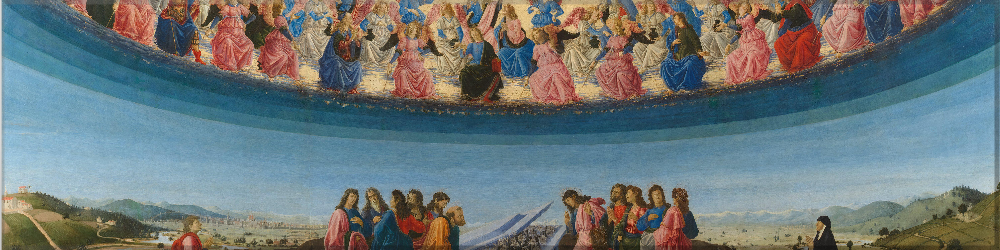
As “fears” flourish in the absence of real knowledge about real “phenomena”162, Epíkouros distinguishes the “suspicions about death”163 as “the most [seemingly] horrible”, since we know, with certainty, that life will end. Treating fear of death with myth fails to address the reality of grief. As one mistakes a placebo for ointment, so the proverbial rash worsens. In failing to face this “perpetual terror”, a superstitious mind suffers, “always expecting some”164 fear of loss.
Epíkouros observes that the multitude “suffers” and “grieves” predictable inevitabilities as a result of mythic misunderstandings, “which is” as he writes, “the worst evil”.165 The time over which the pain of loss is processed can be drastically lessened by accepting that death is a natural end, and, to those who are dead, death is literally nothing. If a person is to procure “the complete life”, they must “step over” that which is “a myth”166 and dissolve their “fears about both […] death”167 and the burden of “grief”.168 Otherwise, anguish “screws them out of the best life.”169

SIDE THREE: DUST IN THE WIND
The Epicureans of the Hellenistic world observed that “all people, including those with [a] good […] physique […] became skeletons in a short period of time, and in the end are dissolved into their elementary particles”.170 The stories of “all those who have been and those who will come to be in the world” will be lost “when it has been destroyed” and “no one will be remembered”.171 As each cosmos has “been generated out of the countless” particles, “in turn, each is to be dissolved”,172 including “both animals, and plants, and all the rest being observed”.173 Thus, of all afflictions that plague the peace of the soul, those fears related to death and dying are the most pervasive.
Not even those who are “worshipped and well-liked”, who seem to have “procured safety”, those “pronounced popular”174, who command “power”,175 boasting a “brilliant reputation and great wealth”176 can secure themselves against death, “since fortune, ruler of all people, is capable of taking [everything] away”.177 Indeed, “we all reside in an unfortified city in relation to death”.178 Practically, “there was no point procuring protection if a person” succumbs to “suspicion of those things from the sky and beneath the earth and generally in the Infinite.”179
YOU CAN’T ALWAYS GET WHAT YOU WANT
Angst is nothing new. Anguish is ancient—so, too are the principal sources of anxiety, “always intruding”180 upon “the pleasures of the mind”.181 Turmoil itself is a feature of mortality. For most of human history, nearly half of all children died before their 10th birthday. To this day, disease holds the highest kill count in history. No political plot has ever been as deadly as tuberculosis. Modernity has only innovated upon anxiety; she did not invent it. The origins of dread precede the disasters of the contemporary era by an epoch — torment itself is prehistoric.
Human populations crashed during the paleolithic period after a series of unstoppable catastrophes and instances of environmental collapse. Until the contemporary period, tooth decay has been a leading cause of mortality. During the Peloponnesian War of the 5th-century BCE, an epidemic decimated over 25% of the Athenian population, including the prominent statesman Pericles. During the reign of Marcus Aurelius, the Antonine Plague killed millions, including the emperor’s adoptive brother (and co-ruler) Lucius Aurelius Verus. During the early medieval period, the Plague of Justinian (that lasted for two centuries), claimed the lives of tens of millions, both affluent and impoverished, famous and anonymous. The classical Maya civilization collapsed during an extended period of drought that instigated an agricultural crisis. Centuries after, the Black Death killed half of Eurasia. In the modern era, HIV/AIDS has claimed at least as many lives as the Black Death. Related, venereal disease has afflicted human relations and complicated human happiness for millennia; despite numerous advancements, over 1 million people contract curable STIs every day;182 in the span of one year, over 350,000 women die from cervical cancer.183 This brief paragraph only hints at the devastation that micro-organisms wreck upon the human body. These “enduring illnesses”184 act as agents of death, and are among the greatest antagonists to human history, chief sources of historic anxiety

ALL THINGS MUST PASS
Managing fear of death is a key to happiness. “Remember”, urges the Epicurean philosopher Mētródōros, “that everything by nature is subject to death”,185 and while “it might be possible to furnish security against misfortune”, when it comes to death, “every human lives in a city without walls”.186 Truly, “every person, even if they should be stronger than the Giants, is transient in relation to life and death”187 since “indiscriminately, we have all been infused with the fatal drug from birth”.188 Thus, “the most significant disturbance [to arise] within the souls [of] human beings is generated by […] perpetual terror”,189 by fearing the loss of friends, the pain of dying, and the state of being dead. This terror arrises “because of” their “being frightened of death”, and as a result, they are “unable to bear” the “burden of misfortune”.190 Death “truly” is the ultimate form of “necessity beyond human control”, thus a constant source of concern.191

DON’T STOP ME NOW
Yet while “necessity is evil […] there is no necessity to live with necessity”.192 For “necessity is not accountable, and [we] perceive luck [as] unreliable”.193 Becoming a “slave to physical inevitability” removes any “expectation of dignity”,194 forever “waiting for Godot”.195 Epíkouros affirms that “rarely is a sage disrupted by chance, but the greatest and most important matters are directed by reason throughout their lifetime.”196 “Luck is unreliable”—at most, “if one receives a paradoxical piece of good luck,” one might be “grateful to circumstances” and count their blessings.197 Otherwise, it would seem that “the whole of life is but a struggle in darkness”.198

EVERYBODY HURTS
The 2,100-year-old writings of the Philódēmos catalogue timeless suspicions about death that have historically darkened the mind—people naturally fear “the pains that come from loss”199 and “the deprivation of good things”200just as they principally threaten our pursuit of pleasure. In the context of being “gripped by illness”,201 like “those with heart disease”202 who may become “unconscious in torpor and faintness”, some fear that they may “never again recover”,203 discouraged by “the whole decay from the peaks to old age”.204 Many obsessively dread an “untimely death”,205 condemned “to die young” before they advance their talents,206 enabling “enemies [to] rejoice over them”,207“not leaving behind” a legacy208. Others are “distressed at not having left behind children”209 so that “the fruits of [their] labors will” be devalued by “unworthy” and “wicked” people.210 Many fear that “parents or children or a spouse […] will be in dire straits on account of their death”.211 Some fear “dying abroad”212, while others fear dying alone “on one’s bed […] rather than doing some doughty deed for even future generations to learn about”.213 Conversely, others dread getting “killed like cattle in the lines of battle”214 or dying “while fighting an enemy”215 or fear “death at sea”,216 or “violently as a result of condemnation by a court or ruler”.217 Some “experience suffering at the prospect of not being remembered by anyone”,218 while others are “pained because [they are] going to be reviled”.219 Ineffectually, “the masses are [either] fleeing death, sometimes as the greatest evil,” or else, they vainly imagine themselves to “prefer the repose in [Death] to living”.220

DON’T FEAR THE REAPER
Epíkouros reassures students that the state of “death in no way exists”, since “what has dissolved lacks perception; and that which lacks perception in no way exists for us”.221 Remembering this, students can avoid emotional paralysis when struck by mortality, neither fearing their own cessation, nor fearing the expiration of their loved ones. The Epicurean school denies any possibility that one could experience torment after death, since death is a state of “unconsciousness and non-existence”.222 For indeed, “to the [dead, death is nothing]”.223
This minimizes the misery of dying, reassuring us that “the peak of pain” exists for the absolute “briefest time”224 — necessarily, the most excruciating, physical pains, those that are so severe that they lead to immediate death, are the most brief. By comparison, the rest of the pains, which are not so severe as to result in immanent death, are, by definition, survivable.
Even the superior torment “of the mind”225 and “sorrow that weighs upon” the soul “on account of death”226 can be slowly relieved with patience, introspection, and reflection. Epíkouros recommends that “we sympathize with the beloved [deceased] not by lamenting, but by reflecting”.227 Survivors find peace through the value of memory, and the therapeutic gratitude that contextualizes the “undying”228 good of friendship. “Sweet [is] the memory of a friend who has died,”229 since pleasant remembrance “for those who died before their time had come”230 eases the grief of loss.

WITH A LITTLE HELP FROM MY FRIENDS
The devastating pain of grief is significantly relieved by the blessing of friendship. Epíkouros exhorts us all to “be prepared” for death by bringing “together a fellowship of friends”231 to support one another through the pain of loss, especially guaranteed losses, those of our mentors, parents, spouses, and every furry friend whom a person has every loved. In forming mutual bonds “with other people”, survivors “live pleasantly among one another keep[ing] steadfast faith”, thereby “engender[ing] the fullest intimacy”,232 sharing love during times of despair, so as to never suffer loss alone.

IN MY LIFE
One manages grief by honoring the memories of the deceased. By practicing gratitude, one reminds oneself of the powerful gift of love that is left after the loss of a loved one. “One must not spoil the present by yearning for the absent; but consider that also these [present] things were once of the [things for which] we wish.”233 Fittingly, it is love, from the memory of ones’ deceased friends that helps one endure sudden loss. Great loss can only come from the loss of a great love, yet no loss can lessen the greatness of the love that outlasts death.
Philódēmos offers consolation to those suffering sudden, unexpected loss, as when a parent loses a child, or a spouse loses their partner, seemingly “falling somewhat short of the best life”.234 Philódēmos asks survivors: “consider it irrational and incredible not if someone dies but if [one] endures for a certain length of time”, for “enduring all the way to old age really [is] a most prodigious thing”.235 Historically, most human lives have ended relatively shortly. Yet no life, no matter how short, need be wasted, nor lived ignobly, nor suffered without dignity. Nature enables living beings to “profit by one day as by eternity”,236 for “unlimited time contains pleasure” that is no less valuable “than that which is limited”.237 Nature’s goal is pleasure, not immortality. As Tolkien wrote, “’All we have to decide is what to do with the time that is given us’”.238

IMAGINE
As regards apprehensions about one’s own death, the Sage provides assurance that the experience of “death in no way exists for us”, given that “what has dissolved lacks perception; and that which lacks perception in no way exists for us”.239 The pain that is so severe that it leads to death is proportionally brief. After the loss of feeling, there can be no feeling of pain—nor can there be pleasure, nor bliss, nor relief; thus, there can be no incentive for suicide. “Undoubtedly trivial are the greatest number of motives one might advance toward an exportation from life”.240
Meditating upon the “real knowledge that Death is nothing to us creates [for] a mortal an enjoyable life, not [by] adding endless time, but [by] having been dispossessed of the yearning for immortality”.241 Philódēmos explains that in “avoiding a careless death, a person …”
… is industrious because of the consequent doctrine based on the concept of the preservation of one’s goods. And since he does not cut short the long extent of his life, he always begins new activities and friendly attachments. And he attends to his own property as to how to administer it. Also, he reflects on former events in the belief that they may concern him in the future. And he treats with much care as many people as he can, and he is thankful to those who treated him kindly, in particular because he hopes that he will share in some goods with them or that he will receive some benefit by these same people again in the future …242
Accepting the finality of mortality highlights the importance of preparing for the inevitable — for example, one can engage the practice of composing a living will (as did Epíkouros) to safeguard the continued happiness of those who survive the deceased, hoping to deter those who would harm them. It is “possible to take precautions”243 against a number of potential misfortunes, such as preventing “a lot of indolence regarding financial matters” when it comes to succession and inheritance.244 In his will, Epíkouros ensured that his best friend, Hérmarkhos, a non-Athenian, would logistically inherit the Garden, circumventing typical stipulations by Athenian law. The Hēgemṓn also provisioned a clause to provide students with permanent access to the Garden. He emancipated his servants, and allocated resources for his friends’ children’s education (whose completion he would not have the pleasure of witnessing).
Before he died, the 2nd-century Epicurean Diogénēs of Oìnóanda commissioned a monument to the teachings of Epíkouros. Builders erected an 8-foot-tall, 260-foot wide stone stoa, surrounded by a portico, adorned with statues, etched with Epicurean teachings. It contained a survey of the wisdom of Epíkouros (as summarized by Diogénēs), as well as several Key Doctrines by the Hēgemṓn. Reflecting upon his own, impending death, the elderly Diogénēs writes,
Having already reached the sunset of my life (being almost on the verge of departure from the world on account of old age), I wanted, before being overtaken by death, to compose a [fine] anthem [to celebrate the] fullness [of pleasure] and so to help now those who are well-constituted. […] besides, love of humanity prompts us to aid also the foreigners who come here. Now, since the remedies of the inscription reach a larger number of people, I wished to use this stoa to advertise publicly the [medicines] that bring salvation. These medicines we have put [fully] to the test; for we have dispelled the fears [that grip] us without justification, and, as for pains, those that are groundless we have completely excised, while those that are natural we have reduced to an absolute minimum, making their magnitude minute.245
IN MY TIME OF DYING
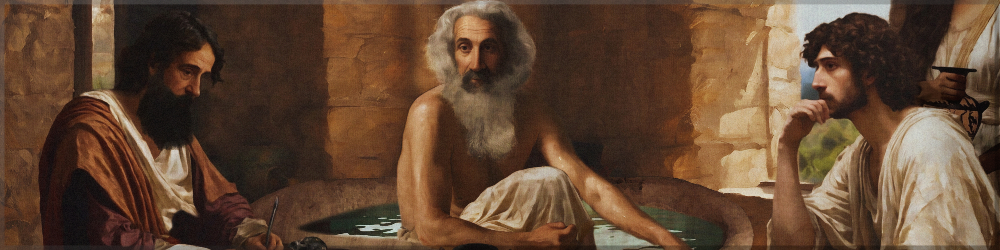
When it comes to inevitable “sickness”, a wise person can address their fears of infirmity by planning to prevent becoming “irascible and hard to please and ill-tempered”246 when deprived of sense faculties. Such a person “takes the greatest care of [their] health. And feeling confidence against illness and death, [they] endure with strength the therapies that can remove them.”247 By the Hellenistic period, ancient Epicureans had published a variety of scrolls on pain management and psychological health, including the scroll Theories about Disease248. Philódēmos explains that one should cultivate a robust “state of health”249 and “be prepared […] from coexisting with other people”—yet when this is no longer possible, Philódēmos recommends that “the right management […] lies in this: in not feeling distressed about what one loses”.250
As the end of life approaches, so writes Philódēmos, one can choose to face death without fear, regret, and worry. The resilience of the intellect allows us to manage peak anxiety through the rejoicing of “the mind upon reliving the memory” of past pleasures. Even at the end of life, when faced with annihilation, “persons of sound mind” can recall their having “enjoyed everything” as “unconsciousness is taking hold of them”, allowing them to “expire […]undauntedly”,251 as “the old one anchors safely in the harbor that is retirement”, after “those good things that were once hoped for were captured” in memory “for safe charity”.252Even on “the day that is the last of life” despite pains “not abating in extremity of their greatness”,253 memories can bless the mind.
For those who pass due to diseases that afflict the mind, even then, bereft of memory, “we will try to make the end more excellent [than] the beginning; we should be taking the path into dawn; yet whenever we go so far as the end, [we should] enjoy ourselves equally.”254 In absence of this peace, confusion exacerbates the pain of dying and the fear of death. The promises of persuasive personalities, who reassure the intellect that we can escape death insults the human soul.
Diogénēs of Oìnóanda adds “as I have said before, the majority of people suffer from a common disease, as in a plague, with their false notions about things, and their number is increasing”.255
SIDE FOUR: THE GRAND ILLUSION
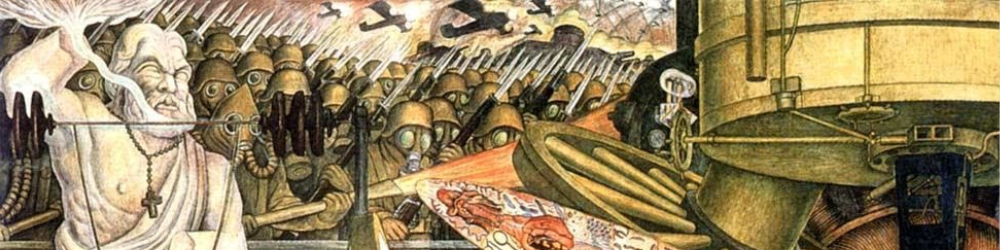
Charlatans thrive in a climate of fear.
Chiefly, swindlers target those vulnerable to mythic persuasion. As “false prophets“256 spread myths in the ancient agora, so too do manicured politicians sell sound bites through modern speakers. Grifters, con-artists, and other malignant narcissists have prized and preferred to provoke gullible souls with superstition. They address the “public in the traditional patter of magicians”257 as ridiculed by the ancient Epicurean author Loukianós. In an era characterized by disinformation and propaganda, cultivating tools against fraud is critical to living a good life.
BLINDED BY THE LIGHT
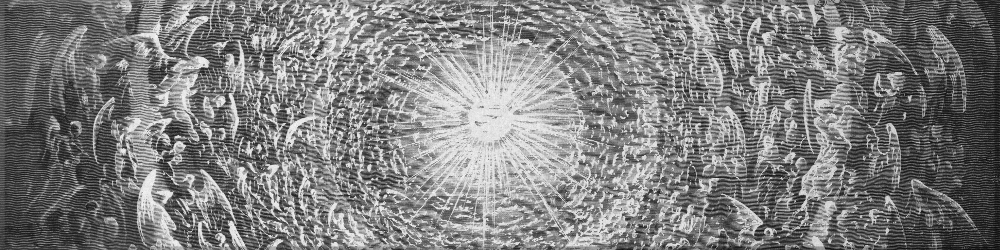
The FIRST science fiction writer, Loukianós of Samósata lambasted one such fraud who “readily discerned that human life is swayed by two great tyrants, hope and fear, and that a man who could use both of these to advantage would speedily enrich himself”.258 The satirist documents an early instance of book-burning, instigated by a petulant zealot who took offense to the “Established Beliefs” of Epíkouros. As Loukianós writes, the false prophet “greatly feared Epicurus […] seeing in him an opponent and critic of his trickery.”259 They continue:
… he brought [the book] into the middle of the market-place, burned it on […] fig-wood just as if he were burning the man in person, and threw the ashes into the sea […] But the scoundrel had no idea what blessings that book creates for its readers and what peace, tranquillity, and freedom it engenders in them, liberating them as it does from terrors and apparitions and portents, from vain hopes and extravagant cravings, developing in them intelligence and truth, and truly purifying their understanding, not with torches and squills and that sort of foolery, but with straight thinking, truthfulness and frankness.260
Loukianós describes in high resolution an instance of trickery wrought by Alexander the False Prophet. In terms of the specific “ruse” the swindler employed, the Epicurean explains:
he contrived an ingenious ruse. Going at night to the foundations of the temple […] where a pool of water had gathered […] he secreted there a goose-egg, previously blown, which contained a snake just born; and after burying it deep in the mud, he went back again. In the morning he ran out into the market-place naked […] he congratulated the city because it was at once to receive the god in visible presence. The assembly […] had come running […] he ran at full speed to the future temple […] he asked for a libation-saucer, and when somebody handed him one, deftly slipped it underneath and brought up […] that egg in which he had immured the god […]. Taking it in his hands, he asserted that at that moment he held Asclepius! They gazed unwaveringly […] when he broke it and received the tiny snake into his hollowed hand, and the crowd saw it moving and twisting about his fingers, they at once raised a shout, welcomed the god, congratulated their city, and began each of them to sate himself greedily with prayers, craving treasures, riches, health, and every other blessing from, him. […] the whole population followed, all full of religious fervour and crazed with expectations.261
Ranking magical thinking among the greatest of evils (and sparing few words for those who perpetuate superstition), the satirist ridicules the “drivelling idiots”262 and “thick-witted, uneducated fellows” who became willfully “deluded” by the charlatan’s “ruse”. The false prophet appealed to common expectations and misunderstandings. In doing so, the liar won the crowd.
Loukianós concludes that “the trick stood in need of […] Epicurus himself or Metrodorus, or someone else with a mind as firm as adamant toward such matters, so as to disbelieve and guess the truth”.263 Here again, an intellectual foundation, grounded in the reality of nature is needed to help guard against mythic deceit. By contrast, supernatural religions and mystical cults feed into the practice of myth and manipulation, doing little to relieve fear, and much to increase it.

MAD WORLD
The μῦθοι (mýthoi) or “myths” of the ancient world provided “plaguy scoundrel[s]”, “swindler[s]”,264 and “consummate rascals” (“greatly daring, fully prepared for mischief”,265 “practising quackery and sorcery”)266 with devious tools to exploit the superstitious sensibilities of those whom Loukianós‘ disparagingly referred to as “‘fat-heads’ and simpletons”.267 This was done to “line [the charlatan’s] purses fairly well at [the] expense”268 of genuinely pious, yet tragically misguided believers. Lucretius orchestrates a mythic example — King Agamémnōn sacrifices his daughter Iphigéneia, to ensure that Ártemis would ordain their campaign:
More often, on the contrary, it is Religion269 breeds
Wickedness and that has given rise to wrongful deeds,
As when the leaders of the Greeks, those peerless peers, defiled
The Virgin’s altar with the blood of Agamemnon’s child…270
History preserves an extensive list of violations and abuses by allegedly spiritual institutions. Whether sacrificing children (or marrying them), or dominating women, brutalizing neighbors, inciting mass slaughter, enslaving captives, persecuting foreigners, popularizing martyrdom, hosting crusades, organizing inquisitions, burning thinkers, drowning healers, hanging doctors, spinning lies, bombing medics, incinerating protestors …. Reality demonstrates how the agents of religious violence excuse themselves from observing “the nature of what is just”.271
This ancient, historical scheme developed over time. After millennia, myths that were once only shared around campfires were formalized by powers into social institutions. Many of those institutions facilitated the transfer of wealth from disadvantaged citizens to insulated priests. Many engaged in political manipulation by deceiving those politicians who based their process of decision-making on ecstatic visions, and not the study of nature. Many engaged in the abuse of the young, female “oracles” who had been trafficked to the temples. Many others, still, exploited their knowledge of natural events to manipulate their followers and gain influence.
In addition to exploiting with magical thinking, many institutions of religion have intertwined themselves with politics and government, growing empires, spreading propaganda, expanding colonies, stealing territory, justifying genocide, perpetuating slavery, pardoning rape, editing histories, robbing treasuries, defrauding economies, deceiving leaders, enchanting legislators —supernatural institutions and political states are two peas in a pod of power and deception.
Personalities like Charles Manson, Jim Jones, David Koresh, and Marshall Applewhite are not unique to the this era. Joseph Goebbels only innovated upon propaganda, he did not invent it. Leopold II was a mere rookie compared to the seasoned violence of Genghis Khan.
So it seems, people have … always been like this.

GASLIGHTING
The subterranean Ploutonia billowed with the deadly pneuma (or “breath”) of Kérberos, the three-headed, canine guardian of the underworld. The temples were named for their host, Ploútōn (better known as Háidēs) who ruled the ploútos, the great “wealth” from the substances that rest beneath the Earth’s surface. For mindless beasts and uninitiated supplicants, the mythic fumes of the temples were deadly—only clergy, due to their righteous piety and closeness to divinity had been graced with supernatural protection, inoculating the lethality of the dogs’ fumes.
Topographically, those sanctuaries were constructed above fault lines; their chambers trapped and flatulated volcanic gases. After centuries of habitation, some residents noticed—some vents triggered intoxication; some, convulsions; some, death. Some residents found ways to exploit their neighbors’ ignorance of this natural phenomenon. Strábōn elaborates on the specifics:
…the Plutonium, below a small brow of the mountainous country that lies above it, is an opening of only moderate size, large enough to admit a man, but it reaches a considerable depth, and it is enclosed by a quadrilateral handrail, about half a plethrum in circumference, and this space is full of a vapour so misty and dense that one can scarcely see the ground. Now to those who approach the handrail anywhere round the enclosure the air is harmless, since the outside is free from that vapor in calm weather, for the vapor then stays inside the enclosure, but any animal that passes inside meets instant death. At any rate, bulls that are led into it fall and are dragged out dead; and I threw in sparrows and they immediately breathed their last and fell. But the Galli, who are eunuchs, pass inside with such impunity that they even approach the opening, bend over it, and descend into it to a certain depth.272
To Strábōn, the ruse was obvious: the eunuch priests “hold their breath as much as they can” so as to mechanically avoid ingesting toxic fumes until they have risen above them.273 The priests understood that some, lethal vapor must pool at the bottom of the cavern. Pliny the Elder records that “there is a place which kills all those who enter it. And the same takes place at Hierapolis in Asia, where no one can enter with safety, except the priest of the great Mother of the Gods.”275 In the center of this invisible, vaporous pool stood a raised landform from which a cleric spoke. Supplicants would encircle the stage like a captive audience. The theatre would proceed: a bull would be lead before the congregation into the breath of Kérberos. The terrific power of the underworld would then kill the unobservant beast. The devout priest, protected from the lethal vapors would rise to the center, thus, demonstrating their power over death.
(As a supplement to this description .. and brief tangent … note that the institution to which we refer as “religion”, and the art to which we refer to as “theatre” were once indistinguishable. A fundamental function of ancient, stage-focused, stadium-seated theatre was to facilitate religion. Similarly, modern, stage-focused, stadium-seated religion employs theatre as a tool.)
By the Hellenistic period, rational minds penetrated the clerics’ contrivance. Many reasoned that the air we breathe must be made of several kinds of vapors that do not uniformly mix. Some rise, and some fall. “In other places there are prophetic caves, where those who are intoxicated with the vapour [that] rises from them predict future event”.274 Rising vapors (like the sweet-smelling, trance-inducing ethylene gas) flooded the sanctums of the oracles and induced visions. Falling vapors (like carbon dioxide) pooled at the bottom of the “Gates of Hell” in the “Holy City” of Hierápolis. Those vapors were suffocating. In small doses, hydrocarbon gases (like ethylene) could trigger visions. In higher doses, oracles could seize and convulse. In the highest doses, die.
The ancient Greek clergy’s abuse of their neighbors’ fears and ignorance of natural phenomena reflects a pattern found throughout human history. Ancient priests misrepresented to their neighbors discernible, predictable phenomena and staged (literally) theatrical performances for the purpose of impressing the reality of their manipulative cult. This was not the first, nor the last time in history when clever figures in positions of power weaponized knowledge by exploiting the ignorance of others. Fifteen centuries later, a Genoan, sailing on behalf of the Spanish crown employed a similar ruse as did those ancient priests. This time, however, it was not the flatulence of the Earth, but rather, the dance of the sky — in this case, a lunar eclipse …
DARK SIDE OF THE MOON
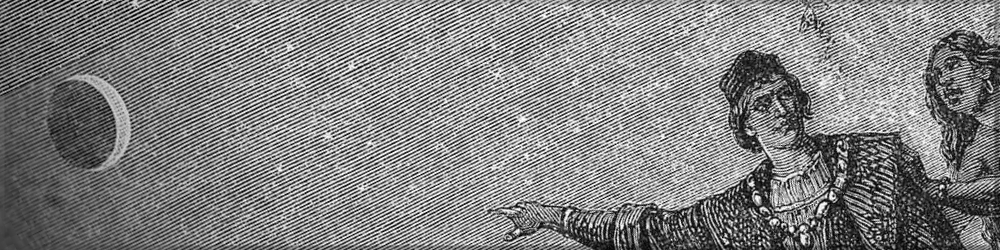
Prior to February 29th 1504, Christopher Columbus faced an extremely precarious situation — he had been marooned for a year. All four caravels loaned to him by the Crown lay in ruin. Dozens were dead. Half the crew mutinied. To his despair (as many of his peers back home expected), Columbus’ final expedition, afforded to him with great reluctance, failed.
Only four years earlier, royal commissioner Francisco de Bobadilla delivered Columbus to the Crown in chains, having imprisoned him over tyranny and abuse of the Taíno people. Stripped of titles and authority, Columbus was afforded by King Ferdinand one, final opportunity. Yet again, far from of accomplishing his goal, Columbus was broke, stranded, and faced starvation.
As history records, the “Admiral” had brought a particular book with him: in particular, Columbus carried a recently-published copy of Alamach Perpetuus Cuius Radix est Annum by Abraham Zacuth, astronomer of the Portuguese court of King Don Manuel. “It was this very book that Columbus used to predict the eclipse of the moon which so terrified the [Taíno] in Jamaica that they became obedient to him, and furnished his party food.”276 This was the context in which Columbus extorted the indigenous people of Jamaica, who lacked appropriate “knowledge about the meteoric”,277 and were susceptible to the manipulation of superstition. In this case, Columbus, aware that a lunar eclipse was immanent, convinced the Taíno people that the moon would be destroyed if the Taíno did not provide him with provisions. Columbus’ son, Ferdinand Columbus recorded the entire manipulation. He writes of …
the eclipse beginning at the rising of the moon, and augmenting as she ascended, the Indians took heed and were so frightened that with great howling and lamentation they came running from every direction to the ships, laden with provisions, praying the Admiral to intercede by all means with God on their behalf; that he might not visit his wrath upon them, promising for the future diligently to furnish all they stood in need of. To this the Admiral replied that he wished to converse somewhat with God, and retired while the eclipse lasted, they all the while crying out to him to aid them. And when the Admiral observed that the totality of the eclipse was finished and that the moon would soon shine forth, he issued from his cabin, saying that he had supplicated his God and made prayers for them, and had promised Him in their names that henceforth they would be good and use the Christians well, fetching them provisions na necessary things … From that time forward they always took care to provide what they had need278
The ruse worked. Columbus received his provisions, and survived until rescue. The Taíno population was exploited. Today, American citizens champion Columbus, having been raised on textbooks that never mention the Taíno nor the crimes of European “explorers“.
Within decades of his arrival, ninety percent of the Taíno population was killed. Tens-of-thousands were murdered. An unknown many committed suicide. These deaths are partially indicative of the failure of religious institutions in correcting the abuses that occur as a direct result of exploiting knowledge and ignorance — in this instance, the Taíno were not the only targets of manipulation: the famous venture to the “New World” was not only an economic enterprise, but, notably, a religious mission, sanctioned by the Church. The religious mission benefitted from the fealty of monarchs, and encouraged the expansion of a colonial empire.
Mythic ambitions were stoked. Irrational fears were instigated. Narratives were established. Hopes were inflated. Fears were exploited. Devious personalities with selfish agendas descended upon the fearful like vultures, as also happened in Imperial Russia.

ABRA-ABRACADABRA
Alix, the Tsarina of the Romanov dynasty was enchanted by Rasputin upon their first meeting. “It had not been very difficult for that expert in human faces to see how much she needed him, how tormented she was by the misfortunes that had befall them”.279 At the age of six, she lost sister to diphtheria; her mother succumbed to the same disease one month later. Only three years later, her father, Grand Duke Louis IV died of a heart attack, “the greatest sorrow of her life”.280 For the rest of her days, she would be consumed with overwhelming fears of death.
(… as were easily shared by those over whom her family ruled … but that’s another essay).
She was not alone. Her husband, Tsar Nicholas II equally ached—without an heir, his family’s status was existentially threatened. Yet when their only son was finally born, their dread only increased: Alexei inherited his family’s “curse”. The “long-awaited prince was suffering from a fatal disease inherited […] haemophilia. His fragile blood vessels were unable to withstand the pressure of his blood.” Such cruel irony, Alix had suffered a decade of pregnancies that left her with significant health issues. Succession laws were brutal. She found little relief.
… until she meets Rasputin. “Alix, who so wanted to believe in miracles”, “with a face tormented by sleepless nights” found comfort in a wandering monk, an alleged “miracle-worker” who had recently gained popularity among the peasantry. “Nicky” (the Tsar), desperate to provide his son with safety, suspended his disbelief in the traveller after witnessing a “miracle” — the unsuspecting monk eased his son’s suffering, a feat at which his educated doctors failed.
Indeed, seven years prior to the birth of Alexei Romanov, a chemist named Felix Hoffmann synthesized a new form of acetylsalicylic acid that revolutionized medical science. Within several years, Bayer registered this product as “aspirin”. The “wonder drug”281 was immediately implemented throughout the world to relieve pain, reduce fever, and treat disease. The product was so effective, so manageable, so safe, it was used to treat symptoms in children, children like Alexei Romanov, children suffering from chronic bleeding disorders, children being treated with blood-thinners (the very last thing a child with Alexei’s condition needed).
As a странник (strannik) or “wanderer”, Rasputin rejected treating disease with the medical science, so when the Tsar, against the recommendation of his doctors, took the advice of the wanderer and denied his son the “wonder drug”, Alexei’s condition improved. Granted, Rasputin did not understand the functional mechanism by which anticoagulants interacted with the body; what he did recognize was the measurable, psychological power that he now held over the Romanov family. They credited him with preventing the death of their son in whom they had placed all of their hopes and fears. They hoped for him to prevent the deprivation of their pleasures. When Nicholas went to the front in World War I, Alix was left in charge with Rasputin as her personal advisor (wherein he gave predictably terrible advice and abused his authority). Still, the Tsar’s daughters wore pendants with Rasputin’s picture. His presence in their bedroom was sanctioned, despite protests from a nursemaid. After all, he was a Saint.
He was also accepting bribes. He was also negotiating with sexual favors. He was also accused of numerous acts of rape. He was abusing the Russian peoples’ Christian superstitions. He was a functional catalyst for the same revolution that lead to the execution of the very family who looked to him in the first place to prevent death. Ironically, the Romanov family feared death. They feared the weight of insecurity. They gave a sinister personality access to their home, their children, and their minds. They bared their souls to a grifter who convinced them that he could prevent death. Rasputin taught that touching his body healed—indeed, this was his favorite line to use with prostitutes. In this regard, the members of the royal family were used, willingly. By comparison, many of their subjects, increasingly suspicious of authority, disenchanted with both an ineffective monarch and an oppressive church, saw through Rasputin’ mythic ruse.
(These anecdotes fail to capture the full complexity of each, nuanced history — readers are encouraged to pursue their curiosity accordingly — nevertheless, each example provides a clear depiction of the chaos that can result from inflating superstitious beliefs.)

PARANOID
Fear of death disrupts rational thinking and consumes the minds of the fearful. A conspirator need only appeal to their target’s fear of death, abuse their misunderstandings about nature, fabricate a false narrative (usually promising deathless rewards), and choreograph a performance that advances a hidden agenda. Examples of this relationship between fear, ignorance, and exploitation are not limited to the dusty pages of history — the modern world of industrialized warfare and mass media provides a variety of devastating examples. For the purposes of this investigation, five instances of irrational thinking and manipulation have been reviewed:
[I] REDACTED Fear lubricates the machinery of propaganda and exposes the intellect to paranoia.
[II] We find another example of fears stoked by
The same fears have been irrationally inflated against These political myths distract millions of people from reality by appealing to vain prejudices. Meanwhile, those same minds turn a blind eye to actual existential threats that contradict their mythic worldviews.
[III] Generations of committed researchers, in nearly every scientific discipline, from nearly every country on the planet, working with decades of analysis, experimentation, and peer review, have conclusively determined that Short-sighted politicians continue abusing mythic propaganda by manipulating ignorant minds to advance personal agendas.
[IV] These criticisms against fear and ignorance apply even more fully toward
[V] No mythic narrative has been as effective (and exploitable) in America as As a result, millions of fearful minds have thrown their support behind charlatans who care more for profit than piety.
Since ignorance and fear create vulnerabilities for deceitful swindlers, conspiratorial thinking has been exploited by tyrants throughout history to gain the favor of violent mobs and fuel political violence — so, today, does the
These prejudicial myths not only harm others; they also consternate the intellects of the deluded; a fearful mind disrupts the ability of the intellect to cultivate future security. Vanity allows the intellect to inflate meaningless fears (that ) while ignoring genuine, existential threats (like ).
When civic decisions are not grounded a shared, natural reality, the vain beliefs of others, informed by delusions, threatens the safety of their neighbors, and the preservation of their own union for the future. “The study-of-nature does not incline one to boast nor [be] contriving of speech nor against the education highly prized by the masses, but both fearless and independent according to one’s own good, [and] not to think highly over the affairs of the [masses].”282

I CAN SEE CLEARLY NOW
In an era characterized by propaganda and misinformation, the Epicurean method of investigation arms students with powerful tools against these threats. One’s “considerations” must be based “in a [world] of facts, versus those on a mere rumor”.283 Armed with her unadulterated rejection of magical thinking, the Epicurean school provides stormy souls with an alternative to the lazy skepticism of the contemporary era that is as unhelpful in dispelling ignorance as is the cheap metaphysics sold in bookstores (those metaphysics that have failed to prevent even a single child’s death). Epíkouros provides a method to navigate these confusions, for, “a sufficient method produces [helpful] thoughts about the nature of reality”284 and requires nothing more than the devoted study of nature. The Sage grounds true statements with verifiable observations. In the absence of material verification (or falsification), groundless conjectures are easily commandeered to construct fear-based alternatives.
Fundamentally, all “conjectural things are contingent upon sensible” stimuli. Any “opinion” regarding nature can be “either true or false”. Yet in order “to be true, [it] must corroborate or not-contradict; but if not-corroborating or contradicting, [it] happens to be false. Hence, this has introduced”285 the need to practice waiting for confirmation, instead of inventing a “pseudodoxy”. Compared against a true belief, a pseudodoxy “has gone astray from the” natural reality “being experienced that perpetually exists”.286 In the case of what remains “to be confirmed or to be contradicted, either it will be confirmed” or contradicted.
Often, “some other [persuasive] motion in us”,287 such as the fear of death, “operates for another purpose” besides the “goal of natural pleasure”.288 On these occasions, conspiracies, myths, and superstitions thrive. Self-reflection gets “combined” with some another “creative application”289 of the mind, and imbues those who speculate with the confidence to pass “judgment even if [they] were not [capable of] confirming or contradicting” with evidence. Thus “a pseudodoxy is generated.” 290 These “pseudodoxies” are generated by those who fail to acknowledge the reality of their own sensations. “If you contest every single one of the sense perceptions, you can neither judge the outward appearance nor can you affirm which of the sensations you, yourself say are deceptive according to the way in which the criterion operates.”291

WON’T GET FOOLED AGAIN
Mythic hopes and conspiratorial apprehensions deeply afflict the mind’s ability to reason. Our 50,000-year-old brain-systems are no less immune to mythic deceit than the 48,000-year-old brain-systems of the ancient Greeks. While many modern persons might dismiss ancient peoples’ apprehensions of volcanoes and lightning, many ancient people would dismiss some modern persons’ insistence that the Earth is flat, a widely-accepted notion by the 2nd-century BCE. despite being truly blessed by the benefits of modern medicine, far, far too many fail to appreciate the blessing of science. Far too many have been programmed by myth, misunderstanding that material science spares most people from (what is otherwise a nearly universal human experience) suffering the deaths of children; in fact, as history records, nearly half of them. If one has been spared this tragedy, one might thank science.
When decisions that affect others are grounded in a matrix of mythic fears (and not our shared, natural reality) then the vain actions of others, informed by delusions, both threatens the safety of our neighbors and the preservation of their own union for the future. As he writes, “the study-of-nature does not incline one to boast nor [be] contriving of speech nor against the education highly prized by the masses, but both fearless and independent according to one’s own good, [and] not to think highly over the affairs of the [masses].” The tools we have developed to respond to all manner of diseases reinforces the confidence we can have in the Epicurean method. Epíkouros encourages students to choose practically, love peacefully, behave justly, and live fearlessly. This is best achieved by studying nature and cultivating friendship.
When it comes to our own futures, Epicurean history provides brave examples like Mētródōros, “undaunted against both disturbances and death”,292 “virtuous and awesome”.293 To achieve the goal of nature, the Sage of the Garden asks us to “study these and those things, for yourself, day and night, as with those like yourself, and at no time, neither awake nor in a dream will you be confounded, for no living person surrounded by immortal Good seems like a mortal creature.294 As has been spoken more eloquently elsewhere, “the only thing we have to fear is fear itself.” Here again, “when you believe in things that you don’t understand, then you suffer.”
Superstition ain’t the way.
1 Epíkouros, Epistle to Pythoklḗs 10.116
2 Epíkouros, Key Doctrine 20 (10.145)
3 Epíkouros, Key Doctrine 38 (10.153)
4 Epíkouros, Key Doctrine 37 (10.152)
5 Epíkouros, Vatican Saying 14
6 Epíkouros, Epistle to Menoikeús 10.129
7 Epíkouros, Key Doctrine 12 (10.143) | Vatican Saying 49
8 Epíkouros, Epistle to Pythoklḗs 10.104
10 Epíkouros, Epistle to Pythoklḗs 10.96
11 Epíkouros, Epistle to Pythoklḗs 10.87
12 Lucretius, De Rerum Natura 1.63, translated by M. F. Smith (1969)
14 Epíkouros, Epistle to Pythoklḗs 10.87
15 Epíkouros, Epistle to Menoikeús 10.129
16 Epíkouros, Epistle to Menoikeús 10.132
17 The fragment catalogued by Usener as #457 corresponds with a citation from Porphyry (Letter to Marcella 31) and Seneca (Letters to Lucilius 8.7), who writes “PHILOSOPHIAE SERVIAS OPORTET, VT TIBI CONTINGAT VERA LIBERTAS”.
18 Epíkouros, Key Doctrines 29-30 (10.151)
19 Epíkouros, Epistle to Menoikeús 10.122
20 Epíkouros, Key Doctrine 12 (10.143) | Vatican Saying 49
21 Epíkouros, Epistle to Pythoklḗs 10.85
22 Epíkouros, Epistle to Menoikeús 10.124
24 Epíkouros, Key Doctrine 22 (10.146)
27 Epíkouros, Epistle to Menoikeús 10.129
28 Epíkouros, Key Doctrine 20 (10.145)
29 Epíkouros, Key Doctrine 25 (10.148)
30 Epíkouros, Epistle to Menoikeús 10.128
31 ΤΑΓΑΘΟΝ | τἀγαθὸν (tágathòn) or “The Good” as ἡδονή (hēdonḗ, “pleasure”), the τέλος (télos,) or “goal” of life.
33 Epíkouros differs from the Kyrēnaíc hedonists, who questioned the benefit of equilibrium.
34 Metródōros’ Epistle to Timokrátēs (Usener fragment 409) is echoed by Athḗnaios (Deipnosophists 7.280A, 12.546F), Cicero (Against Lucius Calpurnius Piso 17.66), and Ploútarkhos (Against Kolṓtēs 2.1108C, 30.1125A).
35 i.e. sexual intercourse, the act of Aphrodite, from which we inherit the word “aphrodisiac”.
37 Diogénēs Laértios, Lives and Opinions of the Eminent Philosophers 10.6
38 Epíkouros, Vatican Saying 61
39 Epíkouros, “Words on the Wise” 10.120
40 Philódēmos, On Property Management 22.44, translated by Voula Tsouna (2012)
41 Epíkouros, Key Doctrine 17 (10.144)
42 Epíkouros, Key Doctrine 40 (10.154)
43 Philódēmos, On Property Management 16.36-37
44 Metródōros, Vatican Saying 51 was taken from a fragment from Metródōros to Pythoklḗs
46 Epíkouros was the ἡγεμών (hēgemṓn) meaning “leader”, “guide”, or “founder” of the Garden.
47 Diogénēs Laértios, Lives and Opinions of Eminent Philosophers 10.11
48 Philódēmos, On Rhetoric 4, translated by Harry M. Hubbell (1920)
49 i.e. sexual intercourse, the act of Aphrodite, from which we inherit the word “aphrodisiac”.
50 Metródōros, Vatican Saying 51 was taken from a fragment to Pythoklḗs
51 Epíkouros, Key Doctrine 31 (10.151)
52 Epíkouros, Epistle to Pythoklḗs 10.116
53 Epíkouros, Epistle to Menoikeús 10.131
54 Epíkouros, Epistle to Menoikeús 10.126
55 This can also be translated as “servants” or “boys”, suggesting either a criticism of pederasty or slavery (or both). This may serve as an overall indictment against the objectification and indoctrination of those in subordinate positions.
56 Epíkouros, Epistle to Menoikeús 10.132
57 Epíkouros, Epistle to Pythoklḗs 10.116
58 Epíkouros, Key Doctrine 23 (10.146)
59 Epíkouros, Key Doctrine 25 (10.147)
60 Epíkouros, Key Doctrine 21 (10.146)
61 Epíkouros, Key Doctrine 7 (10.141)
62 Epíkouros, Epistle to Menoikeús 10.130
63 Diogénēs Laértios, Lives and Opinions of the Eminent Philosophers 10.136
64 Compare this sentiment contained in Usener fragment 469 to the Epistle to Menoikeús10.130.
66 Diogénēs Laértios, Lives and Opinions of the Eminent Philosophers 10.136
67 Note the similarity of Usener fragment 207 with De Rerum Natura 2.34.
68 Epíkouros, Epistle to Menoikeús 10.131
69 See Usener fragment 182
70 Epíkouros, Epistle to Menoikeús 10.131
71 See Usener fragment 512
72 Epíkouros, Vatican Saying 37
73 Philódēmos, On Property Management 13.11-14
75 Usener fragment 116 captures a quotation from Ploútarkhos (Against Kolṓtēs 17.1117A) ↩︎
76 Usener fragment 200 is echoed in Vatican Saying 33
77 Vatican Saying 33 echoes Epíkouros’ recommendation to Menoikeús (10.135)
78 Epíkouros, Epistle to Menoikeús 10.128
79 Vatican Saying 33 echoes Epíkouros’ recommendation to Menoikeús (10.135)
81 Epíkouros, Vatican Saying 41
82 Philódēmos, On Property Management 23.14-18, translated by Voula Tsouna (2012)
83 Diogénēs Laértios ,Lives and Opinions 10.9; translated by N. H. Bartman
84 Epíkouros, Vatican Saying 14
85 Epíkouros, Vatican Saying 21. Compare this paragraph against Epíkouros’ description of desire in the Epistle to Menoikeús: “Then as for the desires one must conclude then [1] the Natural exist, and [2] the Vain, and of the Natural then [3] the Necessary, but only the natural [are needed]; then of the necessary those necessary are [instrumental] to happiness, and to the lack of distress of the body, and to their own living” (Lives 10.127)
86 Epíkouros, Epistle to Menoikeús 10.138
88 Epíkouros, Epistle to Menoikeús 10.131
89 Epíkouros, Key Doctrine 15 (10.144)
91 The fragment catalogued by Usener (457) corresponds with a citation from Porphyry (Letter to Marcella 31) and Seneca (Letters to Lucilius 8.7) who writes “PHILOSOPHIAE SERVIAS OPORTET, VT TIBI CONTINGAT VERA LIBERTAS”.
95 Philódēmos, On Choices and Avoidance 9, translated by Indelli and Tsouna-McKirahan (1995)
96 Cicero, De Natura Deorum 1.16, translated by C. D. Yonge (1877)
97 Epíkouros, Epistle to Menoikeús 10.132
98 Epíkouros, Key Doctrine 23 (10.146)
99 Philódēmos, On Rhetoric, fragment 19, translated by Harry M. Hubbell (1920)
100 Epíkouros, Key Doctrine 27 (10.148)
101 Epíkouros, Key Doctrine 37 (10.152)
102 Epíkouros, Epistle to Menoikeús 10.133
103 Philódēmos, On Rhetoric 5
104 Epíkouros, Epistle to Pythoklḗs 10.116
105 Philódēmos, On Property Management 4.23-30, translated by Voula Tsouna (2012)
106 Epíkouros, Epistle to Pythoklḗs 10.116
107 Epíkouros, Key Doctrine 37 (10.152)
110 Epíkouros, Epistle to Hērodótos 10.81
111 Epíkouros, Epistle to Menoikeús 10.133
112 Epíkouros, Epistle to Hērodótos 10.67
113 These lines are repeated four times throughout De Rerum Natura; see 1.146-148, 2.59-61, 3.91-93, and 6.39-41.
114 Lucretius, De Rerum Natura 1.146-150, translated by H. A. J. Munro (1860)
115 Epíkouros, Key Doctrine12 (10.143) | Vatican Saying 49
116 Lucretius, De Rerum Natura 1.101, translated by N. H. Bartman, from “TANTVM RELIGIO POTVIT SVADERE MALORVM”.
117 Voltaire warns against the political implications of superstitious belief, writing: “Certainement qui est en droit de vous rendre absurde est en droit de vous rendre injuste” (Questions sur la Miracles 412).
118 Epíkouros, Key Doctrine 15 (10.144)
119 Epíkouros, Epistle to Hērodótos 10.45
120 Philódēmos, On Frank Criticism 1, translated by David Konstan (1980)
121 Philódēmos, On Choices and Avoidance 9, translated by Indelli and Tsouna-McKirahan (1995)
122 Other translators employ “superstition” as their preferred translation of RELIGIO. Lucretius, however, uses both RELIGIO and SUPERSTITIO as near synonyms, versus healthy PIETAS.
123 Lucretius, De Rerum Natura 1.82-85, translated by A. E. Stallings (2007)
124 Philódēmos, On Choices and Avoidance 7, translated by Indelli and Tsouna-McKirahan (1995)
125 Lucretius, De Rerum Natura 3.53-54, translated by H. A. J. Munro (1860)
126 Philódēmos, On Choices and Avoidance 8
127 Lucretius, De Rerum Natura 6.1230-1234; translated by H. A. J. Munro (1860)
128 Epíkouros, Epistle to Pythoklḗs 10.87
129 Epíkouros, Vatican Saying 54
131 Epíkouros, Epistle to Menoikeús 10.124
132 Diogénēs Laértios writes that “he also takes everything prophetic as wrong, and as in the Little Epitome, he so affirms, ‘Divination is not real, but even if real,” we should “regard the predictions [as] nothing to us.’” (Lives and Opinions of the Eminent Philosophers 10.135)
133 “…so writes Diogénēs” of Tarsós the Epicurean (c. 2nd-century BCE) “in the twelfth” book Epitome of the Ethical Doctrines of Epíkouros” (Diogénēs Laértios, Lives 10.118).
134 Epíkouros, Epistle to Pythoklḗs 10.93
135 Epíkouros, Epistle to Pythoklḗs 10.113
136 Astromancy, from ἄστρον (ástron, “[sky] glower”) and μαντεία (manteía, “divination”), literally “star-prophecy”.
137 Epíkouros, Epistle to Pythoklḗs 10.113
138 Philódēmos, Epigram 28 (translated by W. R. Paton, 1916-18), there he goes, dissin’ astrology since 69 BCE.
139 Epíkouros, Vatican Saying 40
141 Usener fragment 489 echoes the Epistle to Menoikeús 134 and Key Doctrine 16. ↩︎
142 Epíkouros, Epistle to Menoikeús 10.135
143 Epíkouros, Epistle to Hērodótos 10.81
144 Epíkouros, Key Doctrine 10 (10.142)
145 Epíkouros, Key Doctrine 13 (10.143)
146 Epíkouros, Vatican Saying 24
147 Epíkouros, Epistle to Pythoklḗs 10.115
148 Cicero, De Natura Deorum 1.16, translated by C. D. Yonge (1877)
149 !!! Practitioners of the Mazdayasni religion of Persia are popularly known as Zoroastrians, however, this designation creates a complication (as does referring to “Islam” by the now-obsolete term “Mohammedanism”). Mazdayasna centers around the worship of Ahura Mazda—Zarathustra (Hellenized as “Zōroastrēs”) was merely a prophet of Mazda.
150 Oneiromacy is the practice of allegedly scrying knowledge of future events from dreams.
151 Cicero, De Natura Deorum 1.16
152 Philódēmos, On Signs and Inferences 38.8-12, translated by by Philip and Estelle de Lacey (1941)
153 The ancient, Athenian Stoics gathered at ἡ ποικίλη στοά (ē poikélē stoá), the “Stoa Poikile” or “Painted Porch”.
154 Cicero, De Natura Deorum 1.16
155 According to Diogénēs Laértios, “Kleánthēs” the 2nd Stoic scholarch, “was called a second Hēraklḗs” by Zēnṓn, the first scholarch (Laértios 7.170). Seneca writes a tragedy of Hercules, exploring themes like perseverance and fate (Hēraklḗs Raging). Epíktētos makes numerous allusions to Hēraklḗs in Discourses (1.16, 2.16, 3.22, 3.24, 3.26, 4.10).
156 Epíkouros, “Words on the Wise” 10.120
158 Other translators employ “superstition” as their preferred translation of RELIGIO. Lucretius, however, uses both RELIGIO and SUPERSTITIO as near synonyms, versus healthy PIETAS.
160 Epíkouros, Epistle to Menoikeús 10.124
162 Epíkouros, Key Doctrine 10 (10.142)
163 Epíkouros, Key Doctrine 11 (10.142)
164 Epíkouros, Epistle to Hērodótos 10.81
165 Epíkouros, Key Doctrine 10 (10.142)
166 Epíkouros, Epistle to Pythoklḗs 10.116
167 Epíkouros, Epistle to Hērodótos 10.81
168 Epíkouros, Key Doctrine 10 (10.142)
169 Epíkouros, Key Doctrine 20 (10.145)
172 Epíkouros, Epistle to Hērodótos 10.73
174 Epíkouros, Key Doctrine 7 (10.141)
175 Epíkouros, Key Doctrine 14 (10.143)
176 Philódēmos, On Choices and Avoidance 5, translated by Indelli and Tsouna-McKirahan (1995)
179 Epíkouros, Key Doctrine 13 (10.143)
180 Epíkouros, Epistle to Hērodótos 10.81
182 Harfouche, et al. “Estimated global and regional incidence and prevalence of herpes simplex virus infections and genital ulcer disease in 2020”. Sexually Transmitted Infections. 2025 May 19, 101, 4, 214-223.
183 Bray, et al. “Global cancer statistics 2018: GLOBOCAN estimates of incidence and mortality worldwide for 36 cancers in 185 countries.” CA Cancer J Clin. 2018 Nov, 68, 6, 394-424.
184 Epíkouros, Key Doctrine 4 (10.140) | Vatican Saying 3
185 Mētródōros, Vatican Saying 10
186 Mētródōros, Usener fragment 339, translated by N. H. Bartman (2025)
188 Mētródōros, Vatican Saying 30
189 Epíkouros, Epistle to Hērodótos 10.81
191 Epíkouros, Epistle to Menoikeús 10.133
192 Epíkouros, Vatican Saying 9
193 Epíkouros, Epistle to Menoikeús 10.133
194 Epíkouros, Epistle to Menoikeús 10.134
195 Beckett, Samuel. Waiting for Godot. Faber & Faber, 2006.
196 Epíkouros, Key Doctrine 16 (10.144)
198 Lucretius, De Rerum Natura 2.54, translated by Bailey (1910): “OMNIS CVM IN TENEBRIS PRAESERTIM VITA LABORET”
220 Epíkouros, Epistle to Menoikeús 10.125
221 Epíkouros, Key Doctrine 2 (10.139) | Vatican Saying 2
224 Epíkouros, Key Doctrine 4 (10.140) | Vatican Saying 3
226 Philódēmos, On Choices and Avoidance 10, translated by Indelli and Tsouna-McKirahan (1995)
227 Epíkouros, Vatican Saying 66
228 Epíkouros, Vatican Saying 78 echoes the Epistle to Menoikeús 130
229 Usener fragment 213 corresponds with two, separate attestations, one by Ploútarkhos (It Is Impossible to Live Pleasantly in the Manner of Epíkouros 28.1105D) and one by Seneca (Letters to Lucilius 63.7).
230 Epíkouros, Key Doctrine 40 (10.154)
233 Epíkouros, Vatican Saying 35
237 Epíkouros, Key Doctrine 19 (10.145) | Vatican Saying 22
238 Tolkien, J. R. R. The Lord of the Rings: The Fellowship of the Ring. George Allen & Unwin, 1954, 60.
239 Epíkouros, Key Doctrine 2 (10.139) | Vatican Saying 2
240 Epíkouros, Vatican Saying 38
241 Epíkouros, Epistle to Menoikeús 10.124
242 Philódēmos, On Choices and Avoidance 22, translated by Indelli and Tsouna-McKirahan (1995)
244 Philódēmos, On Property Management 15.10-12, translated by Voula Tsouna (2012)
245 Diogénēs of Oìnóanda, Fragment 3, translated by M. F. Smith
246 Philódēmos, On Choices and Avoidance 10
250 Philódēmos, On Property Management 4.23-30
252 Epíkouros, Vatican Saying 17
253 Epíkouros, Epistle to Idomeneus according to Diogénēs (Lives 10.22) or Hérmarkhos according to Cicero.
254 Epíkouros, Vatican Saying 48
255 Diogénēs of Oìnóanda, Fragment 3, translated by M. F. Smith
256 Loukianós of Samósta. Alexander the False Prophet 1, translated by A. M. Harmon (1936).
269 Other translators employ “superstition” as their preferred translation of RELIGIO. Lucretius, however, uses both RELIGIO and SUPERSTITIO as near synonyms, versus healthy PIETAS.
270 Lucretius, De Rerum Natura 1.82-85, translated by A. E. Stallings (2007)
272 Strábōn, Geōgraphiká 3.4.14
274 Pliny the Elder, Naturalis Historia 2.95
276 Curtis, William Eleroy. The Authentic Letters of Columbus. Field Columbian Museum, vol. 1, no. 2, 116.
277 Epíkouros, Epistle to Pythoklḗs 10.95
278 Columbus, Ferdinand. The Life of the Admiral Christopher Columbus by His Son
279 Radzinsky, Edvard. The Rasputin File. Anchor Books, 2001.
281 Jeffreys, Diarmuid. Aspirin: The Remarkable Story of a Wonder Drug. Bloomsbury, 2005.
282 Epíkouros, Vatican Saying 44
284 Epíkouros, Epistle to Hērodótos 10.45
288 Epíkouros, Key Doctrine 21 (10.146)
289 Epíkouros, Epistle to Hērodótos 10.51
291 Epíkouros, Key Doctrine 23 (10.146)
293 Usener fragment 387, preserved by Philódēmos reflects a sentiment expressed by Lucretius in De Rerum Natura 6.68.
294 Epíkouros, Epistle to Menoikeús 10.135
WORKS CITED
Bergreen, Laurence. Columbus: The Four Voyages, Viking, 2011.

Buxhoeveden, Baroness Sophie. The Life and Tragedy of Alexandra Feodorovna, Empress of Russia. Longmans, Green and Co, 1928.

Cases, Bartolomé de Las Casas. Brevísima relación de la destrucción de las Indias [or “A Short Account of the Destruction of the Indies”], 1552.

Cicero. De Natura Deorum. Translated by C. D. Yonge, Harper & Brothers, 1877.

Diogénēs of Oìnóanda. The Epicurean Inscription. Translated by M. F. Smith. Bibliopolis 1993

Guthrie, Kenneth Sylvan. Numenius of Apamea: The Father of Neo-Platonism. G. Bell and Sons, 1917.

Eleroy, William. The Authentic Letters of Columbus. Field Columbian Museum, vol. 1, no. 2, 116.

Epíkouros. “Fragments”. Translated by N. H. Bartman, Leaping Pig Publishing, 2026, TWENTIERS.COM/FRAGMENTS.

Epíkouros. “Key Doctrines”. The Hedonicon: The Holy Book of Epicurus, 2023, 1-4.

Epíkouros. “Vatican Sayings”. Translated by N. H. Bartman, Leaping Pig Publishing, 2025, TWENTIERS.COM/VATICAN-SAYINGS.

Fleming, Candace. The Family Romanov: Murder, Rebellion, and the Fall of Imperial Russia. Anne Schwartz Books, 2014.

Jeffreys, Diarmuid. Aspirin: The Remarkable Story of a Wonder Drug. Bloomsbury, 2005.

Laértios, Diogénēs. The Lives and Opinions of Eminent Philosophers, Book 10: The Life of Epíkouros. Translated by N. H. Bartman, Leaping Pig Publishing, 2025, TWENTIERS.COM/BIOGRAPHY.

Loukianós of Samósta. Alexander the False Prophet. Translated by A. M. Harmon, Loeb Classical Library, 1936.

Lucretius. De Rerum Natura. Translated by H. A. J. Munro, Deighton, Bell and Co., 1860.

Lucretius. On the Nature of the Universe. Translated by Ronald Melville, Clarendon Press, 1997.

Lucretius. On the Nature of Things. Translated by Cyril Bailey, Clarendon Press, 1910.

Lucretius. On the Nature of Things. Translated by M. F. Smith, Sphere Books, 1969.

Lucretius. The Nature of Things. Translated by A. E. Stallings, Penguin Classics, 2007.

Lucretius. The Way Things Are. Translated by Rolfe Humphries, Indiana University Press, 1968.

Mann, Charles C. 1491. Vintage Books, 2006.

Pfanz, H., Yüce, G., Gulbay, A.H. et al. “Deadly CO2 gases in the Plutonium of Hierapolis (Denizli, Turkey)”. Archaeological and Anthropological Sciences, vol. 11, pages 1359–1371, 2018.

Philódēmos. Epigrams. Paton, W. R. The Greek Anthology: Volume I. Loeb Classical Library, 1916.

Philódēmos. On Choices and Avoidance. Translated by Giovanni Indelli and Voula Tsouna-McKirahan, Bibliopolis, 1995.

Philódēmos. On Death. Translated by W. Benjamin Henry, Society of Biblical Literature, 2009.

Philódēmos. On Frank Criticism. Translated by David Konstan, Society of Biblical Literature, 1980.

Philódēmos. On Property Management. Translated by Tsouna, Society of Biblical Literature, 2013.

Philódēmos. On Rhetoric. Translated by Harry M. Hubble, Conn. Academy of Arts and Sciences, 1920.

Philódēmos. On Signs and Inferences. Translated by Philip and Estelle de Lacey, The American Philological Association, 1941.

Pliny the Elder. The Natural History of Pliny, Volume 1. Taylor and Francis, 2018.

Radzinsky, Edvard. The Rasputin File. Anchor Books, 2001.

Smith, Douglas. Rasputin: Faith, power, and the Twilight of the Romanos. Farrar, Straus and Giroux, 2016.

Strábōn. Geography. Harvard University Press, 2005.

Svendsen, Ann Kristin. "White Nights In Guyana: Leadership, conformity and persuasion in Jonestown and Peoples Temple". Alternative Considerations of Jonestown and Peoples Temple. San Diego State University, 2013.

The Hedonicon: The Holy Book of Epicurus. Twentiers Version. Leaping Pig Publishing, 2023.

The Holy Bible: New Revised Standard Version. Zondervan, 1989.

Tolkien, J. R. R. The Lord of the Rings: The Fellowship of the Ring. George Allen & Unwin, 1954.

Twentiers: Hogs from the Herd. Leaping Pig Publishing, 2026, TWENTIERS.COM.

Usener, Hermann. Epicurea. Lipsiae, 1887.

Voltaire. Questions sur la Miracles. Geneva, 1765.

Zinn, Howard. A People's History of the United States. HarperCollins Publishers, 2015.