Category Archives: Ethics

PD 16: Against The Worship of Fortune

Chance steals only a bit into the life of a wise person: for throughout the complete span of his life the greatest and most important matters have been, are, and will be directed by the power of reason.

One pragmatic method of exegesis is to think of a doctrine in terms of how we connect theory and practice. This helps us to make philosophy tangible. How can we carry out experiments with this doctrine? How is this practiced?

Sages do not need Chance to be happy. This PD does not directly forbid the use of oracles like the runes, Ifa, the Tarot cards, or the prophetic utterances of the monotheists … perhaps as entertainment they’re acceptable, or for things outside “the most important matters”, but from the way it’s worded, we could infer that for all practical purposes there’s a taboo against consulting oracles for true disciples of Epicurus.

One other thing must be noted in this (and many other passages): the expectations that the founders had of sages or even of philosophers were distinct from the expectations they had of average people. The average person is superstitious and waits for Chance to deliver blessings, and the common person considers this happiness. A sage, or a good Epicurean philosopher, must become the cause of his or her own pleasure / happiness.

In the Epistle to Menoeceus, we read that Epicurus also argues that the misfortune of the wise is better than the fortune of fools. Elsewhere in Vatican Saying 47, we see instructions to laugh with derision at Fortune.

I have anticipated thee, Fortune, and entrenched myself against all thy secret attacks. And I will not give myself up as captive to thee or to any other circumstance; but when it is time for me to go, spitting contempt on life and on those who vainly cling to it, I will leave life crying aloud a glorious triumph-song that I have lived well.

It is clear that the attitude of the Epicurean towards fate, destiny, and particularly towards Fortune as a Goddess (or God, when used as an euphemism for Fortune or Chance itself) is one of triumphal derision and mockery. Certainly the attitude is not one of reverence towards Fortuna or Chance. We see, as we see elsewhere, that what is blasphemous for the Epicurean can be worthy of reverence for the common person, while Epicurean doctrines are blasphemous to the average person.

Another way to connect theory and practice, in this doctrine, is to make plans, to leverage whatever control we have over situations. We may ask ourselves what we are trying to accomplish, apply hedonic calculus, and develop a plan. Norman DeWitt said that, while philosophers in general consider that the unexamined life is not worth living, the Epicureans consider that the unplanned life is not worth living.

There are additional literary resources that demonstrate this. Alexander the Oracle Monger contains comical depictions of what may happen when people fall for oracle peddlers. The entire work is about mocking Fortune-tellers, and the short novel could be seen as an exercise in the practice of both PD 16 and VS 47. Finally, as for cultural output, the song O Fortuna pours into verse the feelings of the Epicurean:

https://www.youtube.com/watch?v=O5b7tgkdFH0


On Natural Holiness

The above video on the Epicurean gods may help us to contextualize the following discussion. When I say natural holiness, I mean as opposed to supernatural, and also holiness as it is empirically observed and experienced by mortals.

We recently carried out a study of holiness with the purpose of carrying out experiments in the theory and practice of Epicurean piety, and as part of an effort to formulate a non-theistic Epicurean religiosity for the 21st Century. We also wanted to rescue the words “holiness” and “the sacred” from centuries of appropriation by world-denying religions.

The holy and the sacred, in conventional religions, have sometimes come to be associated with what we view as unhealthy asceticism and self-denial, and sometimes even with the vulgar hypocrisy of people who are ostentatious about their false piety, whereas in Epicurus we find a non-Platonic concept of “righteous happiness” related to natural holiness, and which is not at all ascetic or world-denying. In Against the use of empty words, we learn that the founders of our School re-assigned new meanings to words as per the study of nature. The rectification of a natural conception of holiness, and the sacred, is a (mammoth and worthwhile) philosophical project.

On Holiness

Holiness shares semantic roots with wholeness (the state of being healthy and complete, safe and sound, uninjured, entire). Scottish hale (a related word that shares semantic roots) implies health, being whole, and happiness. In Spanish, the word “santo” (“the holy”) also shares semantic roots with “sano”, which means healthy, and with the English word sanity. The “in-sane” are people who lack mental health. So the naturally holy may have originally been tied to bodily and mental health.

One of the initial points I wish to make in our investigations of natural holiness is that at some point in history, the healthy and the holy separated in many languages, but they are Siamese twins.

Ancient people utilized “the holy” in order to avoid germs and diseases. This may help to explain the many purity and health codes in ancient religions related to hygiene, and the fact that the goddess of health is known as Hygieia (Hygiene, personified). So we may forgive our conventionally religious friends for having inherited so many hygiene-based superstitions and taboos concerning burial of decaying bodies, menstrual and purity taboos, avoidance of eating pork, etc. Many of these taboos are later corruptions of the initial prolepsis of the holy: the feeling of being happy, whole, complete, healthy and sound, which in antiquity (and even today, as the pandemic has shown) at times required certain taboos around hygiene and health.

On the Utility of the Holy

Philodemus taught that Epicurus ordered that all oaths be taken in the name of the most holy gods, and not on trivialities or non-divine things. One of the ancient Epicurean Guides, Philodemus of Gadara, said:

Piety and justice appear to be almost the same thing … because to break one’s oath is to be unjust and also to lie, and both are disturbing.

Over the years of studying together, the Friends of Epicurus have come to realize that a social contract is needed to properly practice Epicurean philosophy. The sincere student must abide by some house rules, and these rules need to be clearly delineated.

An oath, or agreement, between the teacher / community and the individual student helps to know the house rules (this is also true in most social settings). The specific details of any social contract or agreement must delineate the concrete rules by which that community attains the most advantageous ways of achieving its aims and values. If the social contract is vague, it will not serve its purposes efficiently. Since justice depends on very specific circumstances, contracts require specificity and concreteness.

This is the first, and most obvious, use of holiness: it serves as a guarantor of our oaths with each other. If you and I hold our friendship to be holy, and you swear on our friendship that you will complete a shared project, your disloyalty would be an act of injustice that implies a desecration of our holy friendship.

But there are other ways in which the holy is useful. Since it represents our Highest Values, on which we make our oaths, it also serves as a way to distinguish our highest values from our non-values. It creates a separate category for things of great value for a community.

On the Sacred

Let’s now look at the prolepsis (original attestation and meaning, or “proto-noesis“) of the sacred. A quick online search for the meaning of “sacred” yields some of the following meanings:

connected with God (or the gods) or dedicated to a religious purpose and so deserving veneration.

(of writing or text) embodying the laws or doctrines of a religion.

regarded with great respect and reverence by a particular religion, group, or individual.

The sacred is that which is set aside (or dedicated) as a Higher Value, or for the sake of a Higher Value. It’s set apart from the profane, which is ordinary.

It seems initially that the sacred and the holy are one and the same thing, since sacred comes from Latin sacrare, from sacer, sacr– ‘holy’. However, in our usage, people can be holy but not usually sacred (although I would argue that some people are sacred to us). Objects and books can be both holy and sacred.

Things can be made sacred by consecration. In our modern usage, the sacred is that which is “set aside” for a higher purpose or “set aside” as a higher value, and is worthy of great respect. Sacred things are not ordinary. Hence, the Torah scrolls are kept in the Ark in a synagogue. The eucharist is kept in the tabernacle in a Catholic church. The Krishna prasadam (food consecrated and served in Hindu temples) is not just eaten: it is “honored”. They are set apart from ordinary things, and connect us with the higher values they’re consecrated to.

Does the sacred exist in nature? Without a doubt. I do not consider ordinary people comparable in any way to my parents, to my siblings, to my friends. My mother is the most “sacred” person to me. The tomb of my grandmother is sacred to me because of the love and memories attached. The ground around her tomb is, comparably, meaningless and valueless, but her tomb is sacred. Many people go out of their way to visit their mothers’ graves on Mother’s Day, for instance: that means that the place that holds those remains is set apart, marked as sacred in some way. Even elephants have been observed assuming a solemn demeanor in the presence of bones of their loved ones when they stumble upon them during their long journeys.

It seems to me that the utility of the sacred has to do with a communal or individual choice to focus on some good, and with separating the things that we associate with our Higher Values (which are holy to us) from ordinary things. Sacredness also separates the things worthy of respect from those indifferent or unworthy. Religious scholar Durkheim argues that the sacred represents the interests of the group, including communal unity, which is embodied in symbols, as for instance in a totem (the symbol that unites a tribe). Mircea Eliade, another scholar of religion, says that religion is based on a sharp distinction between the sacred and the profane.

I argue that the sacred does exist in nature: that some things are observed to have a much greater value that most other things to certain sentient beings, and so we observe that they are considered to deserve special respect, so they are set aside.

In addition to things that are naturally sacred, things can come to be considered sacred by dedication, devotion, or formal and ceremonial consecration. The definitions of “consecrate” include:

To make / declare something sacred

To dedicate formally to a religious, divine, or sacred purpose

Ordain someone to sacred office

Devote something exclusively to a particular purpose

We sometimes hold on to pictures or objects that were given by loved ones or friends due to emotional attachment: they are “consecrated” to the memory of a loved one. When something is offered to a higher ideal, or to a friend, or towards a goal which is itself considered sacred, the thing offered becomes set apart, gains value from that sacredness.

The Sacred Within our Hierarchy of Values

Let us now contextualize the usefulness of the sacred within the framework of our highest existential projects and goals. Why? Because this helps to illuminate the relation between our hierarchy of priorities and values, and the practice of hedonic calculus. This places “the sacred” within an undeniably Epicurean ethical context, one that helps us navigate our choices and avoidances.

Can our goals (which guide our actions) be “sacred”, or be tied to things that are sacred? The pleasures and advantages we get from our toil justify the disadvantages and pains we choose. Our sacrifices must always be devoted to some higher goal or value, which redeems them or justifies them thanks to the mathematics of hedonic calculus. A rational mortal will sacrifice only lesser values to higher values. 

Notice how we are moving from the most holy gods to our Highest Values in our non-theistic discourse. Rather than sacrifice to Zeus or Dionysus, we are taming religious techniques, and recruiting them for ethical and philosophical purposes. This reminds me of the poem/epiphany early in Liber Primus (the First Book of “De rerum natura” by Lucretius) where religion is trampled underfoot by philosophy.

Also, notice that part of what I’m saying here is that the language used in conventional religions (words like the sacred, or sacrifice) can be transferred into a realism that rejects all supernaturalism; that we can return to the original prolepsis of these words in formulating our own Epicurean religiosity based on the study of nature.

In Epicurean philosophy, we believe Pleasure is the Guide of Life, and the faculty that points to what the goods are. We say a man may be “devoted” to his wife, or to his studies. This expression implies a goal (love and happiness within a matrimony, a PhD or some other professional or educational attainment with prospects of a higher salary, etc.) that justifies these sacrifices and could itself be “sacred”. In fact, matrimony is considered a sacrament by many religions. It’s seen as a holy contract, and an act of mutual consecration of two beings to each other so that they become each other’s Higher Values.

Our sacrifices are a good place to look for our highest values, since we do not seek pains except to serve greater pleasures, so that we observe that our sacrifices (and our hedonic calculus) point to an empirical encounter with in our hierarchy of values.

The word sacrifice carries the prolepsis “to make sacred”–that is, sacer(sacred) + facere (to make). A rational human only offers or makes sacrifices (of any kind) for worthy reasons, or to worthy ideals and goals. Sacrifices are, to speak naturally and concretely, the objects or actions that are “made sacred” and therefore redeemed or justified by consecration to our goals and our Higher Values. We may not think of these goals as sacred, but we use the word “sacrifice” (sacer-facere), which implies something sacred which justifies our efforts. I made huge sacrifices to obtain a school diploma, for instance. Some people sacrifice their marriage for an addiction or a short-lived affair, to offer an example of an irrational, unethical sacrifice that does not pass hedonic calculus.

If our pains are not “sacrificed” to a higher aim, they are not made sacred, they are not redeemed or justified, they lack meaning and value to us. In these cases, such pains or sacrifices are to be avoided, if possible. Please consider your own past and present choices and rejections, and place this before your eyes: we observe that the sacred is, by pragmatic definition, that which justifies our sacrifices by being a Higher Value. We make great sacrifices and accept great pains for the sake of our friends, our loved ones, our Highest Values, and our Gods (even metaphorical ones).

And while we are willing to make great sacrifices and take great risks for a loved one or a friend, we admit only lesser pains for the sake of a stranger. The life of a stranger may still be sacred to us, and we may still be moved by compassion, but not nearly as much as that of a loved one or friend.

Having explored the natural sense of the words holiness and sacred, let’s now move on to a specifically non-theistic religious discussion of them while keeping these definitions clearly in our mind.

Towards a Non-Theistic Experience of the Holy

Should we–and how do we–make the sacred tangible and material in a worldview that rejects the supernatural? How do we enjoy the pleasures of the holy as Epicureans or spiritual naturalists? I believe our experiments in piety within the context of a non-theistic Epicurean religiosity might contribute to the modern atheist arguments that we can create values without God with clear demonstrations of how it’s done, and in a manner that is true to our traditions.

I will begin by arguing that many things other than the holy gods are holy. For instance, people make non-theistic oaths, like “I swear on our friendship …”, with the assumption that said friendship is held in such high esteem that it is understood to be holy by the two parties. There are many other “immortal goods”. We could say “I swear on the words of Epicurus”, or “I swear on justice, or on my honor, or on my reputation”, with the assumption that these are things of value to us. Non-religious people, when they go to a court, have the option of swearing on the Constitution instead of a Bible, in the civic ceremonial tradition of the United States. Even the religious sometimes swear on things other than their god. “I swear on the tomb of my grandmother”, for instance, is a non-theistic oath. They are oaths taken on our (often shared) values, things we love, revere, or highly respect, among which we will find our sacred things.

Epicureanism as a Non-Theistic Religiosity

The imagery, in De Rerum Natura, where religion is trampled under the feet of man, teaches that religion must have utility for all the individuals it serves. Religion must be civilized, reformed, tamed by the Epicurean. Our chosen beliefs must serve us and increase our pleasures.

A naturalist, and perhaps non-theistic, religiosity can be useful, healthy, and relevant. It would purge religion of its less civilized elements, domesticate it, tame it, and keep the best aspects of religion that give people central symbols around which to organize their lives and communities, develop their culture and aesthetics, and make oaths. It’s also a sign that we respect ourselves, our chosen communities, our values, and our philosophy.

By creating tangible artifacts and ceremonies that are considered holy and worthy of reverence, by the sacralization of the words of Epicurus as a sacred text or object of contemplation, by the celebration of the Twentieth, by an oath, or by any other ceremony, philosophy furnishes all the things that conventional religions furnish. We are also making philosophy tangible by these acts of value-creation.

Impious is not so much the man who denies the Gods of the many as the man who attributes the beliefs of the many to them.

Ancient Epicureanism mimicked much of the utility and culture of conventional religion. It was a sect, had rituals, feasts, sacred oaths, Guides (the kath-hegemones), culture heroes (the four Founders) for whom sculptures were made and fetishized (as documented in The Sculpted Word), revered writings, and even a patron Goddess (Venus). It will take years for modern intellectuals to successfully rescue the original sense of many of the words, concepts and practices that world-denying religions have monopolized, but it is my view that carrying out concrete experiments in piety within the context of Epicurean philosophy as a legitimate (theistic or) non-theistic religion for the 21st Century deserves careful and sincere further exploration.

Meléta: Epicurus’ Instructions for Students

Do and practice (μελέτα), then, the things I have always recommended to you, holding them to be the stairway to a beautiful life …

So practice these and similar things day and night, by yourself and with a like-minded friend, and you will never be disturbed whether waking or sleeping, and you will live as a god among men: for a man who lives in the midst of immortal goods is unlike a merely mortal being. – Epicurus’ Epistle to Menoeceus

ταῦτα οὖν καὶ τὰ τούτοις συγγενῆ μελέτα πρὸς σεαυτὸν ἡμέρας καὶ νυκτὸς <καὶ> πρὸς τὸν ὅμοιον σεαυτῷ, καὶ οὐδέποτε οὔθ’ ὕπαρ οὔτ’ ὄναρ διαταραχθήσῃ, ζήσῃ δὲ ὡς θεὸς ἐν ἀνθρώποις. οὐθὲν γὰρ ἔοικε θνητῷ ζῴῳ ζῶν ἄνθρωπος ἐν ἀθανάτοις ἀγαθοῖς.

The Teaching Mission: “Deliberate … with a Like-Minded Friend”

A good disciple is one that tries to follow the instructions of his teacher. Based on the early part, and the closing, of the Letter to Menoeceus, it seems that Epicurus would not consider us true and sincere disciples if we don’t dedicate ourselves to deliberating (meléta) about philosophy in two ways: both by ourselves and with others who are similar to us (of like mind, or who are at the same level).

Epicurus may have been thinking, when he wrote these words at the end of LMenoeceus, that since he (and perhaps his philosopher friends) took so much time and effort to organize the doctrines for the students, that he preferred that they honored his effort by multiplying the fruits of his effort. Hence, by closing LMenoeceus in this manner, Epicurus was basically saying: “Go share this with (those among) your friends who are like-minded intellectual peers”

This is how (what Norman DeWitt called) “the teaching mission” of the Epicurean Gardens began: there was an Epicurean interest in education, or rather re-educating both old and young. We can think of the Epicurean critique of paideia (traditional Greek education) in this light: it comes with an attempt to offer an alternative or an addendum to conventional education.

Who was studying philosophy in the Garden? We might surmise–from the invitation at the beginning of LMenoeceus to young and old to study philosophy–that the Garden had at least two educational curricula: one for youth, and one for elders–or at least one for beginners, and one for advanced students, as we can also imagine from the fact that new students were given the Little Epitome to study, and advanced students had other works to study. We have to imagine also that these curricula included the three bodies of the Epicurean wisdom tradition (canon, physics, ethics).

We can also surmise that the disciples to whom these works were dedicated were advanced and sincere enough, that they were entrusted to continue passing down these teachings. A good teacher would not entrust the “teaching mission” to just anyone: he would not give a doctrine to share if it’s incomplete, or if the disciple who receives it has not mastered the basics and isn’t able to lead a study group, at the very least. Although elsewhere we have a fragment that says that Metrodorus, Polyaenus, and Hermarchus were Epicurus’ ambassadors–we have here an invitation to missionary work not for the Guides (kath-hegemones) of the Garden, but for Menoeceus: a regular disciple. As Norman DeWitt said: “each one teach one“.

Since both the PD’s and the LMenoeceus seem to be conclusive summaries–which is why Diogenes Laertius included them in his biography of Epicurus–, we can surmise that by the time they were given to the disciples, the doctrines of the Garden had matured to a point that was considered sufficiently stable and complete to warrant such a definite summary.

Epicurus said that his teachings were not for everyone, but for those who are “armed for happiness“. While there was a clear hierarchy of knowledge in the Garden, we see in LMenoeceus that every Epicurean pupil was considered intelligent enough to be a “like-minded friend” to other Epicureans, and in this sense there was a form of equality (which manifests as like-mindedness) in the Garden even among slaves, women, and people of different classes.

Practicing Meléta

I’d like to direct attention to the word used here, which is sometimes translated as “practice these things“, or “ponder these things“. The word meléta (μελέτα) has several meanings:

to think carefully
to meditate upon
to give oneself totally to
to dedicate oneself to
to practice
to cultivate
to ponder
to deliberate

This process of pondering is, of course, mostly private, and it’s meant to ensure a full, sincere, cognitive assimilation of the Doctrines, and clear convictions. It also helps us to do the introspective work that the Doctrines sometimes challenge us with.

But there’s a second mode of study that Epicurus recommends. He says we should study with “kindred souls“. He uses the word omoion, which is related semantically to the English word “same”, and with the idea of a counterpart, a double, or equivalent.

Studying Philodemus, Lucretius, and the other great Epicureans of the past (and present) gives us privileged access to the meléta processes of previous generations and allows us to capitalize on their wisdom, and to participate in some way in the meléta of others, enhancing our own, and giving us a different perspective.

As an exercise to help us visualize what is meant by the closing passage of the Letter to Menoeceus, we could ask ourselves: “How do I practice meléta (as defined above) with others, and by myself?“. That is,

How do I think carefully on the Epicurean doctrines with others, and by myself?
How do I meditate upon philosophy with others, and by myself?
How do I give myself totally to EP with others, and by myself?
How do I dedicate myself to the study of philosophy with others, and by myself?
How do I practice EP with others, and by myself?
How do I cultivate Epicurean philosophy with others, and by myself?
How do I ponder EP with others, and by myself?
How do I deliberate about EP with others, and by myself?

This may involve study, reading, writing essays to document what one is learning, asking questions to those who are more knowledgeable, and having conversations with them online or in person. The point is that collective deliberation with knowledgeable Epicurean friends helps to catch most errors, and that by exposing us to frank criticism, collective deliberation helps us to develop a good character, to practice true friendship, and to gain knowledge.

Why should anyone trust that our words are true to the Principal Doctrines, if we are not knowledgeable? Knowledge is an important currency to us. In the Society of Friends of Epicurus, we believe in a hierarchy of knowledge, and place great importance in having knowledgeable Epicureans (preferrably, formal Guides who have been trained in EP) to study with.

Another point that must be raised is that proof is in the pudding: Guides must be happy. They must show in their own life that they are living pleasantly with the aid of philosophy. If a person seems unhappy, impractical, unfriendly, if he relies on Fortune for his happiness, or if she relies heavily on particular and obscure interpretations with no reliance on the PDs, you should look for other students to study with.

Knowledgeable friends or Guides must not harbor ill-will, which destroys philosophical inquiry and makes philosophy degenerate into ad-hominem attacks. That is not true meléta. Guides must give parrhesia with good will, and with a sincere investment in the happiness, wisdom, and good character of their friends. They must also frequently cite the sources, and give exegetical or interpretative insight about them, rather than merely rely on their own pre-established biases. When they do discuss their own ideas or those of non-Epicureans, these ideas must be: 1. in harmony with the rest of the Epicurean doctrine, and be 2. internally consistent (these are Epicurus’ two instructions for innovation).

Meléta is Both Passive and Active

Upar and Onar: On Correct and Incorrect Activity and Rest

I wish to mention here the essay by R Braicovich (which I recently read in Spanish) on the use of epitomes (summaries) by Epicureans, which cites the critique by some hostile scholars who say that the Epicurean practice of memorizing and repeating doctrines is passive and does not constitute true philosophy. In the essay, the author argues that part of the utility of memorization (and of an Epicurean education) is to assist people in the process of hedonic calculus, and therefore this process of memorization was not as passive as these hostile scholars claim. The author also mentions that the epitomes must either 1. be memorized or 2. studied in depth with tutors (to cite Norman DeWitt: “each one teach one“) or with other writings that explain our summaries, but our discussion of the end of the Letter to Menoeceus makes it clear that these two forms of studying are not mutually exclusive: they are complementary, and both are necessary. The bottom line is that Epicurean studies require both a personal cognitive commitment, as well as a community of friends.

Furthermore, the essay stresses that learning is not merely passive memorization and repetition, but that the doctrines of Epicurus are meant to aid us in carrying out our hedonic calculus and in our choices and avoidances. In other words, we must actively interpret the doctrines and use them as moral agents in the real world. The doctrines furnish theory, and we must furnish praxis.

Conclusion

Epicurus advises us to passively and actively deliberate on his doctrines and teachings both by ourselves (private meléta, which takes the form of reading, repetition, memorizing, and evaluating the doctrines against empirical case studies) and with others who are of like mind (conversations with friends, as well as indirectly by studying the writings of other Epicureans and learning from their own process of meléta).

Continue Reading: Epicurus’ Instructions on Meleta, Part II
Upar and Onar: On Correct and Incorrect Activity and Rest

PD 6: On Methods of Exegesis

Over the last few weeks, I have been publishing essays expounding the Principal Doctrines. It has been a very enjoyable intellectual exercise. I’ve learned that it’s an error to take the PD’s for granted and to think that we know everything there is to know about them. In the process of writing these essays, I have been considering the various methods of exegesis that are available to us, and what method(s) might be the most useful for each PD.

The Contextual Method

My main method has been to try to reconstruct or discern (based on the text) what discussions or conversations took place among the founders, that led to these statements being established as authoritative conclusions of the Garden. I’m calling this the method of contextualization.

Clearly, the founders meant for the 40 Principal Doctrines to stand separate from the rest of the textual evidence we have. They are meant to be the forty most important ideas that a student must either revere or study (or both). By what line of thinking, by what arguments, did these 40 conclusions attain their superior status? I began to evaluate this in my study of PDs 24 and 28, on the utility of dogmatism.

The Literal Method

Another method of exegesis (that is, interpretation) is to stick to the literal translation of the text. If we know the original Greek language, we may focus on the anticipation–the initial empirical attestation and conception of each word–in order to deconstruct each PD word-for-word, and glean clarity. These two methods are not mutually exclusive, and are both useful and necessary. 

We know from sermons given by Epicurus–like the one Against empty words–that the founders were very adamant on using clear, concise language. They went as far as coining new terms when conventional language failed, as attested again by their own theory of the evolution of language. So there was no frivolous expression in the PD’s … but then there’s PD 6.

This is a case where the literal reconstruction and the anticipation of each word is necessary because the choice of words in the original was apparently so awkward, so specific, and attempted to be so clear, that most modern readers get lost in translation. So I had to contact a member of the Society of Friends of Epicurus who knows Greek, Panos, who helped me to get a grasp of what the words actually mean. Here is the original:

ἕνεκα τοῦ θαρρεῖν ἐξ ανθρώπων ἦν κατὰ φύσιν ἀρχῆς καὶ βασιλείας ἀγαθόν, ἐξ ὧν ἄν ποτε τοῦτο οἷός τʼᾖ παρασκευάζεσθαι.

This was translated by Hicks as:

In order to obtain security from other people any means whatever of procuring this was a natural good.

It’s not clear to me why he used the past tense (“was a natural good”). If that’s in the original, it may mean that the original doctrine was meant to justify some event or action taken in the past. The Church of Epicurus translation says:

The natural good of public office and kingship is for the sake of getting confidence from [other] men, [at least] from those from whom one is able to provide this.

In this translation, we can appreciate the common interpretation of the PD as justifying ANY form of government that procures security. We could also interpret it as meaning that security is one of (but not the only) the reasons or purposes for setting up a form of government. And the Peter St. Andre translation says:

It is a natural benefit of leadership and kingship to take courage from other men (or at least from the sort of men who can give one courage).

Security, confidence, and courage all mean different things in English. The Epicuros site in modern Greek language has a version of the PD’s, the sixth of which Panos translates from modern Greek as:

With the goal of acquiring security against people, there was (always) the natural good of dominance and of kingship, through which (someone) could sometimes achieve this.

According to Panos,

I get a kinda opposite meaning of what I see in other translations. But it’s a pretty hard sentence to accurately translate …

Because of being afraid of people is right by the nature of authority and dominion, from which things (authority and dominion) if ever be able to prepare (against).

So basically the idea I get is:

It’s right to be prepared against people, just in case, because of oppression and authority.

… It does not say “it’s ok to use oppression and authority” as some translations I saw.

So the PD does not justify violence (which would go against the doctrines on justice based on avoiding mutual harm and seeking mutual benefit), or the overthrow of government (which would be out of line with the non-political nature of our ethics). Here is how Panos breaks down the words:

ἕνεκα: on account of (/regarding // because of)

τοῦ θαρρεῖν ἐξ ανθρώπων: the (tharrein)* from people
–*Tharrein: this word can mean either (a) to be afraid of, or (b) to take courage from!

ἦν κατὰ φύσιν: it was by nature (/quality)

ἀρχῆς: of authority

καὶ βασιλείας: and of dominion (/kingship)

ἀγαθόν, : good (morally good)

ἐξ ὧν : from which (genitive plural)

ἄν ποτε : at some time (/if ever)

τοῦτο: that thing (accusative sing.)

οἷός τʼᾖ : he is able (γʹ ενικ. υποτ. Ενεργ. ενεστ. | 3rd sing. subjunctive active present )

παρασκευάζεσθαι. : to be ready (/prepared)

And again:

ἕνεκα τοῦ θαρρεῖν ἐξ ανθρώπων
because of the (tharrein) from people

ἦν κατὰ φύσιν ἀρχῆς καὶ βασιλείας ἀγαθόν
it was morally good by nature of authority and dominion

ἐξ ὧν
from which (plural which: so the which must refer to: “authority and dominion”)

ἄν ποτε τοῦτο
if ever that thing (which thing? τουτο is neutral accusative singular, so it is talking about a singular neutral object. From the words above, the only candidates are αγαθόν, and θαρρείν (tharrein). I think the only word that makes sense is tharrein…)

οἷός τʼᾖ παρασκευάζεσθαι
he is able (to be) prepare(d)
(so this is subjunctive active which is something like: I expect you prepare. It’s really hard to translate exactly but it’s not that important.)

With Panos finally concluding:

So the way I am seeing this:

Because of being afraid of people is right by the nature of authority and dominion, from which things (authority and dominion) if ever be able to prepare (against).

From all that I’ve read, it seems clear to me that the Hicks translation is flawed. It says

In order to obtain security from other people any means whatever of procuring this was a natural good.

Hicks makes an absolute claim that seems out of place in Epicurean philosophy, where all choices and avoidances must be subjected to hedonic calculus. I do not see mention of “any means necessary” in the original, and I suspect this translation may appeal to people with certain military ideas.

I wish to thank Panos for his assistance. The process we see above is the literal method, which seeks to know the initial pre-conception that belongs to each word chosen for this PD, and which assumes and trusts that the founders chose their words very carefully.

PD 6 in Light of Other Surviving Passages

The idea of the PD is that security is a natural and necessary pleasure. This idea is also expressed in the Epistle to Menoeceus, so it seems indigenous and accurate within an Epicurean list of key opinions.

PD 6 appears to justify (limited) (service to a) political power or civic engagement for the sake of safety. Vatican Saying 39 associates friendship with “help in the future”, and links true friendship with safety. Vatican Saying 67 criticizes “servility to mobs and monarchs“, and seems to imply that we get more safety from friends than from politics. Finally, VS 80 posits a (partly) attitudinal definition of security, one that is in the soul and not in the realm of society or politics: 

The first measure of security is to watch over one’s youth and to guard against what makes havoc of all by means of maddening desires.

A young man’s share in deliverance comes from watching over the prime of his life and warding off what will ruin everything through frenzied desires. (Monadnock translation)

VS 80 is a salvific passage. It uses the word “soterías” in the original. Soter means Savior. Epicurus was seen as a Savior by later generations because of his salvific doctrine. PD’s 10-13 also discuss a form of attitudinal safety: by learning a scientific account of the nature of things, we protect ourselves from superstition. PD 14 concludes this discussion:

Although some measure of safety from other people is based in the power to fight them off and in abundant wealth, the purest security comes from solitude and breaking away from the herd.

In light of context, PD 6 does not refer to this attitudinal sense of safety in the soul (as PDs 10-14 do), or being safe from limitless desires. It also does not refer to weapons or warfare, or constitute a call to violence. The later Lucretian jeremiad (in Book V) against the propagation of weapons after metal working was discovered, and Philodemus’ advice in On Property Management against taking up a military career, appear to confirm a general lack of affinity for warfare among the ancient Epicureans.

Based on the textual evidence we have seen, we may conclude that the necessary measure of safety for an Epicurean is mainly attained by association with friends and by avoiding certain people (PD 39). I will close with Panos’ suggested translation, and with an invitation to all sincere students to study these texts on their own.

It’s right to be prepared against people, just in case, because of oppression and authority.

PDs 32, 37 and 38 and the Moral Problem of Slavery

“But you only understanding the language of the sword” – Lyrics from Krigsgaldr (the Song of the Sword), by Heilung

Those animals which are incapable of making covenants with one another, to the end that they may neither inflict nor suffer harm, are without either justice or injustice. And those tribes which either could not or would not form mutual covenants to the same end are in like case. – Principal Doctrine 32

What does PD 32 mean, in practice? As regards to examples of people who have neither the power nor the desire of making a covenant to not harm or be harmed, we can think of warlike primitive humans, cannibals, or cognitively deficient humans who are incapable of communication and of understanding. These may fall within the category of those who are incapable of abiding by laws or rules. As for those who are unwilling, I think of the Vandals, Goths, and other Barbarian, “uncivilized” (lawless) tribes that sacked and invaded Roman lands. I also think of the Orcs from Lord of the Rings, terrorists, and anyone who is armed and unwilling to abide by laws against violence and against murder. If a person or group invades your home and is obviously unwilling to “agree to not harm”, then we have to do whatever we have to do for the sake of self-defense. It says there is no injustice (no contract or oath was violated), but there’s also no justice because this would have happened in a wild state of nature, in an uncivilized, lawless state of nature.

While Hobbes argued (in his Leviathan) that people in this lawless state can be “tamed” with a strong state and with strong laws, the Epicurean doctrines of justice create a category of wild, uncivilized humans, tribes, and animals that is separate from those that are domesticated or civilized–who are described as able to agree to not harm or be harmed. These contracts of mutual benefit and of non-violence are explained also by Lucretius in a passage (in Book V) on the origins of friendship and compassion for the weak. The bottom line is that civilized tribes and humans live by a legal code of some sort, whether a rudimentary one (an unwritten, tribal code of honor that may include an agreement not to kill or abuse members of one’s own tribe) or a complex system of laws (like those of modern countries). Wild animals and humans, on the other hand, do not have such a code and–since they live in a wild, lawless state and obey “the law of the jungle”–might make unreliable neighbors.

Laws are created not for the wise (who are naturally harmless to others), but for the unwise. But a code of laws is no guarantee that people will abide by them. We see in Diogenes’ Wall Inscription, that the Epicureans seem to have always expressed doubt as to whether many people (in particular, religious people) are able to abide by the laws out of fear of divine punishment. What does this mean? It means that the state (or the religion) and its laws are not enough to safeguard our security, since some people will not abide by the laws, and will live in a wild state even in places that offer the possibility of lawful coexistence. In these cases, there is neither justice nor injustice. In other words, we must engage in self-defense if we are attacked.

As history demonstrates, there are no gods who will come down and punish those who enslave others. There is no absolute or eternal justice. Humans invented the laws and humans must re-write them. Humans must figure out that a practice is disadvantageous or immoral, and reform themselves. Humans must also enforce whatever rules they set for their societies.

This doctrine tacitly accepts the possibility that some animals may be able to come to agreements with us. There are pods of dolphins in Brazil that have developed a habit of fishing together with human fishermen, with both species developing efficient communication techniques, and both groups enjoying the fruits of their work. In his sermon on moral development, Epicurus dedicated some time to discussing predators like sharks, and other beasts of whom we have the expectation that they will be wild (it must be added here that in that same sermon, Epicurus defends the idea of moral development–which is another important benefit of PD’s 37-38: they allow for laws and contracts to evolve with us). On the other hand, we have more noble expectations from humans and other domesticated animals because they are, well, domesticated–if not civilized. Recent years have seen a trend where certain species are being categorized as “non human persons” due to their high intelligence, and it is not entirely clear where they may fall in terms of justice and the ability to agree to not harm, although once trust is established (as we see in many research projects with apes), we observe that even humans can be accepted into the tribes of these higher animals. We likewise see in domestic animals an ability to abide by house rules, which we do not see in wild animals.

Other tacit teachings within this doctrine are that justice exists only for the civilized, and that it requires efficient communication (at least enough to have an agreement between two persons).

The PD’s and Slavery

The issue of slavery was brought up by Alan recently, as having moral clarity with regards to this issue is often seen as a litmus test for whether a moral system is useful and compatible with civilized life and with modern society.

There are various ways in which people in antiquity became slaves. The main way was debt-based slavery: less wealthy people signed a contract requiring to pay back money lent to them by wealthier people or institutions. If the debt remained unpaid by a certain date, then the person had to pay with their service or slavery for a period of time agreed upon, until the debt was entirely paid back.

There has never been a clear boundary between debt and slavery, even today. If a person today is in debt, that person must get involved in wage slavery or indented servitude, giving a bank or lender the fruits of their labor until the debt is paid.

This form of indented slavery (ancient or modern) is based on a mutual agreement, and the only way in which we can avoid debt-based slavery is by making these contracts illegal.

However, all or most Africans who were abducted unfairly and sold into slavery 400 years ago were, in all likelihood, not in debt.

Africans who were enslaved 400 years ago had the ability and the willingness to abide by laws or agreements of mutual benefit and of not harming or being harmed. They were taken against their will, which is unjust.

Slavery, and the Problem of Non-Consent

A black African person who was captured 400 years ago and enslaved, would have been able and willing to enter into covenants–at least as able as the black Africans who sold him. But they were denied consent.

Consent of the governed is found in the Declaration of Independence, and is a foundational political concept in the West. It gives moral legitimacy to a government and to a legal system. We could argue that today consent is given by voting into power a representative in government, in addition to the process of signing a contract.

Can Slavery Have Been Useful for Mutual Association?

So one Epicurean argument against slavery is that Principal Doctrine 32, when requiring that creatures be able and willing to abide by agreements and laws, contains a tacit taboo against non-consent. PD’s 37 and 38, on the other hand, make a definite value judgment and moral judgment in the cases where consent has been given. A person (the enslaver, in this case) who denies consent to another is attempting to recede back to the wild state of nature.

Among the things accounted just by conventional law, whatever in the needs of mutual association is attested to be useful, is thereby stamped as just, whether or not it be the same for all; and in case any law is made and does not prove suitable to the usefulness of mutual association, then this is no longer just. And should the usefulness which is expressed by the law vary and only for a time correspond with the prior conception, nevertheless for the time being it was just, so long as we do not trouble ourselves about empty words, but look simply at the facts. – Principal Doctrine 37

A fellow Epicurean asked me to interpret “whether or not it be the same for all”. My immediate thought was of instances where it is of mutual advantage for people with different skills to agree to do different things in the pursuit of a shared goal. This scenario is most often seen in work places. A great mathematician may agree to work as the accountant of the firm, a great manual laborer may agree to do the manual work and train others to do so, a good cook may prepare lunch for all workers, etc.

In the US and many countries, judges are considered prepared to judge among parties once they are sworn in. Other citizens are expected to abide by their judgments. Everyone can not be a judge, or a legislator, or a business owner. A society where everyone fulfills the same role is not a functional society. So justice is not about equal duties.

In PD 38, we are invited to judge laws by their consequences. This raises many other interesting moral questions concerning laws that have been recently abolished: we may think of the many detrimental consequences of the war on drugs (massive incarceration for victimless crimes, squandering of police resources, expenses of imprisonment for the tax-payer, inability to tax a huge industry, etc.) or of the illegality of gay marriage (closeted gay people marrying the opposite sex, and then being unhappy and unfaithful). Here, the disadvantages did not seem to justify the advantages of the legality of consuming cannabis and gay marriage.

Where without any change in circumstances the conventional laws, when judged by their consequences, were seen not to correspond with the notion of justice, such laws were not really just; but wherever the laws have ceased to be useful in consequence of a change in circumstances, in that case the laws were for the time being just when they were useful for the mutual association of the citizens, and subsequently ceased to be just when they ceased to be useful. – Principal Doctrine 38

Was slavery at one time useful for the mutual association of the citizens? Well, the institution of slavery (for instance, in the Americas) caused lives of misery for millions, huge security concerns, huge cruelty, a Civil War where thousands died, and its legacy created and perpetuated levels of inequality that are still today generating social unrest. Anyone who claims that slaves “would give them (or the enslavers) pleasure” and tries to justify slavery based on pure hedonism, is not expressing an Epicurean view–since we must walk with Pleasure, but also with Prudence and Justice. This is why some of us modern Epicureans take the liberty to criticize the hypocrisy of slavery in Jefferson and ancient Epicureans, even if we understand that those were different times.

Since–as we have seen–Blacks who were enslaved in the Americas were denied the opportunity to consent to the covenant into which they were inserted, it is impossible to argue for mutual advantage in slavery without considering how it was experienced in the bodies, minds, and realities of the Blacks. Due to the problem of non-consent, slavery in the Americas was carried out in a state of wilderness, of lawlessness, regardless of whether slavery was legal. It did not emerge out of contractual agreements or as a form of debt.

If 500 years ago, Africans had invaded and pillaged Europe (if they had been the original aggressors instead of being abducted into slavery), a different situation would have emerged, one where non-law-abiding humans would have inserted themselves into law-abiding societies with a clear unwillingness to agree not to harm others. This would have made imprisonment, enslavement, or violence a measure of self-defense for those invaded. But this was not the case.

I wish to accentuate, once again, that these PD’s give a definite moral judgment. They say “this is just / unjust”. While there is no absolute, de-contextualized or Platonic morality, the PD’s do not remain silent with regards to giving moral judgment. PD’s can be applied to modern legal codes, and to codes of honor, to certify whether they are just (even if for a time) based on utility for mutual association.

Let’s consider what it means to say that laws may change, depending on circumstances, in order to become just or to abolish injustice: this means that laws are man-made and what laws man has invented, man can abolish or change. There is no room for divine laws or superstition in any legal code certified by an Epicurean. It also creates the possibility of collective moral development, of self-betterment for individuals and their societies–for which the PD’s furnish guidelines based on mutual advantage, and for which we may apply public frank criticism, if this is advantageous.

Conclusion

And so, to summarize, the main Epicurean arguments against slavery as an institution are:

  1. Since there is no mutual benefit in slavery, laws that allowed for slavery by abduction were unjust. It’s not clear how Epicurus acquired his slaves, but it’s clear that Jefferson engaged in an unjust practice.
  2. The denial of consent problem presents a set of moral questions that have not been tackled effectively by later generations of Epicurean thinkers, and requires a deepening of our studies. My suggestion is that this is one of the implied requirements of contractarian justice, which is based on mutual agreements to not harm or be harmed.
  3. There is no absolute or divine, unchanging justice. We do not see evidence for divine enforcement of our laws in the study of nature. Humans invented the laws and contracts, and humans must re-write them when this is advantageous.
  4. The Principal Doctrines 37-38 do not shy away from giving moral judgment in cases where laws are not beneficial for mutual association. Epicurean philosophers may either draft our contracts, or issue opinions concerning the prevalent laws in our societies, based on these guidelines.
  5. Epicurean doctrines establish two categories of animals: those who are wild and uncivilized (incapable or unwilling to abide by laws and agreements), and those who are civilized (law-abiding and contract-abiding). Justice and injustice only exist for the civilized, while the former live like beasts.

PD 5: The Four Sisters and the Checks and Balances of Epicurean Ethics

The following essay is a continuation of our essay on PDs 24 and 28

Further Reading: Parable of the Hunter

It is not possible to live pleasantly without also living wisely and well and rightly, nor to live wisely and well and rightly without living pleasantly; and whoever lacks this cannot live pleasantly. – Principal Doctrine 5

The above Doctrine offers us a test to help us separate true Epicureans from other hedonists and from other philosophers.

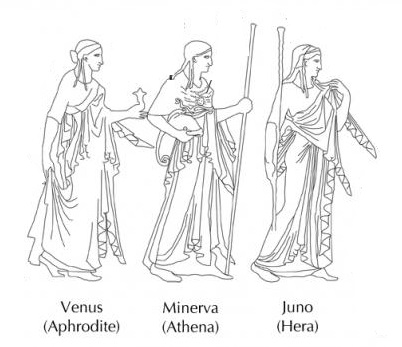
The words used are φρονίμως καὶ καλῶς καὶ δικαίως (phronimos kaj kalos kaj dikaios). Phronimos / phronesis is usually translated as Prudence, sometimes as practical wisdom. Kalos is sometimes translated as “well”, or as “noble”. Dikaios translates as “just”, sometimes as “right”. These ingredientes are all needed to live pleasantly according to Epicurean doctrine. For this reason, in order to encourage the memorization and paraphrase of this doctrine, I like to imagine this as the doctrine of the “Four Sisters” who must walk together with the true Epicurean: Iustitia (or any other personification of Justice), Prudentia (who could be personified by Athena / Minerva), Nobility, and Hedone (which I associate with Venus Urania, the patroness of the Garden). Imagining these “Four Sisters” “walking with” the genuine Epicurean is a way to memorize, visualize, or to imagine this Doctrine. In my attempts to create a visual of the Three of the Four Sisters, I was unable to find Minerva and Venus with Iustitia or Themis or Metis, but I found more than one depiction of them with Juno, so I used her instead. Upon thinking about this, Juno is perfect for this, as she is the goddess of marriage, which is one of the most universal types of contract.

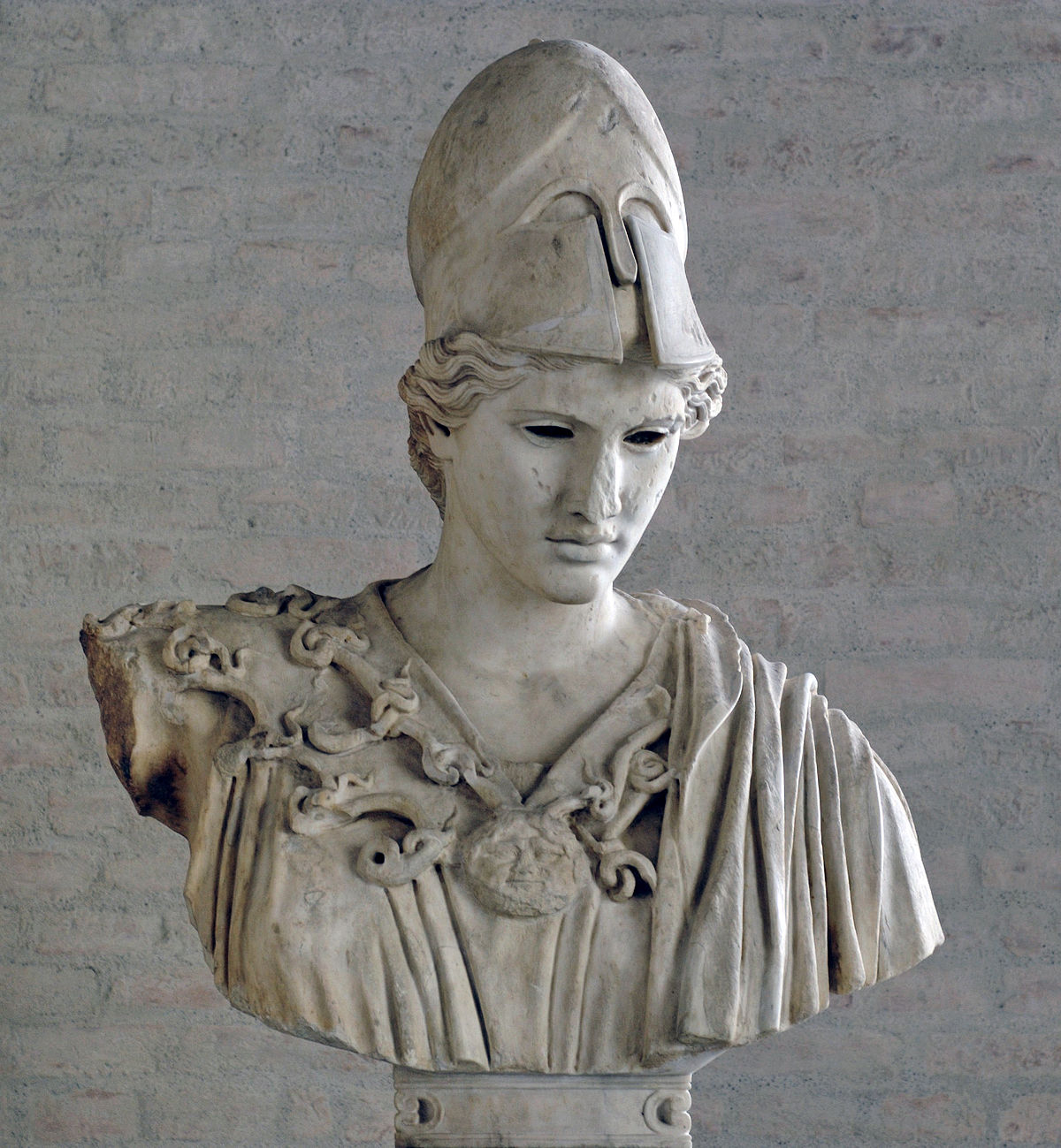
Prudentia carries the preconception of “providentia” and of planning ahead of time, and therefore is needed for hedonic calculus. Minerva is an intellectual deity, and in fact her name shares semantic roots with the word “Mind”.

Minerva

Minerva, Goddess of philosophy and strategy

PD 5 clearly states that pleasure is not enough. This is due to the instructions in the Letter to Menoeceus to carry out hedonic calculus, which requires prudence (phronesis, or practical wisdom, which is required for living wisely) to help us discern which pleasures/pains to choose/avoid. That’s simple enough: we need Pleasure and Prudence, but why is Justice here?

The PD’s say A LOT more on Justice. For instance, in PD 17, we find the diagnosis of perturbation for the unrighteous. Righteous, law-abiding people who fulfil their terms of the social contract enjoy ataraxia (ὁ δίκαιος ἀταρακτότατος), but if people are unjust, they experience great perturbation or disquietude (ὁ δʼ ἄδικος πλείστης ταραχῆς γήμων). The key words here are ataraktotatos (which relates to tranquility, a-taraxia, the state of non-perturbation), and taraxes (perturbation). Here’s an instance where the PD’s emit a judgment that constitutes a diagnosis (a perturbation), that exposes a problem for treatment.

The just person enjoys the greatest peace of mind, while the unjust is full of the utmost disquietude. – Principal Doctrine 17

PD 17 and PD 5 taken together mean that these diseases of the soul (perturbations) tied to people’s unjust character must be treated and healed PRIOR TO being able to advance in philosophy.

One metaphor for how justice FEELS in one’s soul is the Kemetic (Ancient Egyptian) metaphor of the heart being weighed in the balance. If it’s lighter than a feather, then the dead may pass on to the afterlife. If the heart is too heavy, it does not pass. We do not believe in the afterlife, but this metaphor of light-heartedness as justice naturally appeals to any materialist. After all, weren’t the Epicureans known as “laughing philosophers”. Vatican Saying 41 makes it clear that laughter and light-heartedness is an Epicurean virtue, and the association of the feather of Ma’at (righteousness) with lightening up seems to indicate a relationship between justice and light-heartedness. Even Nietzsche said that if there IS a devil, it’s the “spirit of gravity”.

It is impossible for the person who secretly violates any article of the social compact to feel confident that he will remain undiscovered, even if he has already escaped ten thousand times; for right on to the end of his life he is never sure he will not be detected. – Principal Doctrine 35

Concerning Justice, we also find in PD 35 an appeal to a person’s sense of shame and apprehension at the possibility of being caught doing something that goes against the social contract. This doctrine could be called the “doctrine of the stigma”, because it discourages injustice based on an appeal to shame and fear of being detected, and based on the fear of the results of this. Another reason why we need PD 5 is that since the stigma of guilt is experienced as a perturbation, it keeps us from living blissful lives.

There are many scenarios that we can think about where either justice or prudence is lacking, and so the life of pleasure is not complete and can not be labeled Epicurean. These exercises of putting before our eyes various hypothetical scenarios, or thinking back to real ones we’ve encountered, may help to demonstrate what the founders were thinking about and discussing when they established Principal Doctrine 5.

The most common modern scenario for understanding PDs 5, 17, and 35, in my opinion, has to do with wage workers who fail to fulfil their side of the labor contract. Employers may experience this as fear of litigation, or of losing their best workers if they fail to uphold their side of the bargain. Working for wages is probably the most common type of contractarian relation in the modern world, one which most people get to experience at some point. We can imagine a worker who fails to perform his contractual duties, or is always late for work, or somehow does not deliver the services or goods he is bound to produce, or breaks important rules concerning harassment or other ethics rules of their job. If a person does this, they will be worried about losing their job. If they do not enjoy self-sufficiency, this worry may consume them. If they are self-sufficient and their job is only a source of extra income, the perturbation from their sense of guilt will be minor. So what this PD is saying is that an Epicurean must have Justice on his side, that he must avoid having to constantly worry about being caught breaking the terms of a covenant. He does this by fulfilling its terms, as he will not be able to live pleasantly if he constantly worries about possibly losing his job.

Of course, the other side of PD 17 is that the righteous experience ataraxia. Thanks to their innocence, they get to enjoy the pleasure of their sense of decency and peace of mind. This wholesome, healthy state is a positive value that most people who are just probably take for granted. If a worker or employer goes above and beyond their call of duty based on their contractual terms with each other, and learns to love the virtue of responsibility and hard work, they will experience a pleasant, edifying sense of pride, of decency, and of good character. Those of us who are immersed in wage slavery know too well the “Friday night” feeling, the sense of accomplishment and entitlement that comes with being a good worker.

Why else might Justice be a requirement for the Epicurean life, according to PD 5? One possible additional hypothesis is that this may have been a way for the founders to protect disciples from unwholesome association: if someone is incapable of fulfilling their part of the social contract, or of abiding by the law, then their not “walking with Justice” is supposed to exclude them from being seen as properly Epicurean. They will need to work on that prior to advancing in philosophy, and other Epicureans will appropriately be wary of the extent of their association with someone who is likely to break the terms of the social contract.

For this reason, I call PD 35 the “doctrine of the stigma”: it not only warns the perpetrator of the perturbations related to breaking oaths and being a social delinquent. It also warns the Epicurean friends (for whom the PD’s were authored) to be mindful of associating with oath-breakers. For this reason, I believe that PD 35 is a precursor to PD 39.

Further Reading:

Parable of the Hunter

Principal Doctrines 24 and 28 and the Utility of Conviction

In the days after the publication of this essay, it was announced that James Randi had died. Randi had been a champion of empirical thinking for most of his life, applying this Principal Doctrine (although he was not an Epicurean) to uncover frauds, magicians, and conmen. The Humanist featured an article in celebration of his legacy.

In our discussions of Epicurean philosophy, we sometimes come across people who claim to be Epicureans but fall short of clearly understanding and living many of the Principal Doctrines. As our recent discussions about Thomas Jefferson and his slavery practice demonstrate, there are and have always been bad or uninformed Epicureans out there, as well as arrogant ones who are set in their ways and whom Philodemus would’ve labeled “incurable”, as well as people who have their own intellectual and ideological commitments outside of EP, and we must judge their ideas by their connection to our sources as well as by their potential consequence–as Epicurus advised in his sermon against empty words, where Philodemus said:

Epicurus says that we think empirically concerning the actions based on the results observed from any course of action.

Concerning theories that do not seem to have empirical basis, they can be destroyed if they are false (whether rational or not), either if some other theoretical view based on it is false, or if when we establish a link with the action, this proves to be disadvantageous. If any of these things happen, it will be easy to conclude that theoretical arguments are false.

In the coming months, I will be delving into an in-depth study of various PD’s in order to help students to certify whether an opinion expressed in an online forum really represents an Epicurean doctrine or not. This will also constitute an invitation to a deeper study of the Principal Doctrines, as sometimes those who misrepresent EP will cite secondary, even hostile sources, but ignore the authoritative PD’s, of which Lucian of Samosata–writing in the Second Century of CE–had this to say:

The fellow had no conception of the blessings conferred by that book upon its readers, of the peace, tranquillity, and independence of mind it produces, of the protection it gives against terrors, phantoms, and marvels, vain hopes and inordinate desires, of the judgement and candour that it fosters, or of its true purging of the spirit, not with torches and squills and such rubbish, but with right reason, truth, and frankness.

The Principal Doctrines are the closest thing we have to an Epicurean Gospel. They’re the conclusions of very long conversations that led to authoritative declarations by the founders. As students (and in the absence of all the sources), we should try to imagine the discussions that took place PRIOR to the establishment of the doctrines, so that we may understand the ways in which they are coherent with the entire system. What led the founders to consider these truths to be so important, that they became a dogmatic School and set them up as the 40 authoritative doctrines?

There are two key doctrines I’d like to start with. Principal Doctrine 24 creates the taboo of separating that which awaits confirmation (the non-evident) from that which is clearly present (the evident). I use the word “taboo” because this doctrine includes a clear prohibition against mixing them up. Without this doctrine–which clearly establishes that this is an evidence-based philosophy based on the study of nature–, our dogmatism can not be justified.

If you reject a perception outright and do not distinguish between your opinion about what will happen after, what came before, your feelings, and all the layers of imagination involved in your thoughts, then you will throw your other perceptions into confusion because of your trifling opinions; as a result, you will reject the very criterion of truth. And if when forming concepts from your opinions you treat as confirmed everything that will happen and what you do not witness thereafter, then you will not avoid what is false, so that you will remove all argument and all judgment about what is and is not correct.Principal Doctrine 24

Notice here that “our feelings” (important as they are) are among the things that must be subjected to the checks and balances provided by the evidence of nature.

In Philodemus’ scroll On methods of inference we learn that it’s possible to infer about the non-evident based on the evident, but this applies only to phenomena that are considered similar enough to each other to warrant such inference by analogy. Outside of these (sometimes controversial) cases, the instructions here are to await confirmation (evidence) prior to issuing opinions or judgments. This Principal Doctrine is a precursor to modern scientific inquiry and the transgenerational human project of amassing useful knowledge by strict means of evidence.

So Principal Doctrine 24 is the doctrine of empirical reasoning (epilogismos) and of “awaiting confirmation”, and creates the taboo of separating the evident (that which is clearly present) from the non-evident (that which awaits confirmation). This doctrine justifies Epicurean dogmatism based on nature’s evidence. It is necessary to understand this doctrine prior to understanding PD 28:

The same judgment produces confidence that dreadful things are not everlasting, and that security amidst the limited number of dreadful things is most easily achieved through friendship. – Principal Doctrine 28

Here’s another translation:

The same conviction which inspires confidence that nothing we have to fear is eternal or even of long duration, also enables us to see that even in our limited conditions of life nothing enhances our security so much as friendship.

This doctrine is about friendship and about diminishing our existential fears, but it also specifically addresses our “convictions” or “judgments” as efficient means to acquire a confident expectation that leads to security–which is a mental pleasure, or perhaps at times an alleviation of mental anguish. This belief can be experienced as salvation if we’re ever on the verge of homelessness or danger and our friends come to the rescue, or it can simply create a stable sense of confidence.

Implicit in this doctrine is the view that certain beliefs or convictions are not only true, but are also efficient means to certain important and necessary pleasures. It’s not enough to have friends: one must also KNOW that they will be there in times of need. It’s not enough to have few desires: one must also KNOW, have a conviction, that we need few things to live pleasantly. It’s not enough to not fear death or chronic pain: we must KNOW that mental pleasure can be more potent than pain in the flesh and that death is not experienced by us. This is in line with Principal Doctrine 20, which says that the flesh does not know the limits established by nature for time, body and mind, while the mind can learn these limits, and so is in charge of securing our happiness.

And so dogmatism (the acceptance of certain premises which pass the test of the canon, and the taboo of separating the evident from the non-evident in PD 24) is a necessary feature of the practice of Epicurean ethics, and is necessary for us to abide in constant pleasures insofar as this is possible for mortals.

There’s this idea here that your beliefs should be carefully and empirically chosen, and also that your beliefs should do something for you, contribute to your happiness. Beliefs or doctrines can be tools that the mind uses to safeguard a life of pleasure. After all, the goal of an Epicurean ethical education is to give us confidence in our ability to live pleasantly, which is to say, to be happy.

I wanted to write this essay because I wanted to set a foundation for future exploration of the other Principal Doctrines, always coming back to these points. Peace and Safety!

Reply by Jordan:

Great article, Hiram. As always, I came away with a deeper understanding of EP, so thank you. One question: you write ‘It’s not enough to have few desires: one must also KNOW, have a conviction, that we need few things to live pleasantly.’ How do we, as comfortable Westerners, find out whether we really would be content with only natural and necessary goods? Are there any practices that might help give us a justified confidence that we could?

Reply by Hiram:

The Epicurean method is empirical so only by practicing living simply do we know these limits. If we have great comforts and have no memories to rely on of lacking our basic needs and still living pleasantly, we could diminish them temporarily, perhaps for a week, or once in a lifetime at least, or carry out other experiments, if we are devoted to the intellectual challenge of the Doctrines. Here is how Epicurus did it: he fasted from time to time.


The following essay was written by Fernanda Diab, from the Faculty of Humanities and Educational Sciences – Udelar, in Uruguay. Her views are her own. It was translated by Hiram Crespo and shared here with her permission. Please note that the idea of asceticism is here treated in terms of exercises in self-care, rather than self-denial, and also please compare Foucault’s ideas about ethics as self-care with Epicurus’ sermon on moral development.

The complexity of Michel Foucault’s work is such that it is very difficult to make a full assessment of it. The trajectory of his thought has different stages, on which the author himself has made reflections, explained the foundations, and given diagnoses. They can be found in interviews and prologues. The complexity increases if we consider the variety of topics that he has addressed throughout his career, which may even lead us to think, as Couzens maintains, that “there may not be a single Foucault” (1).

Beyond some nuances, there is an agreement to divide Foucault’s work into three stages. The first is that of methodological works, among which the main one is “Words and things”; the second includes the works on power, where another of his main works stands out: “Surveillance and punishment”; and the third is dedicated to works on morality, distinguishing the three volumes of “History of sexuality” that constitute a truncated series since Foucault died before completing the fourth volume he had planned.

Foucault himself has also reflected on the development of his work and made some self-criticisms. As an example of this in “History of Madness” refers to three levels, which every historian should address, which could correspond to three periods of the development of his work. (2) These three levels would be: first, an area of ​​knowledge made up of concepts, theories and disciplines; second, a set of normative rules, such as those that distinguish between normal and pathological; and third, the way of relating to oneself. Despite being these three levels well marked in each of the three stages mentioned above, they can appear together in any of their works.

Another conventional way of ordering Foucault’s work is around certain central questions that he tries to answer. A first stage would be centered on the question of knowledge and it is recognized with the name of archaeology. It is located between 1961 and 1969 and the central works are “History of Madness” and “The Archaeology of Knowledge”. The second stage is known as genealogy and revolves around the question of power. The paradigmatic works of this stage are “Watch and punish” and the first volume of “History of sexuality”. And the third stage addresses the question about subjectivity or the technologies of subjectivity, with volumes II and III of “History of sexuality” being its most characteristic feature.

In Miguel Morey’s introduction to “Technologies of the self”, the author argues that the conventional divisions of Foucault’s work can lead to conceptual errors. For example, accepting the division according to the methodological aspects (archaeology, genealogy, techniques of subjectivity), may lead one to believe that each of the methodological procedures that were used by Foucault would substitute each other. According to Morey this is wrong. Instead he claims that these procedures “are encompassed in ever wider circles, but are not replaced at all.” (3)

According to Foucault’s own writings, a new ordering of his work can be proposed, in terms of ontology: “historical ontology of ourselves in relation to the truth that constitutes us as subjects of knowledge”, “historical ontology of ourselves in relation to the field of power through which we constitute ourselves as subjects acting on others ”,“ historical ontology in relation to ethics through which we constitute ourselves as moral agents ”. (4)

It is also possible to divide Foucault’s work into three axes of analysis: archaeology, genealogy, and ethics. In agreement with Morey, Arnold Davidson maintains that ethics is not a substitute for archaeology or genealogy, but adds that ethics modifies certain final methodological implications of those two. (5)

In any case, whether one talks about “works of morality”, “way of relating to oneself”, “technologies of subjectivity”, “historical ontology of ourselves” or “ethics”, reference is always being made to the the last stage of Foucault’s work, and it is in it that the text to be analyzed in this work is found, contained in Volume II of “History of sexuality”.

In the introduction to Volume II, under the title Moral and self-practice, Foucault analyzes four fundamental aspects of ethics, understanding it as the way in which the individual relates to himself and thus constitutes himself as a moral subject. This work aims to carry out an analysis of these aspects and their identification in Epicurus’ ethics.

Sexuality and self-care

Sexuality is approached by Foucault as a historically singular experience in which the individual is objectified for himself and for others. This not only occurs through an external discipline process that is exerted on the individual, but the individual self-disciplines. It is on this last point that he will emphasize the last volumes of The history of sexuality. Foucault pays attention to this aspect of human life and not to another because “unlike most other major interdiction systems, the one concerning sexuality has been paired with the obligation of a certain deciphering of one same”. (6)

In previous works where he analyzes the problem of power–for example in “Surveillance and Punishment”–he emphasizes how people exercise power over others. But in The history of sexuality, he studies how people exercise power over themselves, that is, how they constrain themselves. This self-control or self-discipline occurs with the more or less implicit purpose of becoming a certain kind of person. Hence, the history of sexuality has as its general framework a history of morals, insofar as it is conceived as one of the clearest ways through which individuals become moral subjects.

In making this shift from the analysis of the methods of discipline that are exerted on the subject to the forms of self-discipline, and in particular when finding sexuality a central element in the self-construction of the subject, Foucault had to abandon the study of sources of modernity and look back on the Greeks. For them sexuality was part of the moral, political, economic customs and became self-care. Foucault’s works are characterized by beginning with a point of difference, a strange phenomenon for modern sensibility. In his history of sexuality, this phenomenon is sexual practice among free adult and young men in the Greco-Roman tradition. It is also different with respect to modernity that above all for the Greeks what was important was not sexuality but the practice of freedom.

In Volumes II and III of “History of Sexuality”, he focuses on the history of subjectivity, that is, in which the subject is built but not as a result of external forces exerted on him, but as a result of his self-representation and therefore the self-control he exercises over himself. The central question is how the constitution of the self occurs through the various discourses about sex. In Volume II “The Use of Pleasures” he discusses how pleasure and desire constitute an element of tension in Greek society even though it is part of it. Tension is given by the relationship between “superior” and “inferior”: ruler and ruled, free man and slave, young and adult. Obtaining pleasure is then linked to a social position, it is not a transgression. But this conflicts with the relationship between the domain of pleasure and the practice of freedom. “Self-care has been, in the Greco-Roman world, the way by which individual freedom – or civic freedom to a certain extent – has been thought of as ethics.” (7)

Sexuality becomes problematic when love for young people threatens the way of life of the Greeks. A morally good life can only be conceived for those who have dominion over themselves and others, that is, for free adult men. This domain is achieved through an active posture. But love for young people could lead young people to a passive life which is incompatible with the practice of freedom for which young people should prepare. In this way sexuality becomes a moral problem for the Greeks. In Dreyfus and Rabinow’s interview, Foucault puts it this way: “The problem was that it could not be accepted that a boy who supposedly should become a free citizen could be dominated and used for someone’s pleasure.”

In Volume II, “The use of pleasures”, Foucault denies the possibility of writing a history of regulative moral codes since these constitute neither the only or the most important element of morality. It gives more attention to the subjectivity techniques by which the individual is constituted as a moral subject. It is not the codes that vary from the Greeks to Christianity but the modes of self-knowledge of the subjects and their self-construction as moral subjects.

Another point of interest of Foucault in the last two volumes of the history of sexuality is to trace how self-care in Greco-Roman culture became a renunciation of itself in Christianity. He finds that both Greeks and Christians valued ascetics, that is, they regarded as a virtuous practice the restriction of pleasures. However, that assessment is not the same. According to what Foucault tries to demonstrate in Volume III, for the Greeks asceticism is not a resignation but the souci de soi, that is, the care of the self. In L’Usage des plaisirs insists on the problematic nature of sexuality for the Greeks, who regarded physical excess not as perversion but as aesthetic ugliness. Instead paradoxically for Christianity, self-care implies a renunciation of oneself.

Morality and self-care

In the introduction of Volume II of “History of Sexuality” Foucault raises his primary interest, which is to trace how sexuality became a fundamental element of the self-constitution of the individual as a moral subject. Or more specifically it claims to “show how, in ancient times, sexual activity and pleasures were made problematic through self-care practices, by creating criteria for an aesthetic of existence”. (8) Ascetic austerity and the measuring of pleasures are not conceived as prohibitions but as lifestyle, as a luxury within a society. However Foucault adds that austerity practices cannot be considered as a simple refinement. “On the contrary, it is easy to see that each of the great figures of sexual austerity relates to an axis of experience and a beam of concrete relationships…” (9) such as the relationship with health or with their own sex. It is about determining “under what forms sexual behavior was problematized, becoming the object of restlessness, element of reflection, matter of stylization.” (10)

Under the title Moral and Practice of the Self, he asks what aspect of morality will be analyzed. He seeks to clarify the object of his history of sexuality, and for this he analyses the ambiguity of the term “moral”. First, morality means “a set of values and rules of action that are proposed to individuals and groups through various prescriptive devices, such as family, educational institutions, churches, etc.” (11) These values are explicitly transmitted, but it is also the case that they become diffuse and thus morality is a more complex game. So the term “moral” is basically associated with a moral code. But it can also be understood as “moral” as “the real behavior of individuals, in their relationship to the rules and values that are proposed to them”. (12) Here “moral” is linked to the way individuals relate to the aforementioned code. It would consist of the actual conduct of individuals in respecting or rejecting the code. This other meaning of the term “moral”, Foucault calls it “morality of behavior”. There is then in the field of morality on the one hand the standard of conduct, and on the other the conduct itself.

There is another constituent aspect of morality that will be emphasized. It is not how the subject relates to the norm but how the subject relates to himself. That is, how the subject self-understands and self-constructs as a moral subject. Even if the moral code is the same, there are several ways to conduct yourself in front of it, several ways in which the subject conducts itself in front of that code. In this diverse way of acting the individual is not only a moral agent, but also a moral subject.

Ethics is in Foucault’s writings understood as the study of the relationship of self to self. He understood that ethics is only part of the study of morality. Without wanting to deny the importance of the moral code or the actual conduct of the people (the other aspects of morality), he intends to shift the analysis towards the ways in which the individual self-constructs himself as a moral subject of his actions. The relationship with oneself, which Foucault calls “ethics”, has four aspects: the ethical substance, the mode of subjection, self-forming activity or asceticism, and the teleology of the moral subject.

The ethical substance or aphrodisia is that part of the individual that is taken as a “raw material” of his moral conduct. It can be the body, sexuality, pleasures; that will be transformed, shaped in such a way that they constitute the way through which the subject in turn is self-transformed as a moral subject. It is the part of the individual that will become the central point of self-care, that which the individual will “work on” to self-control. The ethical substance is not always the same, it was acquiring different forms and is one of the points that Foucault wants to demonstrate when comparing Greek ethics with Christianity.

Foucault calls “determination of the ethical substance”, “the way in which the individual should shape such or that part of himself as the main matter of his moral conduct.” (13) This aspect of ethics would be the one that answers the following question: “What part of myself or my conduct concerns moral conduct?” (14)

The second aspect of ethics is the mode of subjection, it is the one that establishes the link between the moral code and the self. It determines how the code has power over the self. In L’Usage del Plaisirs he defines it as follows: “it is the way in which the individual establishes his relationship with this moral code and recognizes an obligation to put it into play.” (15) And in the interview of Dreyfus and Rabinow: “it is the way people are invited or incited to recognize their moral obligations.” By saying “invited or incited”, it would appear that Foucault is referring to external elements acting on the subject inciting him to obey the law, and then we would no longer be in the field of ethics. But such incitement is exercised by the subject on himself and has to do with the way in which the law is presented to him as obligatory. The way of subjection to the law may be given as a divine law, by belonging to a community of which the individual feels a part or by being the means to attain a more beautiful existence.

The self-training activity is the medium or the whole of them, through which the individual changes, transforming to become an ethical subject. It is the activity “that we perform in ourselves–not only to make our behavior according to a given rule, but to try to transform ourselves into a moral subject of our conduct”. (16) We can see that the work that the individual does on himself is not solely intended to behave according to the law, to abide by it, but that the goal is the construction of the self and to become a moral subject.

This third aspect of ethics is the one that answers the question: “What are the means by which we can transform ourselves into ethical subjects?” (17) The concept of self-sculpting or asceticism in the broad sense can be equated with what Foucault called “technologies of the self”, which he defines as those operations that the individual performs on his body and his soul, his thoughts, or any form of his being. It’s about “… thoughtful and voluntary practices by which men not only set rules of conduct, but seek to transform themselves, modify themselves in their singular being, and make their lives a masterpiece.” (18)

With such operations, the transformation of oneself is achieved with the aim of achieving a certain state which may be of happiness, purity, wisdom or immortality. In “The Subject’s Hermeneutics”, when analyzing Hellenic philosophy, he refers to self-concern, a concept to which the Greek term epimeleia heautou corresponds. It is the ways in which the subjects unfold and constitute at the same time the object of their own action, shaping, building themselves, in a process of refinement to transform into a certain type of subject. Self-care is both a set of self-transformation practices and a duty, that is, a principle that is prescribed as a model of good life.

Finally Foucault defines the teleology of the moral subject that represents the kind of being to which the individual aspires when he behaves morally. The purpose of moral action is not only the adequacy of certain values and norms, but also aims at the constitution of the individual as a moral subject. The telos with which they tend to fulfill moral actions is also changing; thus the individual will aim to transform himself into a pure, immortal being free from his passions.

Volumes II and III of “History of Sexuality” can be understood as a study of the relationships between these four aspects of ethics in Greek and Roman society. In L’Usage des Plaisirs, Foucault discusses these four aspects of ethics through the following topics: health, women and wives, and boys. It emphasizes the importance that Foucault attaches to the relationship with himself in morality:

It is true that any moral action implies a relationship with the reality in which it takes place and a relationship with the code to which it refers, but it also implies a certain relationship with itself; this is not simply “self-awareness”, but a self-constitution as a “moral subject”, in which the individual circumscribes the part of himself that constitutes the object of this moral practice, defines his position in relation to the precept that he follows, sets a certain way of being that will be worth moral fulfillment of himself, and for this he acts on himself , seeks to know each other, is controlled, tested, perfected, transformed. (…) There is no particular moral action that does not refer to the unity of moral conduct; nor moral conduct that does not claim the constitution of itself as a moral subject, nor the constitution of the moral subject without “modes of subjectivity” and without an “ascetic” or “self-practice” that supports them. (19)

An Example from Epicurean Ethics

What I intend to do here is to track and identify in the ethics proposed by Epicurus, the aspects of ethics defined by Foucault and discussed above. I will try to identify the ethical substance, i.e. part of the individual that is considered as a relevant element of ethical judgment for the Epicureans. It will also attempt to determine the individual’s manner of subjection with respect to the law, how the Epicurean conceives the law as obligatory and abides by it. The same will be done with self-forming activity and with teleology. To do this, each of these aspects will be analyzed separately and supplemented with quotes from the garden philosopher.

1. Ethical substance

Let us utterly drive from us our bad habits as if they were evil men who have long done us great harm. – Epicurean Saying 46

As a philosophical doctrine typical of the Hellenistic period, Epicureanism retains certain characteristics of the Greek tradition. For the Greeks, acts linked to pleasure and desire were the point of support for ethical assessment. The point of interest that was considered relevant in moral actions was desires and pleasures. We can say then that in Epicureanism the ethical substance was acts linked to pleasure and desire. Pierre Hadot argues that the “experience of the flesh” forms the basis of Epicureanism–“flesh” not in the physical sense but as the subject of pain and pleasure. (20) In fact this doctrine has been known as a hedonistic doctrine because of its emphasis on pleasures, although as Epicurus himself clarifies this was misunderstood, as it sought the denial of pain (as will be seen below).

Epicurus preached: “It is not the drinks, nor the enjoyment of women, nor the sumptuous banquets that make life pleasant, but the sober thought that discovers the causes of all desire and all aversion and takes away the opinions that trouble souls.” (21) The teachings of Epicurus led to self-care through the measuring of desires. He can only own himself who is not a slave to his desires. Whoever suffers for what he does not have and desires, can never be free or happy, so it is necessary to evaluate the pleasures in order to know which are necessary and which are not. “For none among the foolish are content with what they possess, but they grief for what they do not have.” (22)

2. Modes of subjection

Epicureanism is peculiar in that Epicurus constituted for his followers a kind of god or divine man (theios aner); this characterization having been given to him by having been the only one to be able to attain wisdom on his own. (23) His authority over his disciples was very great–so much so, that association with the teacher was supremely important for the formation of the disciples. So after his death, the fundamental precept of his school was this: “Act always as if Epicurus was watching you.” This means that one of the most important elements by which Epicurus’s followers felt compelled to abide by their precepts was by their master’s own influential figure.

With the exception of Epicurus himself, the rest of the members of the Garden School needed, to attain wisdom, a tutor (Hegemon) with whom they had to maintain a strong bond of friendship. Community life for the Epicureans was very important. Since the founding of the Garden School, rather than the study of books, the essential thing was community life; and the best form of learning was that based on personal contact and dialogue. It was not about coercing men, but persuading them, which did not exclude authority. In that community only Epicurus was considered and called wise, the remaining members were aspiring sages. Presumably, this aspiration would act as a means of subjection to the precepts of Epicurus in order to attain the wisdom of the master.

The mode of subjection of the Epicureans is then linked to their loyalty to Epicurus. Upon entering the community, one gave an oath: “I will be loyal to Epicurus, according to whom I have chosen to live.” That loyalty was identified with friendship, as his followers were called “friends.”

If the disciples were impelled by the teacher’s image to obey the law or the precepts he gave them, one might wonder what subjected Epicurus himself to the obedience of certain moral standards. At this point there could be an overlap between the aspects identified by Foucault, and the mode of subjection is the telos itself. The way in which the individual conceives the standard as obligatory is closely linked to the sense of duty towards the model of being that he wants to achieve.

3. Self-forming activity

The fundamental means by which the individual must self-transform to become a moral subject is reflection. Philosophy turns out to be a “four-fold drug” meant to help us have the right attitude towards the gods, death, pleasure and pain. Epicurus’s considerations on these points are found in the Letter to Menoeceus, which is an invitation to the philosophical attitude. Philosophy is for Epicurus a fundamental element in self-care, because only through it can the individual lose those fears that do not allow him to achieve the true state of happiness that consists in the tranquility of the soul (ataraxia).

Philosophy has a therapeutic character (therapeutike). Its practice itself has a healing, liberating function. It helps us to discern which pleasures are necessary and which are not, while giving us elements (e.g. the physics) to eliminate the fears that afflict individuals. This type of philosophy is able to free the individual from annoying desires. The individual can only be saved from a disturbed life if he practices philosophy and, for this purpose, Epicurus understands that there is no age:

Let no one put off the love and practice of wisdom when young, nor grow tired of it when old. For it is never too early or too late for the health of the soul. Someone who says that the time to love and practice wisdom has not yet come or has passed is like someone who says that the time for happiness has not yet come or has passed. – Epicurus’ Epistle to Menoeceus

True freedom for Epicurus can only be achieved through philosophy because it frees man from that which disturbs him, and in this lies the liberating value of all knowledge since knowledge of cosmology and physics are also fundamental to making man a free and therefore happy subject.

If we were not troubled by the thought of heavenly things and that death means something to us and not knowing the limits of pains and desires, we would have no need for the science of nature. – Epicurus’ Principal Doctrine 11

The theoretical value that Aristotle attributed to philosophy, the value of knowledge for its own sake, changes with Epicurus and it becomes practical value. Prudence, the measuring of passions and desires, and the end of disturbances are the ultimate end of philosophical reflection.

The search for knowledge has the liberating function of being a “four-fold medicine”. Man, in order to be happy, must be freed from certain errors that disturb him: fear of the gods, fear of death, seeking excessive goods, and the limit of evil. As for the gods, he argues that as long as they are incorruptible and blessed, they cannot be attributed anything that goes against these characteristics. Man should not fear the actions of the gods upon him, as the gods have no worries and there’s no reason why man should be a worry to them. The gods live in pure ataraxia (tranquil pleasure). As for not fearing death, the explanation is based on his atomistic physical theory (which I will not develop here).

Second, train yourself to hold that death is nothing to us, because good and evil consist in sensation, and death is the removal of sensation … So death, the most terrifying of evils, is nothing to us, because as long as we exist death is not present, whereas when death is present we do not exist … It is nothing to those who live (since to them it does not exist) and it is nothing to those who have died (since they no longer exist). – Epicurus’ Epistle to Menoeceus

With regard to the pursuit of goods, he argues that it is easy to achieve and seek the limit of goods. Pleasures are sought if pain is avoided, so the magnitude of pleasures will depend on the greater or lesser distance from the pain. And this would build on the practices that Epicurus followers should carry out to achieve happiness. As for the evils he argues that these are limited in duration. Epicurus identifies evil with pain and says:

Continuous pain does not last long in the body; on the contrary, pain, if extreme, is present a short time, and even that degree of pain which barely outweighs pleasure in the body does not last for many days together. Illnesses of long duration even permit of an excess of pleasure over pain in the body. – Epicurus’ Principal Doctrine 4

Another fundamental element in the self-forming activity prescribed by Epicureanism is the cultivation of friendship. In Vatican Saying XXIII, he writes: “Of all the means that wisdom procures for our complete happiness, the possession of friendship is by far the most important thing.” The bonds that were established in the Garden School between men, women and children were basically given by friendship. In his will he prescribed that the house be preserved and that the philosophers would all live together. He also prescribed annual commemorations in his honor and of the disciples who had already passed.

The Epicurean conception of friendship is problematic because while exalted as a value, it is reduced to utility. In his Vatican Saying he says: “Every friendship is desirable in itself; however, it had its beginning in utility.” However, he then states: “He is not a friend who always seeks usefulness, nor he who never binds utility to friendship: since the former, transacts with favors what is given in exchange, and the other cuts off great hopes for the future.” This tension is resolved for Foucault in the idea that the existence of friends is a condition not of real help, but of hope and security to know that friends will be available to help us in the future. That’s why friendship is one of the forms of self-care. “Any man who is uneasy about himself should make friends”, says Foucault.

Meditation and calculation of pleasures are also self-care practices. In the Letter to Menoeceus, Epicurus argues “one must meditate on these things night and day, and one will live as a god among men“. Since this inclination induces man to pleasure, one must reflect and calculate the consequences of each pleasure. In this way, one will be able to abandon those pleasures that cause many disgusts and endure those pains that generate greater pleasure. Reflection lets us know that the highest pleasure is the suppression of pain. It also allows us to determine several categories of desires: natural and necessary (e.g. desire to eat and drink); natural and unnecessary (e.g. desire to eat a delicacy); and others that are neither natural nor necessary (e.g. desire for a crown). According to this classification, the measuring of pleasures is prescribed, and then the wise will be able to achieve the greatest degree of pleasure giving satisfaction to the first kind of desires, and as Epicurus himself sustains “with a little bread and water, one rivals even Jupiter in happiness“.

The exercises prescribed by the wisdom teachers are of particular importance for self-care. Theory is not enough. Knowledge of the doctrine of Epicurus is not enough to reach wisdom. Permanent exercise is required. “First of all we must meditate, that is, assimilate intimately, become intensely aware of the fundamental dogmas.” (29) Epicurus prescribes in the Letter to Menoeceus: “All these teachings consider them, therefore, day and night, by yourself alone, and also with a companion like you. Thus you will not experience disturbance in sleep or vigil, but you will live as a god among men.” (30) One such exercise was a variant of praemeditatio malorum. This mental exercise consisted of meditating on future evils, but for the epicureans this was useless and they preferred to evoke past pleasures as a shelter from today’s evils. (31) In this regard, judgments, summaries, and dialogues with friends were considered to be the privileged means of exercising themselves on the road to wisdom.

4. Teleology of the Moral Subject

Epicurus identifies the end of man as happiness. Every man and woman should attain happiness. Happiness consists in the pursuit of pleasure. Pleasure is obtained by avoiding pain. The model that  guides the moral actions of the Epicureans is that of the one who has achieved both ataraxia (absence of mental perturbation, which is experienced as tranquil pleasure) and aponia (absence of bodily pain). The first consists of the tranquility of the soul that is distant from disturbances, and the second is the absence of pain. Whoever is in this situation will have found happiness. But these two states are subordinate to the pleasure that is the end that every man must pursue, and ataraxia and aponia are desirable because of the pleasure they bring.

Wise then is the one who achieves ataraxia, tranquility, peace of the soul, and he who does not allow himself to be disturbed by that which disturbs the vulgar: the fear of the gods, of death, of the future. Without such fears, and by limiting desires, happiness is attained.

The model pursued by the Epicureans is that of the gods who enjoy full tranquility and imperturbability. This is the telos they pursue, and in pursuit of which the prescriptions of the garden master are followed.

In short, Epicurean ethics is characterized by: taking pleasures as an object of transformation (ethical substance); basing obedience (to laws and conventions) in loyalty to Epicurus himself and in community, mainly based on the bonds of friendship (means of subjection); practicing self-care through philosophy, cultivation of friendship, meditation, and the calculation of pleasures (self-transforming activity); and by pursuing happiness–understood mainly as ataraxia (moral subject’s teleology).

What is the interest of this kind of morality for the contemporary subject? It is important to note that it does not seem to be Foucault’s intention to present such forms of self-compliance as alternatives to contemporary ones. He does not even intend to value them as better or worse, even though his work is presented as a critique of the society in which he lives. He, however, insists on the impossibility of returning to those earlier forms of understanding. As Couzens argues:

Although he does not build a totally different ideal than we can aspire to, his story makes us more aware of the inconveniences of our self-understanding and our practices. The imperative to change must come from within us, if it comes. Foucault can only hope that his historiography will help subvert what he believes are our self-deceiving tendencies to deny any such imperative. (32)

Or as Mark Poster (who considers Foucault’s “History of Sexuality” as a genealogical work) argues, the author’s intention is to “reveal the difference in a phenomenon in such a way that it undermines the certainty of the present without presenting the past as an alternative.” (33) This work denies all teleology and progressivism. At the same time it undermines the purported universality of the contemporary model of sexuality with its implications with respect to morality. This opens the way for the task of developing strategies to modify it.

However, I believe that what’s being proposed isn’t merely a negative path, which ends only in the acceptance of the impossibility of basing a morality on universalism. Beyond Foucault’s intention to resurrect morality as self-care, the model of self-transformation, of taking oneself as a center of concern and occupation, of making each person better, and in that way making us freer, can be a model of inspiration for contemporary man. As Paul Vayne argues: “Greek morality is dead, and Foucault considered it as undesirable as impossible to resurrect it; but an aspect of this morality, namely the idea of a working on oneself, seemed likely to return to a present meaning, in the manner of one of these columns of pagan temples that we sometimes see located in more recent buildings.” (34) The subject as an artist of his own life seems a very interesting normative principle in the context of massification, marginalization and lack of citizen participation, which are aspects of our societies that contrast with the modern ideal of autonomy.

Notes:

1 Couzens, D., Foucault. Introduction, p.8.
2 Ibid., p.9
3 Morey, M., Introduction: The Question of method, in Technologies of the Self, p. 16.
4 Dreyfus, H., Rabinow, P., On the Genealogy of Ethics. Tell M.Foucault, p. 199.
5 Davidson, A., Archaeology, Genealogy, Ethics, in Foucault, p.246.
6 Foucault, M., Three Lectures at the University of Toronto, 1982; quoted by Morey, ibid., p.35
7 Foucault, M., Subject Hermeneutics, Annex, p.111.
8 Foucault, M., Hist.de sex., II. The use of pleasures, p. 15.
9 Ibid., p. 25.
10 Ibid
11 Ibid., p.26.
12 Ibid.
13 Ibid., p.27.
14 Foucault, M., On the Genealogy of Ethics, Dreyfus-Rabinow interview, p.200.
15 Foucault, M., Hist. of sex., II. The use of pleasures, ibid.
16 Ibid., p.28.
17 Foucault, M.; On the genealogy of ethics, interview by Dreyfus-Rabinow, p.202.
18 Foucault, M.; Subject’s hermeneutics, p.59 quote 5.
19 Foucault, M., Hist. of sex., II. The use of pleasures, p. 29.
20 Hadot, P. What is Ancient Philosophy?, p.129
21 Usener, 64, 12 and sigs., quoted by Brehier, History of Philosophy, p.485.
22 Ibid. Frag. 471, quoted by Mondolfo, Ancient Thought, p.105.
23 Foucault, M.; Ibid., p.141
24 Epicurus, Letter to Meneceus, 122, quoted by Mondolfo, Ancient Thought, p. 94.
25 Epicurus, Sent.princ., 11, quoted by Mondolfo, Ibid., p. 95.
26 Epicurus, Letter to Meneceo, 124-5, quoted by Mondolfo, Ibid.
27 Epicurus, Sent. Princ., 4, quoted by Mondolfo, Ibid.
28 Foucault, M.; Subject’s Hermeneutics, pp. 193-194
29 Hadot, P.; What is ancient philosophy?, p.138
30 Quoted in Ibid.
31 Foucault, M.; Subject’s hermeneutics, p.475
32 Couzens, D., ibid., p. 27.
33 Poster, M., ibid., p. 229.
34 Veyne, P.; The last Foucault and his morals, p.55.

Further Reading:

 Epicurus’ sermon on moral development

The History of Sexuality, Vol. 1: An Introduction

The History of Sexuality, Vol. 2: The Use of Pleasure

The Foucault Reader

Discipline & Punish: The Birth of the Prison

The Theodorians

The following is part of a book review of Cyreniacs Handbook: Handbook of Source Material for Cyrenaic Philosophy.

Theodorus the Atheist was discussed in a previous series of essays about the Cyrenaics. Like the other thinkers who were highlighted, he also founded a sect that bore his name. According to the Handbook,

Theodore was the founder of that branch of the Cyrenaic sect which was called after him “Theodorei”, “Theodoreans.” The general characteristics of the Cyrenaic philosophy are described elsewhere. The opinions of Theodore, as we gather them from the perplexed statement of Diogenes Laertius (ii. 98) partook of the lax character of the Cyrenaic school.

He taught that the great end of human life is to obtain joy and avoid grief, the one the fruit of prudence, the other of folly; that prudence and justice are good, their opposites evil; that pleasure and pain are indifferent. He made light of friendship and patriotism, and affirmed that the world was his country. He taught that there was nothing really disgraceful in theft, adultery, or sacrilege; but that they were branded only by public opinion, which had been formed in order to restrain fools … The wise man would indulge his passions openly without the least regard to circumstances.

But the great charge against him was atheism. “He did away with all opinions respecting the Gods,” says Laertius, but some critics doubt whether he was absolutely an atheist, or simply denied the existence of the deities of popular belief. The charge of atheism is sustained by the popular designation of Theodoras ”Atheus,” by the authority of Cicero (de Nat. Deor. i. 1), Laertius, Plutarch (De Placit. Philos. i. 7), Sextus Empiricus (Pyrrhon. Hypotyp. lib. iii.), and some of the Christian Fathers; while some other authorities speak of him as only rejecting the popular theology. Theodore wrote a book “Concerning God”, De Diis, which Laertius–who had seen it–says (ii. 97) was not to be disdained; and he adds that it was said to have been the source of many of the statements or arguments of Epicurus. According to Suidas he wrote many works both on the doctrines of his sect and on other subjects.

Elsewhere, it says:

Theodorus considered joy and grief to be the supreme good and evil, the one brought about by wisdom, the other by folly. Wisdom and justice he called goods, and their opposites evils, pleasure and pain being intermediate to good and evil. Friendship he rejected because it did not exist between the unwise nor between the wise; with the former, when the want is removed, the friendship disappears, whereas the wise are self-sufficient and have no need of friends.

Notice the statement on how Laertius held Theodorus’ book on divinity in high esteem, and considered it to be the source for “many of the arguments” we find in the Epicurean theories on theology and piety. Now, let’s consider this in light of what we know of Epicurean theology, as attested in Principal Doctrine 1 and Philodemus’ scroll On Piety. PD1 states:

A happy and eternal being has no trouble himself and brings no trouble upon any other being; hence he is exempt from movements of anger and partiality, for every such movement implies weakness.

The Monadnock translation says:

That which is blissful and immortal has no troubles itself, nor does it cause trouble for others, so that it is not affected by anger or gratitude (for all such things come about through weakness).

The pattern that immediately becomes evident here is that, just as Theodorus used to teach his philosophy in terms of pairs of opposites (joy/grief, prudence/folly, etc.), we see here a focus on “anger and partiality / gratitude“. Scholars have pointed out that this has to do with the gods’ autarchy (self-sufficiency): they do not need anything from anyone, ergo they are not of the constitution that would experience anger or gratitude, as no creature may harm or benefit them. We know from Lampe’s book that autarchy was one of the cardinal virtues of Theodorus, so this fits his profile, particularly if the gods are to be seen as ethical guides.

Also notice that these aspects of the theology do not touch on the physics. Unlike Epicurus, Theodorus was not of the lineage of Democritus and may not have come up with a physical theory of gods as super-evolved animals with bodies made of particles, as we see in Epicurean theology. This indicates that his ideas in the work On the Gods cited by Laertius (which seem to have influenced Epicurus) may have focused, instead, on the ethical aspects of the gods. Hence the two key attributes that Epicurus considers taboo to ascribe to deities in his Epistle to Menoeceus:

Do not ascribe to god anything that is inconsistent with immortality and blissfulness; instead, believe about god everything that can support immortality and blissfulness.

Some translations use the word happiness (that is: always abiding in pleasure, which fits the ethical ideal of hedonism), and indestructible (which fits the definition of a god). In the case of the gods’ immortality, Epicurus may have developed this theory by linking it to his atomist physics.

Like Epicurus, Theodorus seems to not have been a real atheist (in spite of his epithet “Theodorus the Atheist”). He seems to have rejected the vulgar and popular beliefs about the gods, as Epicurus did, and for that reason they were both misbranded atheists. Diogenes Laertius, in Life of Aristippus (2.97-104), says:

The Theodoreans derived their name from Theodorus, who has already been mentioned, and adopted his doctrines. Theodorus was a man who utterly rejected the current belief in the gods. And I have come across a book of his entitled Of the Gods which is not contemptible. From that book, they say, Epicurus borrowed most of what he wrote on the subject.

Here, we see that Anniceris is not the only proto-Epicurean in the Cyrenaic lineage. The Handbook has this to say of Theodorus, which could have easily been attributed to Epicurus, as it is consistent with his instruction that one should philosophize not for Greece, but for oneself:

It was reasonable, as he thought, for the good man not to risk his life in the defense of his country, for he would never throw wisdom away to benefit the unwise.

Elsewhere, the Handbook says of Theodorus:

He said the world was his country.

These teachings are identical to the Epicurean conception of cosmopolitanism, which is sustained by an anarchic spirit that choose nature over culture, true friends over imaginary or Platonic communities.

Further Reading:
Cyreniacs Handbook: Handbook of Source Material for Cyrenaic Philosophy

Dialogues on the Epicurean Gods

The Annicerians

The following is part of a book review of Cyreniacs Handbook: Handbook of Source Material for Cyrenaic Philosophy.

In my most recent Twentieth message, I argue for the possibility of an Afro-Greek intellectual ferment happening around Cyrene, which may have influenced pleasure philosophy. While studying Lampe’s book on the Cyrenaics, we learned that the philosophical lineage and tradition that Aristippus began there was very diverse, and that many of his disciples branched off into their own sects. However, since much of the philosophizing that took place there involved the celebration of Pleasure as our guide, Cyrene has been often neglected among students of philosophy, and for this reason Michel Onfray calls the city of Cyrene a philosophical Atlantis whose buried treasures we should rediscover.

Anniceris was a disciple of Aristippus, who is credited with inventing pleasure ethics, and he and his sect are considered Cyrenaic, but he was not an acritical follower. He was a reformer of Cyrenaic doctrine who established his own sect. He invented the idea of the hedonic calculus (which Epicurus appropriated and developed further by adding the hierarchy of desires). Anniceris has been called a proto-Epicurean. More on his doctrine can be found here.

Anniceris is supposed to have reformed the Cyrenaic sect, and to have introduced in its stead the Annicerian sect. – Strabo

One passage in the Cyrenaic Handbook says that Anniceris “became an Epicurean despite being an acquaintance of Paraebatus, the student of Aristippus“. According to his biography, he lived at the same time as Alexander the Great, which means that it is chronologically possible that he may have met Epicurus or some of the early Epicureans and converted to the new doctrine. However, since Anniceris is not mentioned as a prominent disciple in any of the extant Epicurean sources, this may be speculation, and we may treat the Annicerians as a pre-Epicurean sect. The Handbook says:

Anniceris had a brother by the name of Nicoteles, also a philosopher, and his student was the famous Posidonius. The sect called Annicerean originates from him. He lived at the time of Alexander the Great, he believed that friendship and patriotism were good in themselves and so seems to have created a sect that was halfway between Epicurean and Cyrenaic.

Among his sayings and teachings, we find many ideas that would later be elaborated on by the Epicureans, including the importance of cultivating healthy habits and dispositions, and the importance of friendship:

Instruction is not sufficient in itself to inspire us with confidence and to make us rise superior to the opinion of the multitude. Habits must be formed because of the bad disposition which has grown up in us from the first.

A friend should be cherished not merely for his utility – for, if that fails, we should then no longer associate with him – but for the good feeling for the sake of which we shall even endure hardships.

Clement of Alexandria had this to say of the Annicerians:

And those called Annicereans, of the Cyrenaic succession, laid down no definite end for the whole of life; but said that to each action belonged, as its proper end, the pleasure accruing from the action. These Cyrenaics reject Epicurus’ definition of pleasure, that is the removal of pain, calling that the condition of a dead man; because we rejoice not only on account of pleasures, but companionships and distinctions; while Epicurus thinks that all joy of the soul arises from previous sensations of the flesh.

It seems from this passage that the Annicerians focused on “the pleasures” rather than Pleasure. I have noted before that the use of plurals rather than singular nouns to refer to things is one technique that may be used by materialist philosophers to speak in clear and concrete language, rather than in abstract language. In A Few Days in Athens, this technique is used in the passage: “Zeno has his eyes on man; Epicurus has his eyes on men“–the idea here being that “man” is a Platonized, idealized abstraction while “men” are real, physical people. Ergo, Epicurus is more personal, and his philosophy is more humanized and reality-based.

Further Reading:

Cyreniacs Handbook: Handbook of Source Material for Cyrenaic Philosophy

The Birth of Hedonism: The Cyrenaic Philosophers and Pleasure as a Way of Life, by Kurt Lampe

Hegesias and Anniceris

Making Sense of Epicurean Friendship: An Intended Audience Approach